


Political Parties, Trump, Adam Smith, and the Nation’s Future
The Trump administration has repudiated or at least challenged the free-market philosophy endorsed by Adam Smith.
November 23, 2026
News Article
The Trump administration has repudiated or at least challenged the free-market philosophy endorsed by Adam Smith.
Wherever representative democracy exists, there are political parties. Unlike most countries, the United States historically rarely has more than two parties of major or enduring consequence, although third-party candidates (think George Wallace, Ross Perot, Strom Thurmond, even Theodore Roosevelt) occasionally play consequential roles in determining presidential results. Occasionally, candidates of some smaller political parties such as the Libertarian Party receive enough votes that they might tilt the results between the major Republican and Democrat candidates. Clearly, however, the Democratic and Republican parties have dominated the American political scene for over 160 years, and most aspiring political leaders operate within their rules, traditions, platforms, and personalities.
While both major parties exhibit some degree of ideological stability, each has evolved in their political philosophies over time with changing circumstances. For example, the Democratic Party of 1935 had a much stronger federal government intervention orientation than the one of 1910, before Woodrow Wilson’s and especially Franklin Roosevelt’s presidency during the Great Depression. For several decades both before and after Ronald Reagan’s presidency in the 1980s, the Republican Party was generally staunchly pro-market, favoring relatively low taxes and federal regulations; it also supported state rights and a small federal governmental role except for national defense.
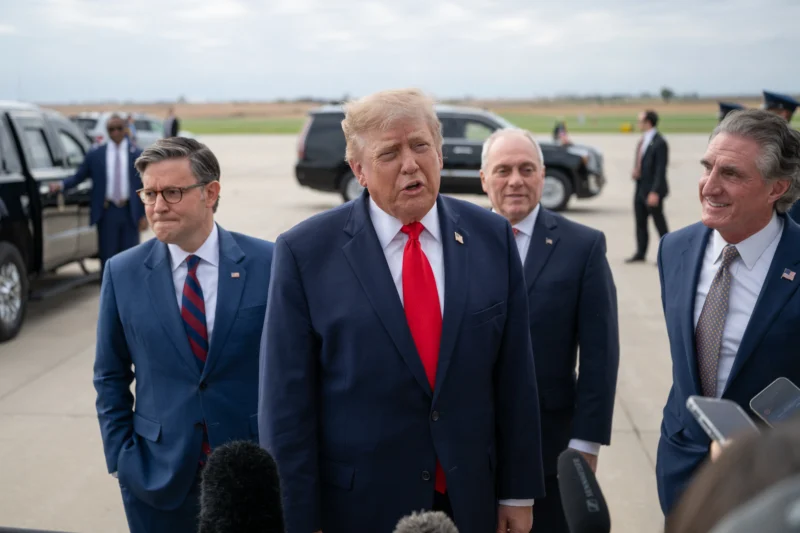
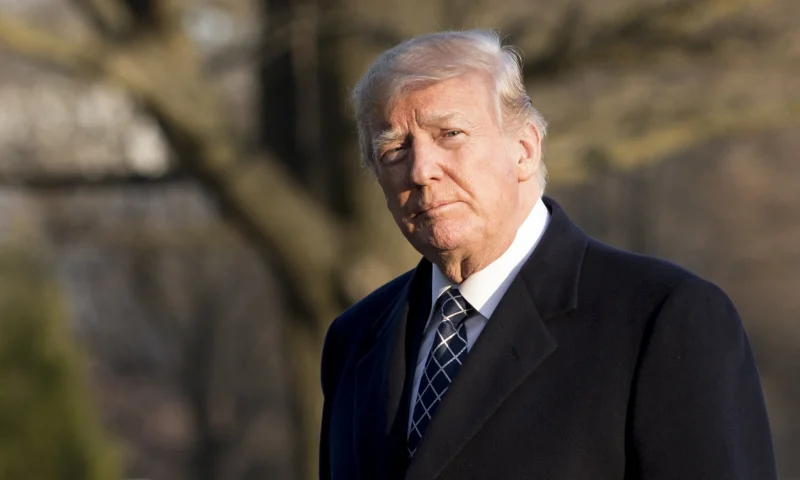
In the 2010–2015 period (immediately before Donald Trump’s meteoric political ascendency), nationally powerful and respected Republican figures mostly adhered to the traditional GOP small federal government philosophy except regarding matters of national defense, personified by leaders like Paul Ryan, John Boehner, Mike Pence, and by two Mitches, McConnell and Daniel. Contrast that with the 2026 national GOP. The Trump administration, in addition to pursuing a wildly aggressive foreign policy (for example, threatening to annex Greenland (!), as well as major interventions in countries such as Venezuela and Iran), has mounted equally aggressive federal police actions domestically (the ICE immigration raids) and even engaged in overtly socialist actions by making equity investments in storied American corporations like Intel, not to mention more symbolically visible efforts, such as trying to tackily reshape the beautiful but non-ostentatious architecture of the nation’s capital in a style eerily reminiscent of Mussolini’s Italy if not Louis XIV’s France. A Republican-controlled Congress in Trump’s second term has until now meekly acquiesced in this aggressive assertion of presidential prerogative. Presumably that will change as Trump’s clout ebbs.
The Trump administration has repudiated or at least challenged the free-market philosophy endorsed by Adam Smith and the 2015 mainstream Republicans of reducing barriers to the movement of goods, services, and people by imposing massive tariffs and the aggressive deportation of immigrants who entered the country illegally. To cap it all off, the president apparently avidly used lawfare to both enhance his political power and enrich himself and his family in ways that earlier Republican presidents like Dwight Eisenhower, the two Bushes, and Ronald Reagan would have found offensively improper. Indeed, those earlier Republicans took pride in not being corrupt like many big city mayors dependent on powerful Democratic machines.
What now? Lame duck presidents have always seen their power and influence wane somewhat, but it should be particularly acute in the next two years given Trump’s low approval ratings and his party’s trouncing in the last election. Trump’s dictation of the direction of the Republican Party should come to a near complete halt. Possibly excepting Marco Rubio, who has wisely kept his distance from Trump as much as possible while capably serving in his Cabinet, the Trump acolytes and sycophants, including Vice President JD Vance, are not likely a big part of the GOP’s future. The GOP almost certainly will look outside Washington, especially at individuals with traditional Republican values who made their mark as state governors, such as Florida’s Ron DeSantis or former Virginia Gov. Glenn Youngkin, although some senators, like Texas’ Ted Cruz, may well also be in the mix.
In terms of political philosophy, there are Trump Republicans, who tend to be disproportionately highly patriotic blue-collar workers who disdain immigrants perceived to be competing for their jobs and favor high tariffs to keep out foreign manufactured goods, and the traditional relatively free-market Republicans of the Paul Ryan variety who favor minimal federal government regulation, low taxes including tariffs, and oppose aggressive regulatory meddling, such as stringent environmental rules and restrictions on drilling for oil or precious minerals. Which group is going to lead the party in the future? Is anyone going to support free markets and allow Adam Smith’s “invisible hand” to continue working its magic as it has for 250 years? The anti-market forces in American politics are growing daily as leftist teacher unions and ideologues have dominated an education system that ignores or even denigrates the market-driven past accomplishments of the U.S. while educating increasingly a nation of dumbbells, as evidenced by international math and reading tests administered to primary and secondary educated students.
On the Democratic side, there are the traditional progressives ranging from the moderates of the Bill Clinton variety to more strident ones like Barack Obama, but also now a smaller but rapidly growing younger radically socialist group exemplified by Alexandria Ocasio-Cortez, New York Mayor Zohran Mandami, and probably newcomers like Michigan’s Abdul El-Sayed. These newcomers tend also to be staunchly anti-Israel, unlike traditional Democratic politicians. They also are open to eliminating some venerable American traditions or upsetting longstanding arrangements by, for example, ending the filibuster in the U.S. Senate, adding several states to the Union (Puerto Rico, making D.C. a state), and expanding the Supreme Court and/or trying to undermine constitutionally determined lifetime judicial appointments. It’s a pretty radical agenda for a nation that should not be posed for major change in the way it functions, given its generally high level of prosperity and low rate of unemployment.
The pessimist in me sees the U.S. in the early stages of national decline, not wholly unlike that of the Roman Empire in the early Christian era or the British Empire in the twentieth century. Given some costly Chinese miscues in the Xi era, perhaps the ascendant dominant nation of the midcentury and beyond will be India, which is increasingly abandoning a government-directed economic policy and embracing the Invisible Hand, just as the Chinese in recent years increasingly disdain it. The optimist in me sees an America that historically has risen to severe and often unanticipated challenges like the Civil War, Pearl Harbor, and 9/11. Let’s hope that tradition continues.