
Republicans vs. Reality
Voters have spoken; protectionism, corruption, and the Iran War sank the GOP.
November 20, 2026
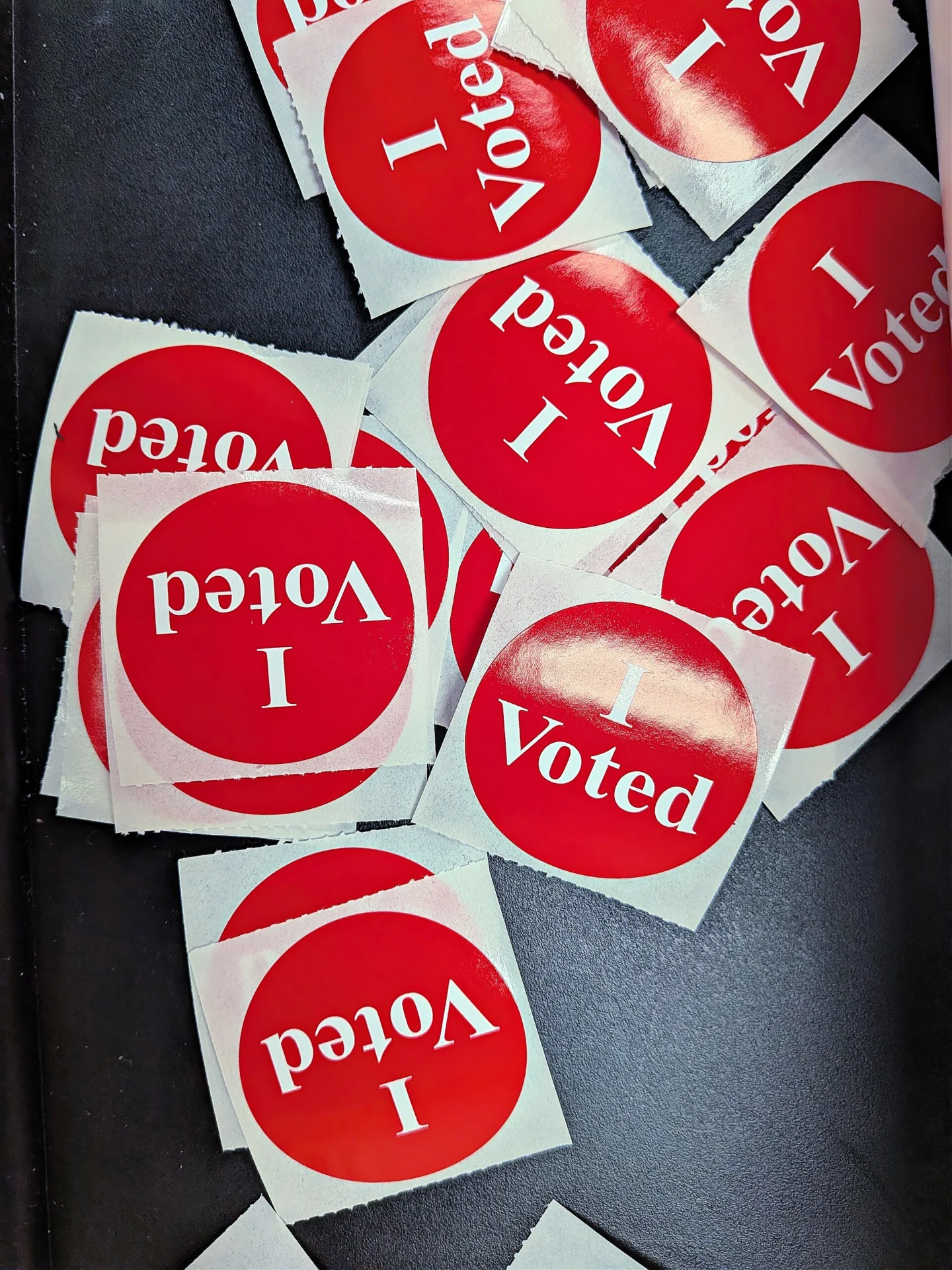
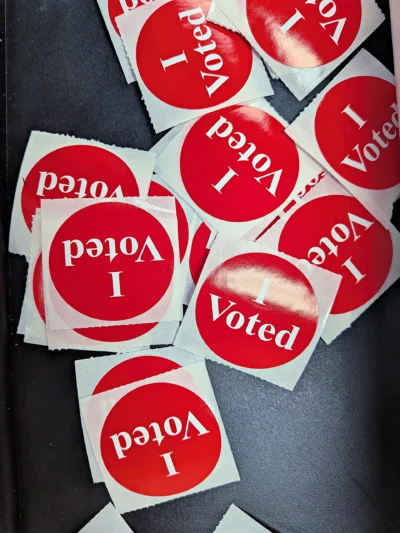
"I Voted" stickers at a polling station in Saint Paul, Minnesota.
News Article
Voters have spoken; protectionism, corruption, and the Iran War sank the GOP.
In the immediate aftermath of the 2026 midterm rout, Vice President JD Vance offered a remarkably convenient post-mortem. “The real reason we lost is obvious to almost everyone,” Vance wrote on social media. “The reason we lost is the war.” By framing the electoral bloodbath almost exclusively as a voter rebuke of the conflict with Iran and the U.S.-Israel alliance, Vance and the postliberal Right are attempting to absolve their own unpopular and destructive economic agenda of any blame. This strategy is political gaslighting at its most transparent, and the data flatly contradicts the Vice President’s assertions.
While the conflict in the Persian Gulf undeniably inflicted severe economic damage, disrupting global shipping lanes and sending fuel prices through the roof, it acted as an accelerant on an economic fire that was already burning out of control. According to AP VoteCast data, roughly half of Americans cited the cost of living and government corruption as “crucial” to their vote, far outpacing the share who prioritized the war in Iran. Voters had already soured on the administration’s economic stewardship long before hostilities in the Middle East began in February. The war compounded household pain at the pump, while President Trump’s tariff regime drove up prices across nearly every aisle of the grocery store, hardware store, and beyond.
At the core of the postliberal worldview is an ideological hostility toward free markets and spontaneous order. Postliberal theorists insist that top-down industrial planning and aggressive trade barriers enrich the working class at the expense of foreign competitors, yet basic price theory and empirical data prove otherwise.
Federal Reserve research confirmed that roughly 90% of the economic burden of the administration’s tariffs fell directly on domestic businesses and consumers. The pain was most acute in Midwestern and northern industrial and border states whose supply chains are deeply intertwined with Canada. Updated figures from the National Taxpayers Union Foundation reveal that Michigan households suffered the highest tariff burden in the nation at an astounding $6,485 per household. Neighboring states Indiana ($3,472) and Ohio ($2,668) saw steep hidden tax hikes as well. Democrats swept the Great Lakes State, which President Trump won in 2024, and Ohio Republicans lost every statewide seat except state auditor, despite outgoing Republican Governor Mike DeWine winning re-election four years ago by 25 points.
When Washington slapped sweeping tariffs on Canadian steel, aluminum, and manufacturing imports, it did not spark an industrial renaissance in the Rust Belt; it taxed American production, triggered retaliatory boycotts of U.S. exports, and massively reduced working-class purchasing power. Postliberal commentators and politicians spent nearly two years insisting that import taxes were painless, right up until voters in border states rejected this notion at the ballot box. Texas Senator Ted Cruz, the last statewide Republican standing in the Lone Star State, acknowledged the obvious the morning after the election, noting bluntly that tariffs had made everything more expensive.
Equally damaging was the stench of cronyism that accompanies state-directed capitalism. In a pre-election Harris poll, government corruption ranked second only to the cost of living as a top voter concern, with 76% of Americans agreeing that public officials care more about self-enrichment than helping everyday citizens. President Trump’s net worth has increased by an estimated $3 billion during his second term, to say nothing of the enrichment of his sons and other figures in the administration, including Commerce Secretary Howard Lutnick.
When the executive branch wields unilateral power to impose broad tariffs by decree, hand out exemptions to politically favored corporations, and acquire federal stakes in dozens of private firms, it replaces market competition with political favoritism. Voters did not need economics degrees to recognize that an administration picking corporate winners and losers was operating a system ripe for pay-to-play abuse.
The postliberal Right wants you to believe that the midterms came down to foreign policy, and that if Republicans simply retreat further into isolationism while doubling down on tariffs, price controls, and industrial subsidies, voters will return to the Grand Old Party. Reality says otherwise. Economic interventionism does not cease to be destructive when it is wrapped in nationalistic rhetoric. Until Republicans abandon postliberal gaslighting and return to the principles of free trade, fiscal restraint, and the rule of law, they will remain locked in a losing battle against economic reality.