Housing Shortage Forcing More Families into Motels
Regulatory policies have made it harder and costlier to build apartments working families need.
November 12, 2026
News Article
Regulatory policies have made it harder and costlier to build apartments working families need.
In December 1988, New York City moved the last 448 homeless families out of the Martinique Hotel, a once-fashionable Manhattan landmark that had become a national symbol of the “welfare hotel.” During that time, the Martinique reportedly housed 1,500 children, with the city paying $1,800 a month ($5,126 in current dollars) to house families in its rundown rooms.
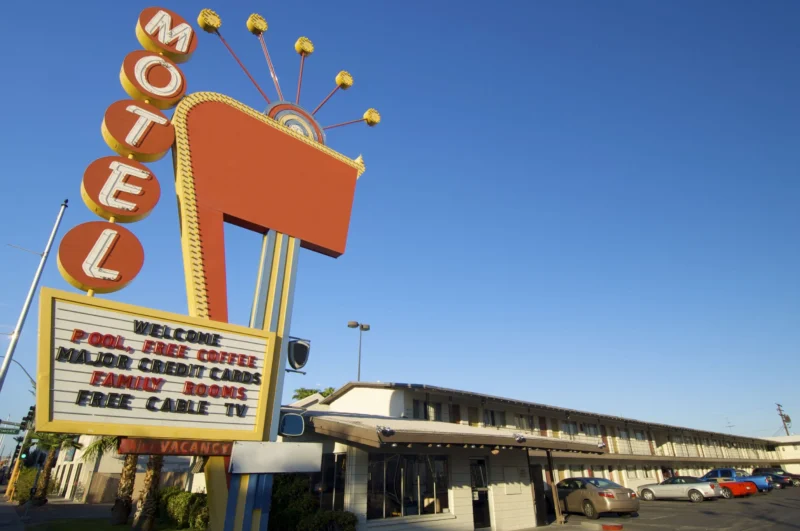
After extensive renovations and upgrades, the Martinique no longer houses families teetering on the brink of homelessness. But many other hotels and motels across the country do, due to a nationwide housing shortage largely driven by state and local policies that limit new construction.
Federal law requires schools to identify students who lack stable housing, including those living in motels. In the 2019–20 school year, schools identified 88,663 such students. By 2023–24, the number had reached 132,010, an increase of 49 percent. Over roughly the same period, overall homelessness grew by only 33 percent, according to the Department of Housing and Urban Development’s annual counts.
The two measures differ, since schools count students over a full year, while HUD counts the homeless on a single January night and includes motel residents only if they receive rental assistance. Still, the number of families with children living in motels appears to be increasing significantly faster than the overall homeless population.
The government’s usual response is to offer families vouchers to cover a portion of their rent, but pouring subsidies into a market where supply can’t grow mostly bids up the price of the existing housing.
More significantly, vouchers fundamentally misdiagnose a supply problem as an income problem.
Motel families are often not destitute in the usual sense. Many parents living with their children in motels are employed and paying rent that matches or even exceeds the price of a local apartment. In one Georgia county, researchers found that in 78 percent of the motel households someone was working and the families were paying an average of $1,852 a month, about the same as a typical two-bedroom apartment in the area.
What these families lack is not income so much as access to available units, driven by a housing market with too few vacancies. For decades, local and state policies have made it harder and costlier to build the apartments many working families need. Zoning codes reserve most residential land for detached single-family houses, while parking mandates, height limits, lot-size requirements, and density caps shrink what can be built on the rest.
Unnecessary red tape and lengthy permitting timelines, environmental reviews, and neighborhood opposition pile on more costs and may drag projects out for years. The result is a housing market that responds to rising demand with higher prices rather than new homes.
The regulatory burden falls hardest on cheaper housing. Many government requirements cost builders the same whether they’re building luxury condos or modest apartments. This encourages developers to focus on the upscale market, and as affordable housing falls by the wayside, the budget motel becomes the landlord of last resort.
As Austin, the Texas state capital, has shown, the best way to help motel families is to make it easier to build housing.
Austin has been aggressively deregulating its zoning code and shortening its permitting timelines. Builders have responded with a construction boom.
According to Pew, Austin’s median rent fell from $1,546 in December 2021 to $1,296 by January 2026, even as its population skyrocketed. Meanwhile, the number of Austin students living in motels declined by 48 percent, from 192 students to only 100.
The Martinique was a scandal because a city that had regulated cheap housing out of existence paid roughly five times the going rent to house the poor in squalor. Thirty-five years later, the rising motel population suggests that most cities still have not learned from that mistake. Austin offers the opposite lesson: instead of a costly new government program, the city got out of the way and let the housing market work.