Billions Spent, Few Trucks Delivered: The USPS EV Fiasco
December 18, 2025
News Article
Listen to the article here:
At any given time, the U.S. government is spending taxpayer dollars that are being wasted. Today’s example is being delivered by the U.S. Postal Service (USPS).
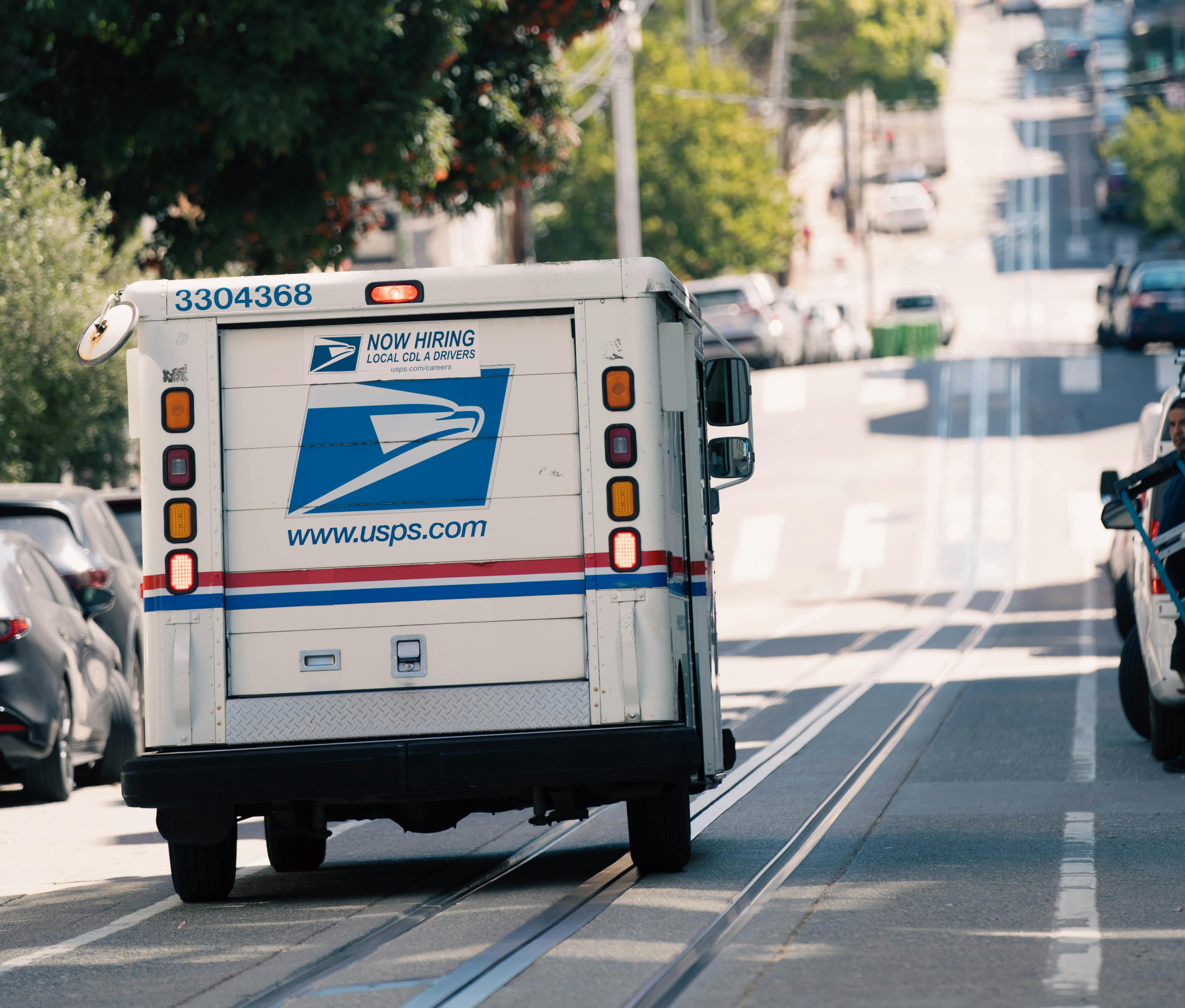
That’s a shame, because with around 533,000 career employees and another 106,000 non-career employees, the Postal Service accounts for about one out of every five of the U.S. government’s three million civilian employees. From post offices to stamp machines, mailboxes, and mail trucks, they represent the most visible connection Americans have with the federal government in their daily lives.
But that connection doesn’t prevent them from squandering the resources of the taxpayers whose interests they are supposed to serve.
In August 2022, when the Biden administration’s Inflation Reduction Act became law, taxpayers provided over $3 billion to government contractor Oshkosh Defense to design and build 35,000 electric battery-powered mail trucks. These supposedly environmentally friendly vehicles were intended to replace the Postal Service’s fleet of gasoline-powered mail trucks.
It has been described as both “unusual” and “ugly.” It’s certainly very different than the very familiar vehicles that have preceded it, as the video below describing its development history makes clear.
Three years later, the U.S. Postal Service is far behind schedule in its ambition to switch over to battery-powered mail trucks. As of November 10, 2025, it is operating a total of 612 electric battery-powered mail trucks.
USPS EV fleet behind schedule with $3B in taxpayer funds spent — and only 612 trucks built https://t.co/0vJI3TJ2DK pic.twitter.com/amrTr3vSO2
— New York Post (@nypost) December 2, 2025
Oshkosh Defense’s production of the Postal Service’s Next Generation Delivery Vehicle (NGDV) has been troubled. According to the New York Post, the company is producing the vehicles at a rate of about 3 to 4 per day. That is far short of the 80 vehicles per day the company projected it would be making by December 2024.
The massive shortfall in actual versus projected deliveries of functional battery-electric mail trucks has prompted several fiscally responsible members of Congress to attempt to claw back funding and halt production of the vehicles, in favor of other vehicles that the Postal Service can acquire and operate in greater numbers.
They have a strong case. If Americans want to rely on receiving regular mail service, having postal carriers in mail trucks that can be built and operated as needed is vital to meet that demand. Despite its years in development and billions of dollars in cost to taxpayers, it doesn’t seem that the Postal Service’s battery-electric NGDV is going to deliver anytime soon.