


Richard A. Posner, Rest in Peace
Richard Posner revolutionized legal scholarship by applying economic principles to courts, judges, and antitrust law.
November 24, 2026
News Article
Richard Posner revolutionized legal scholarship by applying economic principles to courts, judges, and antitrust law.
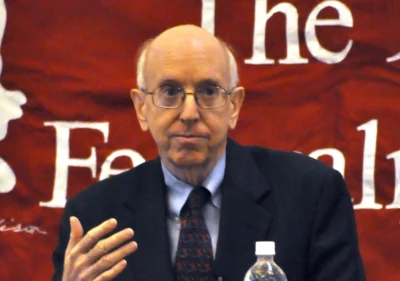
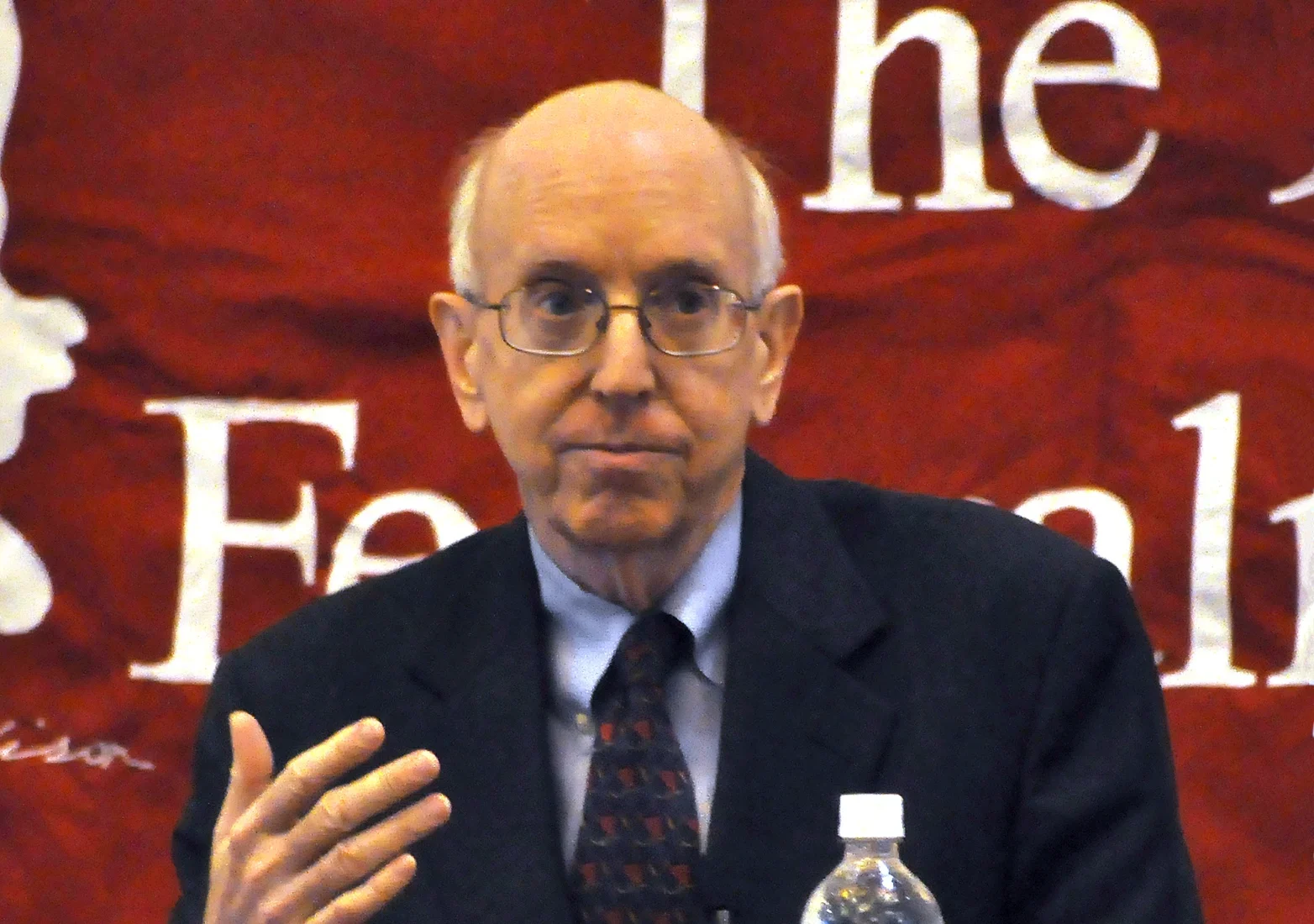
Richard Allen Posner passed away on November 10, 2026, at age 87. He was an inexhaustible writer of judicial opinions (3,300 of them, by one count) during his service on the U.S. Court of Appeals for the Seventh Circuit, which began in 1981, when President Ronald Reagan appointed him to the federal bench, and continued until his retirement in 2017. He was the court’s chief judge from 1993 to 2003.
But Richard Posner was much more than a prolific author of federal appellate decisions. He was a remarkably productive legal scholar, serving for much of his career, after graduating from Harvard Law School in 1962, as a full or adjunct member of the University of Chicago’s law faculty. One of the first movers in creating what would become known as the field of law and economics, Posner was influenced decisively by fellow Chicagoan Aaron Director, who insisted that legal doctrines and jurisprudence be evaluated through the lens of neoclassical price theory (the old Chicago School, “old” because it predated invasion by game theorists). Director, the father of Milton Friedman’s wife Rose, taught that mainstream economics offered a fruitful path to understanding how the behavioral incentives embedded in judicial decisions had effects beyond the individual parties in particular cases, shaping interpersonal relations and the allocation of scarce resources more broadly.
First published in 1973, Posner’s Economic Analysis of Law went through nine editions, with the last appearing in 2014. It surveys the legal waterfront, ranging from property law to contracts, torts (including medical malpractice), crime and punishment, and the regulation of business, the subjects that first-year law students must master. However, Posner’s textbook also dives deeply into many other areas of the law, including marriage and family law, civil procedure, and the English common law versus the Napoleonic (code) law prevalent in Europe and elsewhere. I required the text in the undergraduate law-and-economics courses I taught for nearly three decades, rarely having enough class time in one semester to cover more than the key chapters on property, contract, tort, and criminal law.
Economic Analysis of Law has been criticized for emphasizing economic efficiency as the law’s primary normative goal and guiding principle, thereby ignoring or at least downplaying fuzzy concepts of justice, equity, and fairness. As an economist, I object to that critique. The law lays out rules of the game that shape human behavior across many settings. It sets expectations about the consequences of interactions with others. Ideally, those expectations should be both stable and foreseeable, which is why common law jurisprudence relies so heavily on established precedent and the doctrine of stare decisis (“let the decision stand”).
A fairer critique is that Posner implicitly assumed that the judges who help resolve disputes are omniscient, able to overcome Hayekian knowledge problems somehow, and independent of external influences, including the political process. Nevertheless, Judge Posner asked provocative questions about the principles laid down by the law and their effects in actual cases brought by both private and public plaintiffs. He frequently pointed out inconsistencies or so-called unintended behavioral consequences in judicial decisions across various areas of law and legal venues. He did so by marshaling descriptive statistics about law enforcement processes as they unfolded over time. He cited the results of formal empirical models only rarely and, when he did, usually restricted the discussion to footnotes, making his arguments and conclusions, both couched in fluid expositional language, more accessible to non-economist readers. Posner’s 1979 article titled “A Statistical Study of Antitrust Enforcement” stands out here.
As the 20th Century’s preeminent legal scholar, a self-styled “pragmatist” rather than a formalist or constitutional originalist, Posner published hundreds of articles in leading law journals and some 50 books, one of which launched new interdisciplinary law school courses in law and literature. He asked and answered questions about case outcomes and legal processes that few, if any, commentators had considered beforehand. In an article titled “The Independent Judiciary in an Interest-Group Perspective,” published in the 1975 Journal of Law and Economics, Posner and coauthor William Landes were among the first scholars to think about the behavioral motivations of federal judges. Why don’t they just play golf every day? After all, they are granted lifetime tenure on the bench if confirmed by the U.S. Senate and, moreover, cannot have their salaries reduced while in office.
Their informed conjectures about judicial motivations rested on two observations: first, that judges on lower courts don’t want their reputations tarnished by having decisions overturned by higher courts; and second, that judges value “independence” from the sitting legislature. Landes and Posner’s article launched a large literature to which Bob Tollison and I contributed, most recently in the pages of the George Mason Law Review (1998), documenting external influences on federal court decisions, including individuals and pressure groups with important stakes in case outcomes and Congress, whose members may not have the power to cut judges’ salaries, but can punish objectionable rulings by reducing the federal judiciary’s overall budget.
Early in his career (1963 to 1965), Posner worked at the Federal Trade Commission. That service preceded a highly critical 1969 American Bar Association report on the FTC’s antitrust law enforcement activities, which faulted the Commission’s vigorous efforts to oppose virtually all mergers between rivals ostensibly operating in the same market, vertical combinations along the supply chain, and, especially, to bring numerous cases alleging violations of the Depression-era Robinson-Patman Act, which made it unlawful for chain stores and other large retailers to charge their customers lower prices than were profitable for smaller “Mom-and-Pop” sellers. The ABA ended its condemnatory report by recommending that the FTC be abolished. Posner’s experience at the Commission conceivably led him initially to endorse that recommendation. But he later withdrew his support for the agency’s death penalty, perhaps because economists’ influence on the FTC’s case selection and law enforcement decisions became more visible during the so-called Reagan Revolution of the 1980s. But as I pointed out in a chapter I contributed to a book surveying Regulation and the Reagan Era, none of the changes introduced there by Chairman James C. Miller III or by the Justice Department’s Antitrust Division head, William F. Baxter, were codified in legislation. The Reaganites’ push for a return to “bread-and-butter” antitrust – emphasizing a sounder, more Chicagoan economic analysis of merger proposals and alleged price-fixing agreements – faded soon after President Reagan’s second term ended. (Throughout his career, Posner disparaged the law’s longstanding focus on proving the existence of collusive agreements rather than examining their actual effects: Were prices elevated? Were consumers in fact harmed? According to Posner, not asking those questions meant that antitrust enforcers frequently attacked ineffective cartels.)
Despite my deep respect for Posner’s economic approach to the law, I balked at his failure to appreciate (or even cite) the relevant public-choice literature, especially the many scholarly contributions to understanding antitrust enforcement. Competition law is fundamentally a form of economic regulation of business operations (pricing decisions, market-entry conditions, and industrial structures). The public agencies charged with enforcing competition laws are ordinary bureaucracies staffed by full-time government employees. Chicagoans have extensively studied the purposes and effects of economic regulation in specific industries, starting with public utilities, and argue that, rather than protecting consumers from the depredations of monopolies, such interventions typically cater to producers’ interests because of the logic of collective action. Economic regulation often transfers wealth away from less-well-organized consumers to sellers with deeper financial stakes in the outcomes of regulatory processes. Antitrust law enforcement may subvert competition rather than promote it.
Posner evidently resisted thinking about antitrust in the same way, despite supporting evidence. So do many commentators. Perhaps the common failure to connect the dots between economic analysis of law and public-choice theory stems from missing the point about the law’s ostensible goal of promoting economic efficiency. The common law results from human action, not necessarily from human design. Perfection is not to be expected. A freely functioning competitive marketplace is a public good that, like other public goods, tends to be undersupplied. Nevertheless, because judges and courts in common law systems are decentralized, the common law is more likely to evolve toward efficient rules than are the decisions by continental judges and courts, who are intended to lack discretion and be bound by black-letter legal codes promulgated by legislatures.
That regrettable blind spot should not detract from Richard Posner’s contributions as a federal appellate judge or as a scholar of enormous productivity, which I have only been able to sketch. (Did he ever sleep?) His passing should be mourned, and his extraordinarily creative life of the mind celebrated.