Flock, ALPRs and the Problem of Police Misuse
Cases involving officers who allegedly used Flock and other ALPR systems to track former partners suggest that surveillance powers require more than internal policies to prevent misuse.
October 27, 2026

Garrett Langley, co-founder & CEO, Flock
News Article
Cases involving officers who allegedly used Flock and other ALPR systems to track former partners suggest that surveillance powers require more than internal policies to prevent misuse.
In September 2026, four active Indianapolis police officers and one former officer—Michael Rogers, Jonathan Schultz, Cassandra Crawley, Matthew Binford, and Abigail Cramer—were charged with abusing the Indianapolis Metropolitan Police Department (IMPD) Flock camera system. According to The Washington Post, Jonathan Schultz, an 18-year veteran of the IMPD, was accused of using Flock to track his ex-wife and women he met while on duty; he was charged with multiple counts of misconduct and two counts of stalking. According to CNN Newsource, another officer was accused of using the Flock system “more than 950 times in a six-month period” to track his ex-wife’s movements. One officer, Abigail Cramer, resigned, and the other four involved have been suspended. Still, Police Chief Tanya Terry said IMPD has no plans to reduce the number of Flock cameras it leases.
Indianapolis is not an isolated incident; police around the country have used Flock, a system marketed with the slogan “Better Tools for Safer Communities,” to track women in their personal lives. The Washington Post reported in August 2026 that at least 50 law enforcement officers around the country had been accused or charged with misusing Flock and other automated license plate reader (ALPR) systems. In 26 of these cases, officers used ALPR technology to spy on “their wives, their girlfriends, their exes, their exes’ new partners or women they wanted to meet.” The Post found officers did this to women without their knowledge or consent. The risk falls unevenly. Men made up 85.6% of the country’s roughly 864,000 police officers in 2024, according to Data USA, so most of the people with access to this surveillance are men, and many of those tracked were women.
ALPR systems give officers enormous power; a stalker needs to physically follow someone, but an officer can potentially locate that person’s movements simply by entering a license plate number. In August 2026, CNN reported that a Kentucky police officer was accused of using Flock over 2,000 times to track his ex-girlfriend, the mother of his child, over a five-month period. The officer, Asad Zahir, listed the reason for the searches as a narcotics investigation, even though his former partner was not the subject of any drug probe. Zahir was caught by a newly implemented audit tool, but only after more than 2,000 searches over about five months.
Officer Jarmarus Brown of Orange City, Florida, allegedly used ALPRs 69 times over 7 months to follow his ex-girlfriend’s movements. Brown is also accused of tracking the ex-girlfriend’s mother 24 times and her brother 15 times. The woman told detectives he sat outside her workplace and placed a GPS tag in her wallet without her knowledge. Brown told investigators it was a case of “emotions flowing, mind going.” Emotion cannot be allowed to override reason when Flock cameras are this powerful. Since no one can know in advance which officers will cross that line, the technology cannot rely on self-control alone.
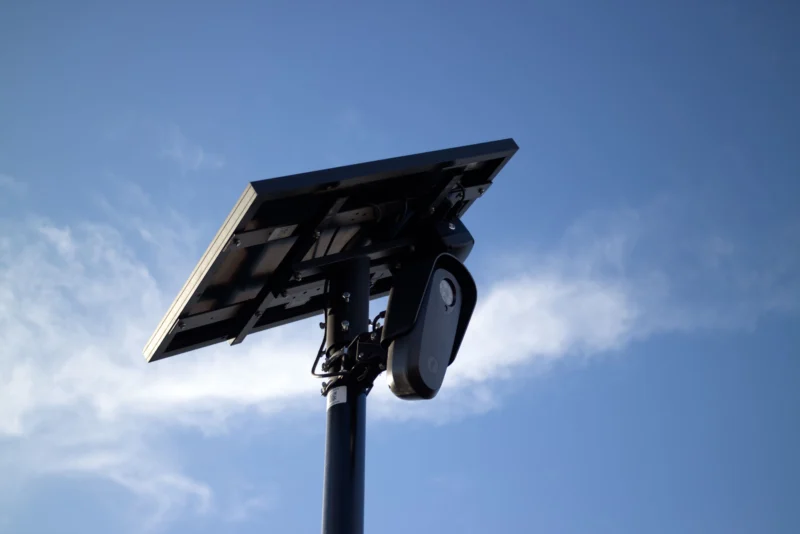
About 140,000 ALPRs are currently installed around the country, according to Axios. Flock itself operates more than 120,000 of these cameras and records about 20 billion plate scans every month. Flock CEO Garrett Langley has said over a million cases were solved last year with this technology, and that abuse is incredibly low by comparison. But the company’s own methodology describes a broader count of about a million investigations and incidents of all kinds, not a million solved crimes.
Either way, the same technology that can find a stolen car has now been used more than once to follow private citizens going about their daily lives. Around the country, people have started vandalizing Flock cameras, and according to Secure Justice’s Flock termination tracker, 462 agencies and institutions have “terminated, suspended, or declined to renew” their contracts. This country finds itself in a position where technology designed to protect the public has, in some cases, been used to monitor and pursue private citizens, often women.
“Better tools for safer communities” is a promise that deserves to be tested against the question of who is actually safer in the United States. These cases may be relatively rare, but that is not the point. Many of the women in these cases were tracked without their knowledge. The people these women would ordinarily turn to for help were the very ones stalking them. For a woman trying to get away from someone, it is not only a privacy problem. It is a safety problem. Police officers cannot let emotion override reason, and safety should not come without safeguards.
At a minimum, that means audits that flag misuse in real time, judicial authorization before law enforcement can conduct historic location tracking, and notice to individuals whose data is searched outside an active investigation. Women are the targets in many of these cases, but a system built this way exposes everyone who drives. As Flock expands, the danger will not stop with former partners. These cases show officers searching for women they met in public, the relatives of their exes, and a spouse’s ex-wife. These cases suggest that without stronger safeguards, anyone who becomes the subject of an officer’s personal interest or grievance could be vulnerable to being tracked.