Repeal Gun-Free Zone Laws
Good Samaritan Kaylub Giamanco broke the law to save lives at Silver Rail Elementary.
October 28, 2026

News Article
Good Samaritan Kaylub Giamanco broke the law to save lives at Silver Rail Elementary.
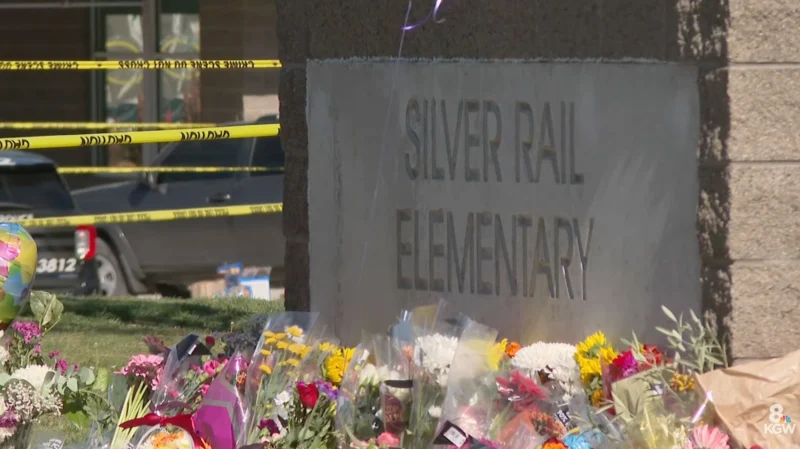
Within hours of the tragic shooting at Silver Rail Elementary School in Bend, Oregon on October 15th, the familiar political script was dusted off. Gun control organizations were immediately mobilized to demand fresh restrictions on firearm access, expanded waiting periods, and outright bans. Yet no policy proposed by gun control advocates would have changed the outcome, save for the one that left every student and teacher on campus defenseless.
The perpetrator, a sixteen year old former student at Silver Rail, entered the school armed with a Maverick 88 pump-action 12 gauge shotgun, a gift from his mother. He bypassed Oregon’s battery of strict gun control measures, including universal background checks, red-flag laws, and safe-storage mandates, before shooting through the school’s locked glass doors. The killer murdered three children ages five, eight, and eleven, and one teacher.
The killing spree was not stopped by a statutory ban or a response from law enforcement. It was stopped by Kaylub Giamanco, a 36-year-old carpenter and father of two daughters enrolled at Silver Rail. Driving nearby during his lunch break, Giamanco saw the gunman fire at a truck and head toward the school. He then retrieved his licensed .40 Smith & Wesson pistol from his vehicle, entered the school, and fatally shot the attacker while a brave teacher struggled with the gunman, preventing him from utilizing the 44 additional shotgun shells in his possession.
Here lies the policy paradox: under Oregon state law (Senate Bill 554) and district rules, Silver Rail is a designated “gun-free zone.” By carrying a firearm onto school grounds in order to stop an active shooter, Giamanco technically broke the law. Had he complied with the state’s mandate to ensure schools are soft targets for killers, he would have been forced to wait helplessly outside as more students were targeted.
From a constitutional perspective, state-mandated gun-free zones operate on a fundamentally flawed incentive structure and create an acute moral hazard. The state promises security in exchange for total civilian disarmament, yet it cannot guarantee (and rarely provides) a police presence at the precise moment violence occurs. Simultaneously, gun-free zones alter the risk-reward calculus for violent actors by signaling a resistance-free environment. Data from the Crime Prevention Research Center reveals that over 90% of mass shootings in the United States occur in locations where law-abiding citizens are legally barred from carrying firearms. By disarming compliant citizens, gun-free zones lower the barrier to entry for violent criminals who, by definition, ignore statutory bans. The state effectively subsidizes the attacker’s tactical advantage while imposing a devastating cost on the innocent.
On the topic of gun-free zones, something you often hear from gun rights activists is “I’d rather be judged by twelve than carried by six.” Giamanco’s intervention was not vigilante disorder, but a textbook execution of emergency defence of the innocent. Yet under current legal frameworks, law-abiding citizens who take up arms to protect children in restricted zones face potential criminal liability for choosing life and duty over compliance.
Rather than exploiting tragedies to attempt to pile on new regulations onto compliant gun owners, policymakers must dismantle the artificial barriers that leave public spaces defenseless. Repealing gun-free school zone laws and enacting statutory immunity for civilians who intervene during active threats aligns policy with reality. In Bend, Oregon, cops drive the Ford Police Interceptor, the law enforcement version of the Explorer. Its twin-turbocharged engine can reach speeds upwards of 140mph. However, a .40 S&W pistol can push a hollow point upwards of 1,200 feet per second. If it were my children at Silver Rail, I know which one I would trust to keep them safe.