Latin America’s Rightward Surge Reaches A Crossroads in Brazil
Bolsonaro’s win would mark one of the most astonishing political resurrections in the modern history of Latin America’s largest nation and economy.
October 23, 2026
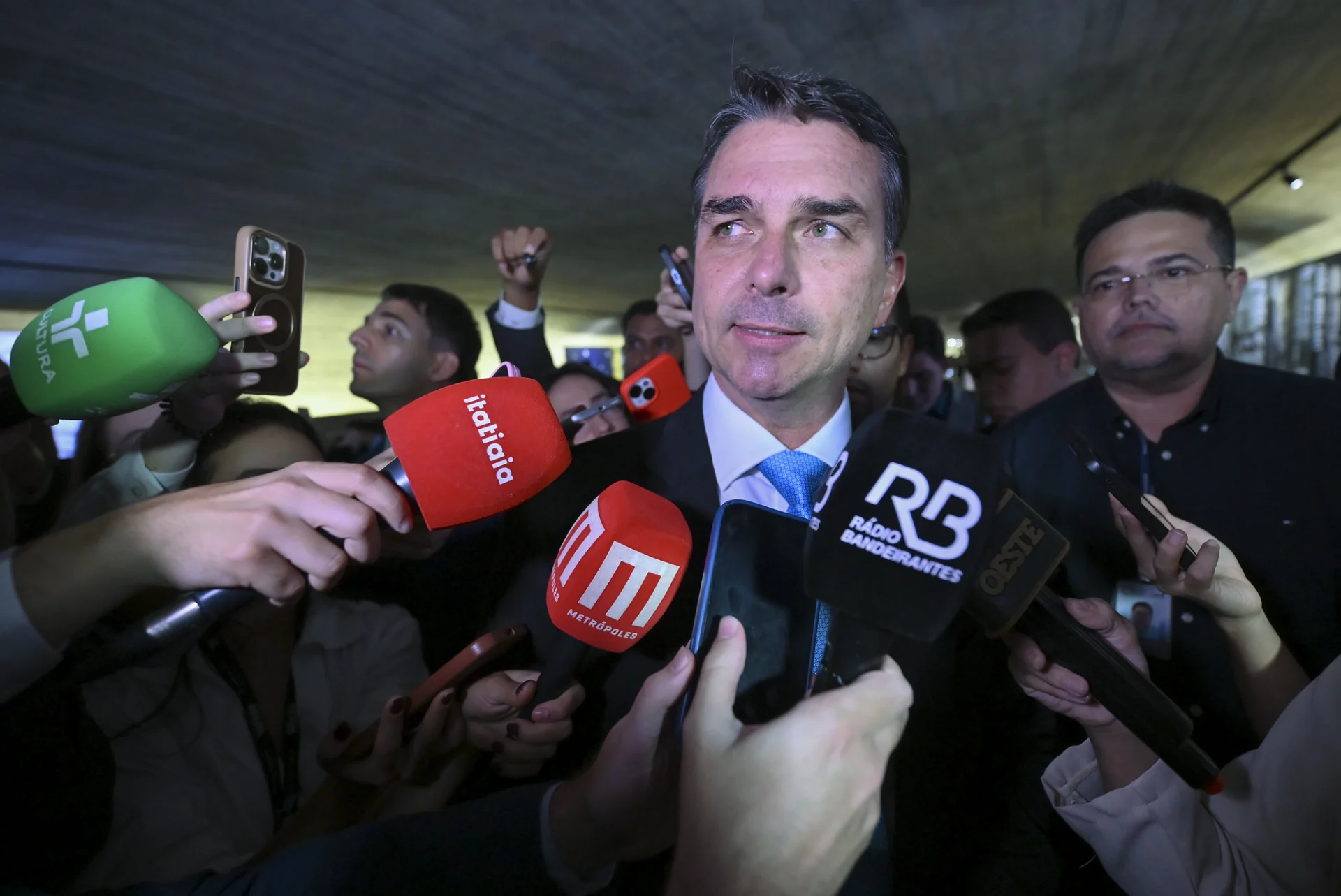
Flávio Bolsonaro
News Article
Bolsonaro’s win would mark one of the most astonishing political resurrections in the modern history of Latin America’s largest nation and economy.
The political pendulum in Latin America and the Caribbean continues to swing decisively. Across the region, the right or center-right parties—occasionally deploying MAGA-style campaign strategies—have won the last seven presidential elections. The recent first round of Brazil’s presidential race was no exception: the right triumphed by two points, capturing 47 percent of the vote against the left’s 45 percent—a gap of 2.2 million votes.
Now positioned as the frontrunner for the October 25 runoff is 45-year-old Senator Flávio Bolsonaro, the son of former president Jair Bolsonaro, who is currently serving a 27-year prison sentence for an alleged coup attempt aimed at retaining power after his previous election loss. The younger Bolsonaro is challenging sitting President Lula da Silva, an almost 81-year-old titan of the left. In the initial round, Flávio Bolsonaro dominated the south, southeast, and midwest regions. Meanwhile, Lula secured the northeast—his traditional stronghold—though he did so with fewer votes than he received in 2022.
The Bolsonarista surge extends deep into the legislative branch. Bolsonaro’s party expanded its footprint by 23 members in the lower house, while expanding its presence in the upper house from a mere 9 senators to 28. Although this does not constitute an outright majority, alliances with various right-wing and center-right factions—most notably the União Progressista federation—will bring him close to control. For the remainder, he will rely on the other groups that make up the Centrão, a bloc of opportunistic centrist parties.
Meanwhile, nearly 8 percent of the valid votes were distributed among alternative candidates whose constituencies naturally lean toward Bolsonaro. An even more decisive battle ground exists beyond this 8 percent: the abstainers. About 21 percent of the electorate—roughly 33 million voters—skipped the first round. Lula is openly courting them, hinting at appointing a right-wing finance minister, such as Geraldo Alckmin.
Compounding the challenge for the incumbent is a palpable sense of “Lula fatigue,” given that this would be his fourth presidential term. Several controversies have eroded his standing among millions of citizens. One is the blatant collusion between the executive branch and key figures on the Supreme Court. This is epitomized by the once all-powerful magistrate Alexandre de Moraes—an enemy of the Bolsonaro family who orchestrated the former president’s imprisonment (now being served under house arrest), who issued an arrest warrant against another one of his sons soon after the first election round, who has persecuted politicians, business people, and journalists, and who has limited free speech. (He famously blocked the social network X.)
De Moraes symbolizes the erosion of republican institutions that’s been a feature of Latin America’s populist left (with exceptions such as Chile and Uruguay, two more institutionalized countries, in recent decades). Furthermore, Lula has been politically compromised by explosive revelations linking Supreme Court justices to the former owner of a collapsed bank.
Brazil faces major economic challenges. Unemployment is low, but public spending—a systemic vice of Brazil’s bloated government—has driven the public deficit to 10 percent. This fiscal strain has forced interest rates to painful heights, penalizing the 82percent of Brazilian families saddled with debt.
The news of Bolsonaro’s first-round victory triggered a rally among investors, who propelled both the primary stock-exchange index and the national currency upward. Wall Street and local markets view Bolsonaro as far more likely than Lula to implement fiscal austerity. Economists heavily warn that Brazil’s public debt, which hovers at over 80 percent of GDP, has reached unsustainable territory. However, curbing spending in Brazil is notoriously difficult due to its federal system. To make matters worse, over 90 percent of public spending is legally mandated; altering fiscal policy would require rewriting the law. Should the incoming president fail to enact changes, the debt crisis will worsen.
Flávio Bolsonaro has already announced ambitious plans for constitutional reform, aiming to limit presidents to one term, lower the age of criminal responsibility, and restructure the Supreme Court. Bolsonaro’s win would mark one of the most astonishing political resurrections in the modern history of Latin America’s largest nation and economy.
It would send a clear signal: after years of leftist governance, and when organized crime has eclipsed economics as the people’s primary source of anxiety, Latin America is ready to pivot toward the uncompromising right.