Make America Healthy Again Meets Public Choice
The political incentives behind health policy help explain why reform is easier to promise than to achieve.
November 5, 2026
News Article
The political incentives behind health policy help explain why reform is easier to promise than to achieve.
Robert F. Kennedy Jr. built the Make America Healthy Again movement on a simple but alarming story. Big Food, Big Pharma, and the medical establishment long ago “captured” the agencies meant to protect us—and it made America sick. After taking charge of the Department of Health and Human Services, Kennedy vowed to purge these conflicts of interest and rebuild trust in public health through “radical transparency.”
But a recent POLITICO article tells a very different story.
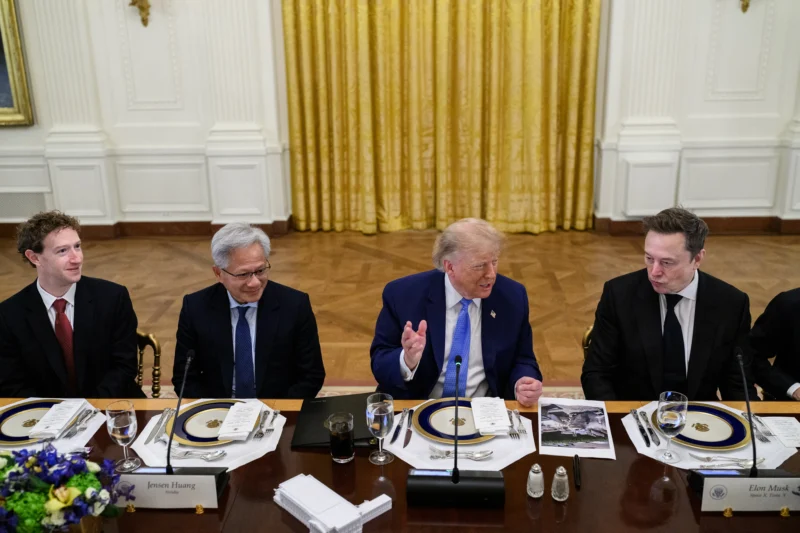
Last month’s MAHA Summit in Washington was brought to you by a long list of the usual suspects, including Walmart (one of the country’s biggest sellers of the ultra-processed foods MAHA decries) and health insurance giants UnitedHealth and Elevance.
The event also had some newcomers. OpenAI and Anthropic, whose chief executives have asked Washington to regulate their industry, signed on. So did several makers of psychedelic drugs preparing to seek FDA approval. Peptide sellers, recently praised by the HHS Secretary, paid between $20,000 and $100,000 each. All sponsors got a private dinner with summit speakers, including the heads of the FDA, NIH, and CMS.
These relationships are making headlines now, but RFK’s political dealings long predate his current appointment.
Kennedy’s 2024 presidential campaign was kept afloat by a handful of very wealthy donors and a few well-connected allies. One, Calley Means, helped broker Kennedy’s alliance with Trump and became a senior adviser before resigning last week. Means also founded TrueMed, which helps consumers spend health savings accounts on wellness products, and held a stake reportedly worth $25 to $50 million while MAHA-aligned policy expanded what those accounts could buy. Another, Tony Lyons, co-founded the super PAC behind Kennedy’s campaign and now runs MAHA’s summit.
Kennedy himself told senators he would hand his share of fees from Gardasil vaccine lawsuits to his son. Instead, he assigned them directly to Wisner Baum, the law firm where his son works. His office maintains he has complied with his ethics agreement. Still, the anti-establishment candidate has always had an establishment of his own.
Swift movement of special interests to influence the MAHA movement is a bitter pill to swallow for RFK’s supporters and those hoping for genuine reform. But it comes as no surprise to those familiar with public choice.
Public choice is, in short, economics applied to politics. It starts from the idea that voters, politicians, bureaucrats, and interest groups respond to incentives the same way people in markets do. In both settings, people make exchanges—but they aren’t the same exchanges.
In markets, people trade money for goods and services. In politics, they trade votes, campaign support, and access for favorable policy. When those exchanges win special privileges rather than create value, economists call it rent-seeking. The deal-makers benefit. The rest of us live with the consequences.
The more government controls an industry, the more valuable political favor becomes—and the more firms will spend to get it. Few industries are as regulated as health care. Few should expect to attract as much rent-seeking.
And RFK has not meaningfully deregulated the industries he oversees. The FDA still decides which drugs reach the market. CMS still decides what gets reimbursed. The reward for influencing those decisions hasn’t changed. What changed is who hands them out—and who is lining up to influence the new boss.
Peptides offer a clear example. Kennedy has called himself a “big fan” and pledged to make more of them available. In April, the FDA removed 12 peptides from its list of substances barred from compounding.
As I’ve written before, that’s a welcome change. But notice how it happened. The FDA didn’t give up its authority over which compounds pharmacies can make. It simply used its discretion differently under leadership that favored the outcome. And what one administration grants, the next can take away. As long as the FDA holds that power, staying in its leaders’ good graces remains a valuable investment.
So it’s no wonder peptide companies showed up as MAHA Summit sponsors. “This is a big business differentiator if you’re aligned with RFK [Jr.] and this group of people,” one told POLITICO. None of this requires anyone to be corrupt. It only requires them to respond to incentives.
Above all, RFK’s connections remind supporters and detractors alike that political exchanges have political outcomes. To change this, we have to change the political part—by shrinking the discretion that agencies like the FDA hold over what patients can access. Until then, we can’t expect different outcomes.