What Newsom Now Says He Got Wrong About COVID
The governor’s reflections raise unresolved questions about transparency, mandates, and state authority.
September 23, 2026

News Article
The governor’s reflections raise unresolved questions about transparency, mandates, and state authority.
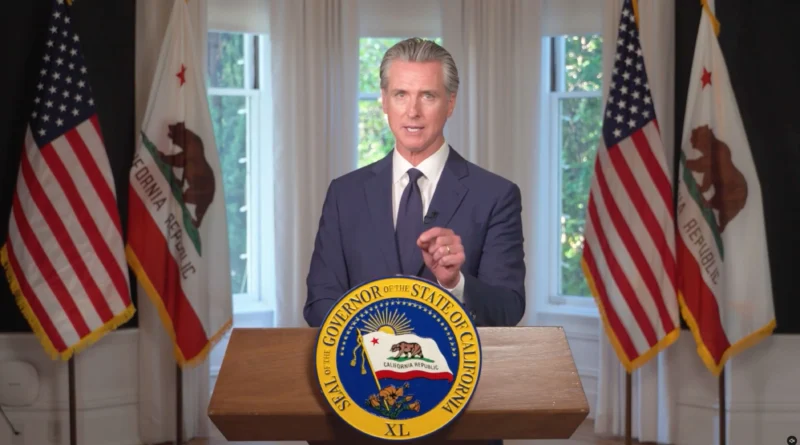
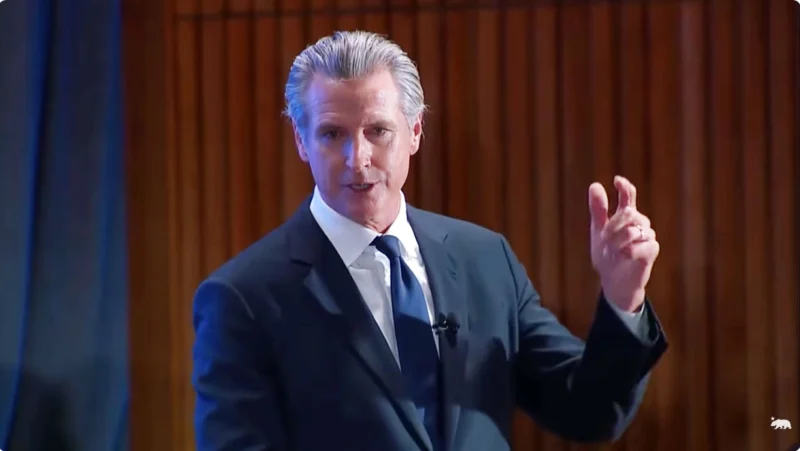
As his second term winds down, California Gov. Gavin Newsom has gone public with regrets about his performance during the COVID pandemic. For example, as he told Jake Tapper of CNN, “the idea that we closed beaches was insane in hindsight.” The governor is on to something, but closing the beaches was not just an “idea.”
Gov. Newsom declared a state of emergency on March 4, 2020, and issued a stay-at-home order on March 19. By the end of the month, the governor had shut down Malibu Beach, the Santa Monica Pier, and all beach bathrooms and bike paths. Also shut down were all beach parking lots and parks, including nine in Los Angeles County alone. In early April at Malibu, police arrested a solitary paddleboarder for refusing to come out of the water. School closings were also a problem.
“Obviously, the schools are taking too long,” Gov. Newsom told Tapper. “A lot of districts were open, but the big ones weren’t. LA refused, and I regret that.” His maskless party with lobbyists at the upscale French Laundry was “just boneheaded decision. Just stupid decision.” That helped to promote a recall, which “I almost lost. You know, talk about humility. Come on.” Each of those regrets could stand more detail, and the outgoing governor, with ties to the Brown, Pelosi and Getty families, left out a few items the people might recall.
In April, 2020, Gov. Newsom restricted sport fishing on a county-by-county basis. That month, the governor announced a $1 billion deal for masks with the Chinese company Build Your Dreams (BYD), which at the time did not manufacture protective equipment. The governor kept details of the deal secret, even from fellow Democrats, and the masks were part of the draconian guidelines for gatherings, which included:
- Gatherings that include more than 3 households are prohibited. This includes everyone present, including hosts and guests.
- The host should collect names of all attendees and contact information in case contact tracing is needed later.
- Seating must provide at least 6 feet of distance (in all directions—front-to-back and side-to-side) between different households.
- Everyone at a gathering should frequently wash their hands with soap and water, or use hand sanitizer if soap and water are not available. A place to wash hands or hand sanitizer must be available for participants to use.
- When gathering, face coverings must be worn in accordance with the CDPH Guidance on the Use of Face Coverings, unless an exemption is applicable. People at gatherings may remove their face coverings briefly to eat or drink as long as they stay at least 6 feet away from everyone outside their own household, and put their face covering back on as soon as they are done with the activity.
- All people who are singing or chanting should wear a face covering at all times while singing or chanting, including anyone who is leading a song or chant.
- Musicians must be from one of the three households. Playing of wind instruments (any instrument played by the mouth, such as a trumpet or clarinet) is strongly discouraged.
And so on, personally reinforced by Gov. Newsom. “Going out to eat with members of your household this weekend?” the governor tweeted in early October 2020. “Don’t forget to keep your mask on in between bites. Do your part to keep those around you healthy.” The following month, the governor partied sans mask with lobbyists at the upscale French Laundry in Napa.
The governor now calls this “stupid” and “boneheaded,” but Californians told to pull up their mask between bites might think “wrong” would be more appropriate. The governor’s pandemic regime launched an effort to recall him, but the people have cause to question the claim that he “almost lost” the recall election.
On Sept. 14, 2021, Newsom prevailed with 61.9 percent of the vote, identical to his 61.9 percent margin of victory for governor in 2018. Math professors and Las Vegas insiders were not calculating the odds of such a miraculous outcome, or wondering about the possibility of voter fraud. On the other hand, Gov. Newsom had it all figured out. As he told supporters in Sacramento:
I want to focus on what we said yes to as a state. We said yes to science. We said yes to vaccines. We said yes to ending this pandemic. We said yes to all those things that we hold dear as Californians, and I would argue as Americans. Economic justice, social justice, racial justice, environmental justice are the values where California has made so much progress—all of those things were on the ballot this evening.
So, according to Gov. Newsom, the same draconian COVID regime that launched the recall served up his victory, a repeat of 2018 right down to the decimal point. Californians might compare the 2003 recall for Gov. Gray Davis, whose administration was known for electrical blackouts. Davis lost to upstart Arnold Schwarzenegger by a margin of 55.4 percent to 44.6 percent. Also in play are actions Gov. Newsom declined to take.
In 2019, the legislature passed Assembly Bill Five, an assault on independent workers, from truckers and drivers to freelance writers, editors and videographers. When a group of freelancers perceived a threat to their rights and livelihood, the Independent Institute filed an amicus brief in their case.
During COVID, the Independent Institute enlisted 151 distinguished economists and scholars to request the suspension of AB-5 to make up for the shortage of medical workers. Gov. Newsom declined to deploy his emergency powers to suspend the measure. This inaction failed to surface in the list of regrets, which passed over another workplace-related measure.
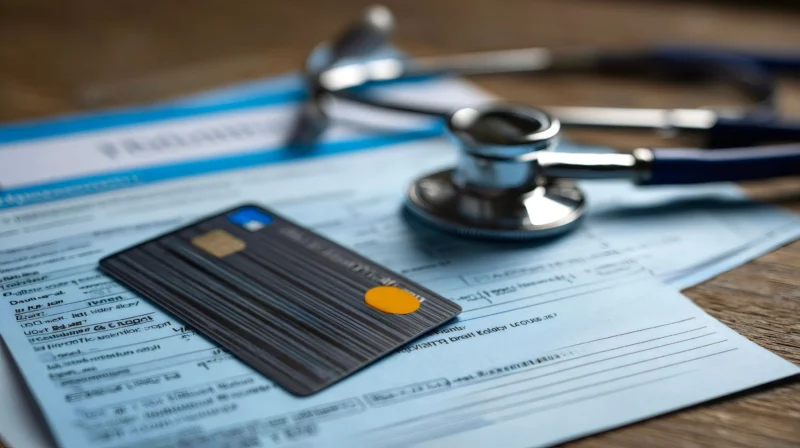
California businesses were closed with no warning or compensation, a loss for owners and workers alike. In these conditions, California paid out $110 billion in pandemic unemployment benefits, with more than $30 billion going to convicts and fraudsters.
Fontrell Antonio Baines of Memphis, Tennessee, obtained debit cards pre-loaded with unemployment benefits administered by the California Employment Development Department, issued in the names of third parties and victims of identity theft. Baines, better known as “Nuke Bizzle,” posted a video titled “EDD,” bragging about “my swagger for EDD,” as a second rapper says, “You gotta sell cocaine. I just file a claim.”
This fathomless fraud, by some estimates the worst in U.S. history, took place on the watch of Julie Su, head of California’s Labor and Workforce Development Agency (LWDA). Julie Su was also a strong supporter of AB-5, and when Joe Biden tapped Su for deputy labor secretary, Gov. Newsom said in a statement:
On behalf of all Californians, Jen and I want to thank Julie Su for her service to this state and congratulate her on her confirmation to serve as our nation’s Deputy Secretary of Labor.
Julie joined my Administration in the very beginning with a shared vision to create a California For All. She represents the best California has to offer —a champion for our state’s workers who tirelessly fights for equity, inclusiveness and social justice.
Julie has been fighting for workers’ rights from California for nearly three decades. And now, as Deputy Secretary of Labor, she will help our country build a more inclusive economy that works for all Americans as we recover from a once-in-a-lifetime pandemic.
Gov. Newsom’s regrets included no second thoughts about the performance of Julie Su, who went on to serve as “acting” labor secretary, without confirmation by the U.S. Senate.
By his own account, through 71 executive orders, Gov. Newsom issued 561 proclamations related to COVID. In 2022, he cut back on many orders but maintained the state of emergency until February 28, 2023, nearly three years from his March 4, 2020, declaration.
In February 2023, the governor’s office claimed that the state’s Covid death rate was “among the lowest in the nation” and better than Texas and Florida. California’s unemployment rate “fell nearly twice as fast as other large population states,” and “California is on track to become the 4th largest economy in the world.” On average, California students experienced “less learning loss than the rest of the nation,” and so on. Nothing about regrets for closing schools, the “insane” beach closings, the “boneheaded” and “stupid” decision to go maskless at the French Laundry, or almost losing the recall.
The federal government’s COVID response was headed by Dr. Anthony Fauci, a government bureaucrat since 1968, director of the National Institute of Allergy and Infectious Diseases (NIAID) since 1984, and an MD who claimed to represent science. In 2024, Dr. Anthony Fauci admitted that the COVID protocols were not based on science and the six-foot distancing requirement “just sort of appeared.”
Before leaving the White House, Joe Biden issued a presidential pardon for Dr. Fauci. The pardon and Dr. Fauci’s admissions on the COVID rules failed to elicit a public pronouncement from Gov. Newsom.
In September 2025, the governor launched the West Coast Health Alliance, “a unified regional response to the Trump Administration’s destruction of the U.S. CDC’s credibility and scientific integrity.” In effect, the alliance was a new “Centers for Disease Control,” with little, if any, acknowledgment of what had gone wrong, and no regrets about anything in his own record.
As people should know, the CDC had its own equivalent of Fauci in Dr. Anne Schuchat, a veteran of the CDC’s Epidemic Intelligence Service who twice served as “acting” CDC director, without Senate confirmation. It was Dr. Schuchat and other EIS veterans who first announced the arrival of COVID in the USA and the restrictions people would have to endure.
For Gov. Newsom, more bureaucracy is the answer, not the problem. At best, the governor’s regrets are incomplete, evasive and self-serving. Californians also have the benefit of hindsight. As they now understand, the struggle against white coat supremacy is the struggle of memory against forgetting.