What The Odyssey Teaches About Restraining Power
Free societies need their institutions
August 7, 2026
News Article
Free societies need their institutions
Despite all the controversy surrounding Christopher Nolan’s The Odyssey, the movie preserves one of the oldest and most enduring lessons of the Western political tradition: free societies survive only when power is constrained by constitutional rules, checks and balances, and the separation of powers.
In a film that runs nearly three hours, perhaps its most important political lesson is delivered in just a few minutes.
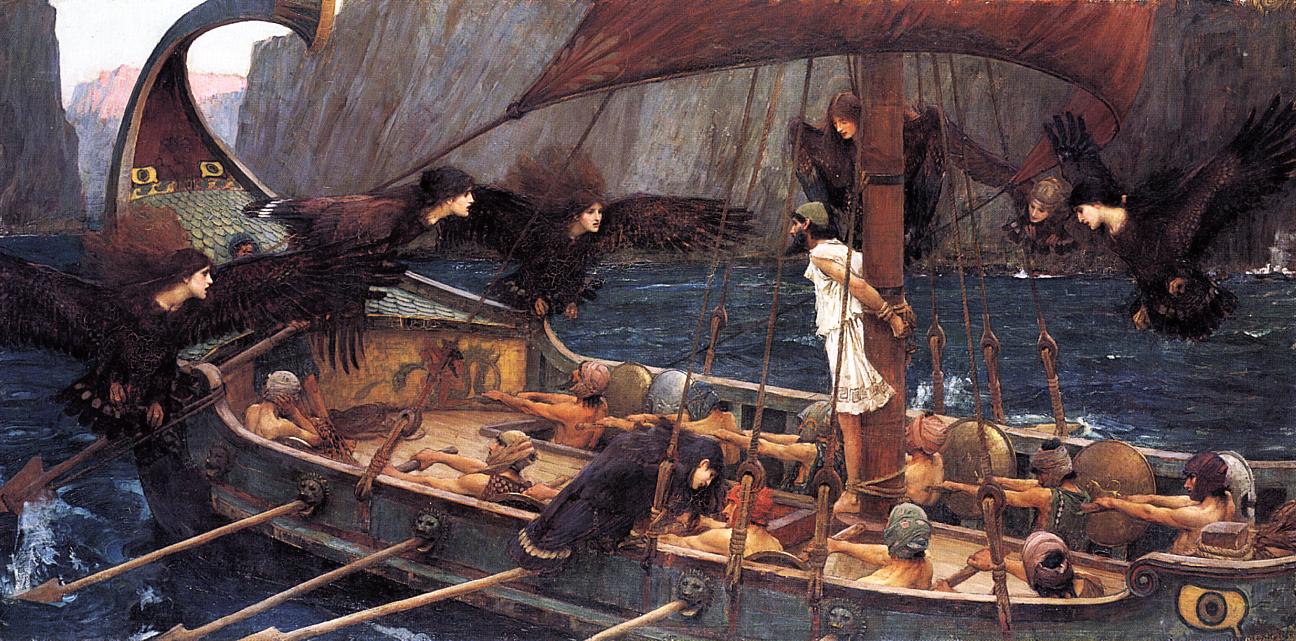
Before sailing past the island of the Sirens, Odysseus learns that their irresistible song is not a gift of wisdom but a deadly trap. Sailors who succumb to its enchanting melody steer their ships toward the rocks, where they meet their destruction.
Odysseus wants to hear the legendary song without falling victim to it. To accomplish this seemingly impossible task, he devises what economists recognize as an ingenious plan. He orders his crew to plug their ears with beeswax so they cannot hear the Sirens’ voices. He then commands them to tie him securely to the ship’s mast and not to release him under any circumstances until the danger has passed.
As the ship approaches the island, the Sirens begin to sing. Their promise of knowledge and glory overwhelms Odysseus. He struggles against the ropes, shouts at his crew, and desperately orders them to untie him. Yet the sailors obey his earlier instructions rather than his frantic commands. Instead of releasing him, they keep paddling until the ship safely sails beyond the Sirens’ reach.
The genius of the episode lies not in Odysseus’ willpower, but in his recognition that willpower alone is not enough. Before passing the island, he knows that his future self, seduced by temptation, cannot be trusted. His solution is to bind himself in advance and delegate authority to others who are unable—and unwilling—to yield to his wavering impulses.
Political scientists have long recognized this scene as a powerful metaphor for constitutional government. The ropes symbolize constitutional constraints, imposed in advance, that limit the discretion of those in power, who are inevitably seduced into misusing it. The sailors represent the separation of powers. They possess the authority to enforce the rules agreed upon in advance, even against the current wishes of those in power. Even more important, they cannot hear the Sirens themselves. Since they are insulated from the temptation, they are not tempted themselves to break the rules. Only under this ingenious arrangement does the ship survive and continue its journey.
Notice how fragile the arrangement would have been if either safeguard had been absent. Had the sailors heard the Sirens’ song, they might have shared Odysseus’ temptation and released him. Had Odysseus carried a knife to cut the ropes himself, the commitment would have been meaningless. The arrangement worked because the constraints were credible and could not be undone in the heat of the moment.
The ancient wisdom of The Odyssey is that good government is not built on finding exceptionally wise or virtuous leaders. It is built on designing institutions that anticipate and successfully constrain human weakness.
Yet much of the West appears to be forgetting this lesson. From Washington to Brussels, executives increasingly bypass legislatures, stretch emergency powers, govern through executive orders, and test the limits of judicial authority. Whether the issue is war, trade, or elections, the temptation is the same: loosen the ropes whenever constitutional constraints become politically inconvenient.
The lesson of The Odyssey is that free societies do not depend on enlightened rulers. They depend on institutions robust enough to restrain rulers when enlightenment gives way to temptation.
More than 2,700 years after Homer told the story, the Sirens are still singing. The question is whether the West still remembers why Odysseus tied himself to the mast—or whether it will untie itself in pursuit of unattainable promises. There is still time to change course, but only if we remember that the surest safeguard of liberty has never been the wisdom of rulers, but the institutions that restrain them.