Vulnerability in Flock Condor Cameras Lets Anyone Spy on the Public
Exposed security flaws allowed unrestricted access to live and archived police surveillance footage.
January 14, 2026

News Article
Exposed security flaws allowed unrestricted access to live and archived police surveillance footage.
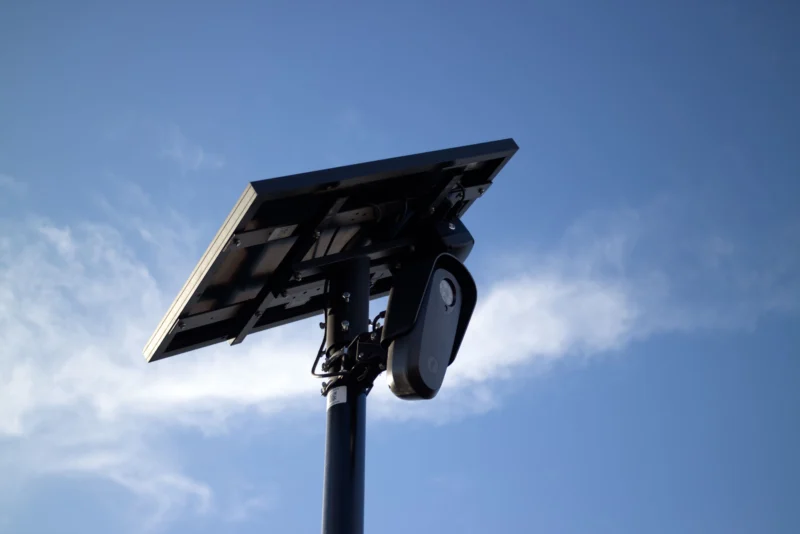
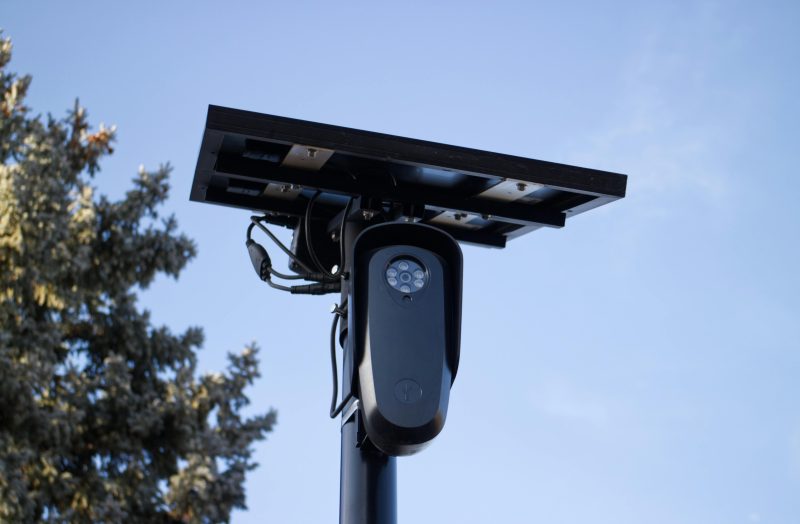
The products of Flock Safety, one of the largest vendors of police surveillance technology, such as automated license plate readers (ALPRs) and gunfire locators, are frequently plagued by security vulnerabilities, either due to inherent flaws or user failure to follow best practices. As detailed in a recent video investigation by technologist Benn Jordan, several Flock Safety’s AI-powered “Condor” cameras were found broadcasting both live and archived footage directly to the open internet. No passwords or login credentials were needed and the auto-focus feature in these cameras certainly raises privacy questions.

Benn Jordan and 404 Media
While known primarily for their ALPR cameras, Flock Safety has released a generation of PTZ (pan-tilt-zoom) cameras, called Condors. In addition to being remotely controlled, the cameras feature onboard artificial intelligence that can identify a human and automatically zoom in and follow their movements. The cameras are scattered throughout public locations and are intended to be part of a suite of options for law enforcement investigations.
Of course, given their incognitio nature and their ability to track individuals, one would hope that utmost care is given to the cybersecurity of the camera’s footage. However, what Jordan found was a free-for-all, with less security than even what a standard Netflix account would require to watch a show. Not only could he access the live footage, but he could also review the video archives and even delete the recordings if desired.

Benn Jordan and 404 Media
Within minutes, Jordan was able to spy on countless people who were surely unaware their movements were being monitored. In one instance, one of the cameras spots a rollerblader. After the rollerblader makes a momentary pause off to the side, the camera zooms in on the man’s phone and his display is plainly visible to Jordan.

Benn Jordan and 404 Media
While Jordan is a good-faith setward who is doing security research, it is highly concerning what a bad actor could do with such access, including but not limited to stalking people, planning crimes and destroying evidence. As I have detailed elsewhere, ALPRs are ripe for abuse, particularly by stalkers. There is no reason to presume the same would not be true for PTZ cameras.
Flock Safety has taken a puzzling approach to addressing past vulnerabilities, often deflecting from the real concerns at hand. They dismissed earlier findings as merely factory settings on devices that hadn’t even been rolled out yet, while proudly touting their cloud security measures.
Yet despite these reassurances, their Condor cameras have been actively monitoring individuals in public spaces. The continuous scandal of municipal surveillance beckons legally enforceable oversight rules governing all police and municipal surveillance technology. These incidents are not isolated; they are the predictable outcome of a dangerous gap in public policy that does not enforce data retention limits or rigorous auditing.
Proponents can argue that the cameras are located in the public square, and therefore, there are no privacy concerns and no risk of violating standards. That excuse is weak when the cameras can watch you through your home windows or zoom in on your phone screen.
You can watch the full exposé here: