License Plate Reader Baton Passing
The looming constitutional conflict over automated license plate readers
May 12, 2026

News Article
The looming constitutional conflict over automated license plate readers
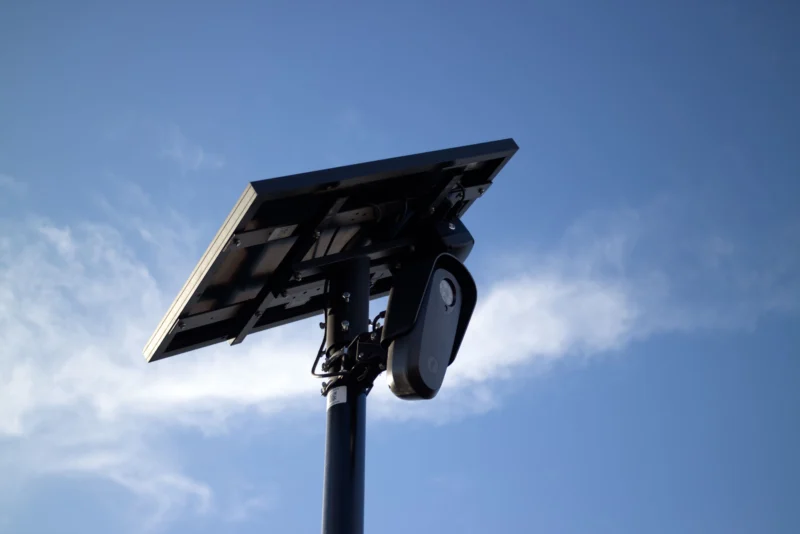
As many are likely already aware, automated license plate readers (ALPRs) are high-speed cameras that can identify vehicles as they pass and record their time and location. Over the last decade, the technology has rapidly expanded across American roads and is found in nearly every major city. In a recent posting, I offered a rough estimate of how many ALPRs are deployed in California, suggesting the number is plausibly in the 9.3k–14.9k range, well above the 5k documented in the best records of the technology. However, there has been considerably less attention paid to whether or not the number of ALPRs changes the constitutional calculus. I argue that it does, and that it may render some elements of ALPRs unconstitutional.
Privacy in the Public Square?
Depending on how you parse it, ALPRs are now the most prolific surveillance tool in the country. Generally speaking, since the landmark Katz v. United States (1967) case, the law has recognized that when there is a reasonable expectation of privacy, the government has a higher barrier to perform a search. On the other hand, that which occurs or exists in the public square or is in plain view is infrequently afforded privacy protections. ALPRs used by law enforcement are almost exclusively installed on public thoroughfares or mounted on government vehicles that operate on public roads. Thus, the legal rationale for ALPRs is that there is no 4th Amendment problem with observing a car in public.
Case law has already addressed a number of privacy issues regarding vehicles. For example, when an officer stops a vehicle and sees or smells drugs through the car’s window, the vehicle and some of its contents can be searched, as was held in United States v. Ross (1982). There are other circumstances, such as exigent circumstances or officer safety, in which arresting someone can justify searches. Vehicles are afforded some legal protections. Areas of the car not easily accessible to the driver or concealed may present higher barriers to search, depending on the circumstances, such as trunks or glove boxes. See Arizona v. Gant (2009) and California v. Acevedo (1991). However, those situations pertain to the car’s interior. What about the outside? Cars traveling on a public road are obviously plainly visible. We all understand that there are usually no expectations of privacy for visual observation outside a car on a public road. If an officer takes a picture of a car, even if it includes the license plate, that would not, in itself, raise any constitutional questions.
Why ALPRs Might Trigger a 4th Amendment Search
What makes the ALPRs case unique is that they are technologically different than simple cameras. The relevant feature of ALPR networks and their data is that they can create a continuous and cumulative record of a car’s whereabouts. Instead of viewing the ALPR issue as whether the government can photograph the exterior of a car, it’s more relevant to consider whether the government can establish a pseudo-GPS system using ALPRs.
In 2012, in a rare moment of unanimity, the Supreme Court ruled in United States v. Jones that the government requires a warrant before using a GPS tracker installed on a vehicle. Delivering the opinion of the Court, Scalia emphasized that the government was incorrect to presume that there are no expectations of privacy with respect to movement on a public thoroughfare. A few years later, in Carpenter v. United States, the Court went much further, ruling that the reconstruction of the plaintiff’s travel using cell-site tower location data was unconstitutional. Combining the implications of the two rulings results in what privacy scholars refer to as the Mosaic Theory of the 4th Amendment, which suggests that while one instance of government observation can be legal and does not constitute a search, when these observations are compiled together and over time, the sum equals a large picture that does amount to a search.
GPS works by pinging satellites and calculating the time it takes for different signals to travel to the receiver to determine location. Cell site data works similarly by using prior connections to cell phone towers. ALPRs can accomplish the same thing, albeit using an entirely different technique. If a vehicle passes an ALPR in location A, and then is scanned in location B, not only can the location be ascertained at those particular moments, but the time stamps add an additional level of information and the direction and speed of travel can be inferred, which means an inference can also be made about the car’s location between the two ALPRs.
One of the features of cell site data that the Court emphasized in Carpenter was that cell phones are pinging cell towers every several seconds and that a phone is intimately tied to an individual. That was not the case with ALPRs previously. But as the density of these cameras in a given area increases, the individual snapshots effectively become a continuous stream, a kind of baton-passing from one camera to another to reveal a vehicle’s travel patterns. The gaps between camera sightings shrink to the point where investigators can reconstruct a vehicle’s path with a fidelity that rivals classic GPS. In urban traffic engineering, researchers already use ALPR data and reinforcement learning models to reconstruct complete vehicle trajectories between adjacent sensors.
How is that relevantly different from GPS?
The prevailing complaint against Mosaic is that it lacks the particularity required of a guiding theory. It is a fair criticism. A single ALPR scan may not be a search, but what about 10? What about 500? Over what time frame and what if the 10 scans are in quick succession? Currently, the Supreme Court is deliberating on geofence warrants in Chatrie v. United States. The results of the hearing may indicate the direction that the Court is willing to take. Until then, there is limited case law on the issue. Commonwealth v. McCarthy (2020) from the Massachusetts Supreme Judicial Court and Schmidt v. City of Norfolk (2026), heard by the Eastern District of Virginia, are the two most relevant cases, but neither is definitive on the question; though both ruled in favor of the government. In United States v. Martin (2024) from the Eastern District of Virginia, the court explicitly ruled that ALPR queries did not constitute a 4th Amendment search, a ruling later relied upon in the aforementioned Norfolk case. In Rinaldi v. Sylvester (2025) from the Southern District of New York, the court indicated that changes in ALPR capabilities may be relevant factors in the future, potentially turning ALPR queries into a search.
In any case, the lack of specificity in Mosaic as a legal precept is overstated. I would point out that in Carpenter, the Court was not tallying pings; it was primarily gauging the intimacy and duration of the inquiry. Courts should generally be as capable of this task as they are of adjudicating reasonable expectations of privacy in other contexts. While courts sometimes do a poor job, this does not invalidate the whole concept.
The case Rinaldi v. Sylvester (2025) suggests that future ALPR capabilities are viewed as advanced technical features, akin to sophisticated image recognition technology. However, why shouldn’t density be considered a capability as well? It is reasonable to believe that a network of cameras of sufficient density would not pass constitutional muster unless offset by countervailing limits on their record-keeping. As I have expressed elsewhere, there is an obvious, at least, partial remedy: mandate regular purges of location data. Long-term data has de minimus use to law enforcement anyway. If there is reason to believe that a car was used in a crime, police would always be free to download those records and book it into evidence. By default, some vendors purge data after 30 or 60 days. Already this appears overly long, but as the readers become more common, it’s likely that public policy should require shorter retention periods.