Virginia Passes Plate Reader Oversight Bill
What House Bill 2724 accomplishes
June 5, 2025

News Article
What House Bill 2724 accomplishes
Virginia recently passed House Bill 2724, establishing essential guardrails for using automated license-plate readers (ALPRs). In 2023, the state tried to pass similar legislation, but to no avail. This bill, introduced by Del. Charneile Herring, was initially sent back to the House of Delegates, but the controversial bill has since been signed into law by Gov. Glenn Youngkin. Most of the bill’s provisions are now in effect.
What are ALPRs?
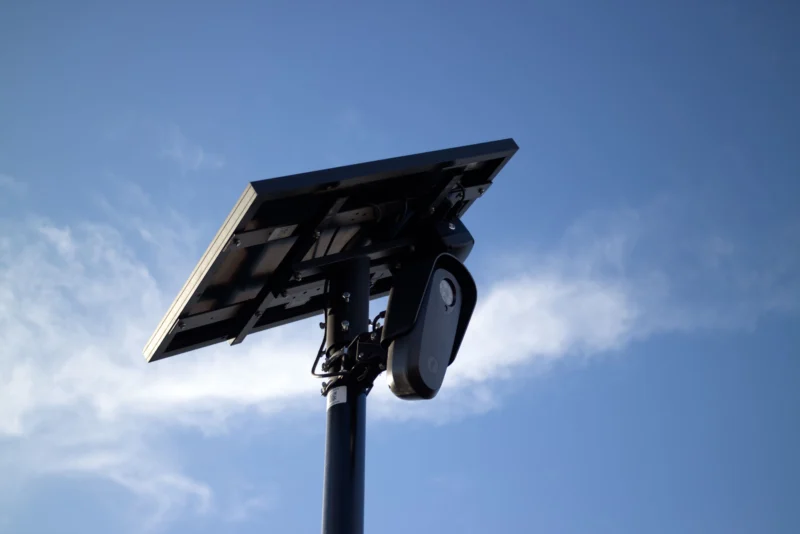
ALPR systems utilize high-speed cameras and character-recognition software to read the license plates of passing cars. Since they can read plates far quicker than any human being and store information, they have become a mainstay of modern policing. They are meant to assist in locating stolen vehicles, apprehending dangerous individuals with outstanding warrants, and finding missing or endangered persons.
However, they are a constitutional nightmare, and their legality is questionable without safeguards. Recording the location of cars can easily be abused. Nationwide, police have exploited the technology to stalk female police officers, stalk ex-girlfriends and ex-wives, harass individuals they didn’t like and surveil attendees at political rallies and gun shows, just to name a few instances.
What is more, information from ALPRs is notoriously unreliable. This is not always a problem when an officer can make informed decisions, but ALPRs could rely on old stolen-car records, for example, as they tell an officer that a particular car is stolen. This tends to trigger gun-drawn felony stops, which unnecessarily endanger officers and drivers.
Why Virginia’s new ALPR law matters
HB 2724 addresses these issues. It would establish clear conditions under which ALPR data is accessible for querying, such as reasonable suspicion of criminal activity, stolen vehicles, and missing or at-risk persons. Perhaps more important, the bill would place retention limits on the data collected by ALPRs. Data collected must be deleted within 30 days, unless relevant to an ongoing investigation or prosecution.
This recommendation is highlighted as one of the most crucial reforms in the Independent Institute’s Golden Fleece® Award report. Setting retention limits helps reduce the risks associated with keeping data for long periods. Storing large amounts of data can lead to unwanted surveillance and potential misuse, as it provides the system with extensive information about individuals and their travel patterns.
The ideal data retention limit is likely closer to 12 days to avoid the retracing of steps component from the SCOTUS ruling in Carpenter v. United States (2018). As Leslie Corbly and I have argued elsewhere, inferring car location through aggregated data may amount to a Fourth Amendment search under the Mosaic Theory. However, 30 days is certainly preferable to other jurisdictions’ limits, or absence thereof.
HB 2724 introduces robust oversight mechanisms. Law enforcement agencies would be required to submit annual reports detailing their use of ALPR systems, including the number of cameras deployed, database queries made and vehicle stops initiated. Furthermore, the bill would mandate that officers document whether a stop was based on an ALPR notification and specify the reason for the alert.
It’s worth noting that certain provisions, such as the requirement that law-enforcement agencies obtain permits before installing ALPR systems on state roads, would be contingent on reenactment by the 2026 General Assembly. This would allow for a measured and thoughtful implementation, providing an opportunity to assess the bill’s impact before fully committing to specific measures.
HB 2724 adds needed safeguards. Best practices would dictate that jurisdictions adopt policies prior to acquiring plate reader technology, but having use policies in place is better than having no policies.