Not Your Parents’ Cops
Are Neighborhood Police Officers Being Replaced?
October 8, 2018
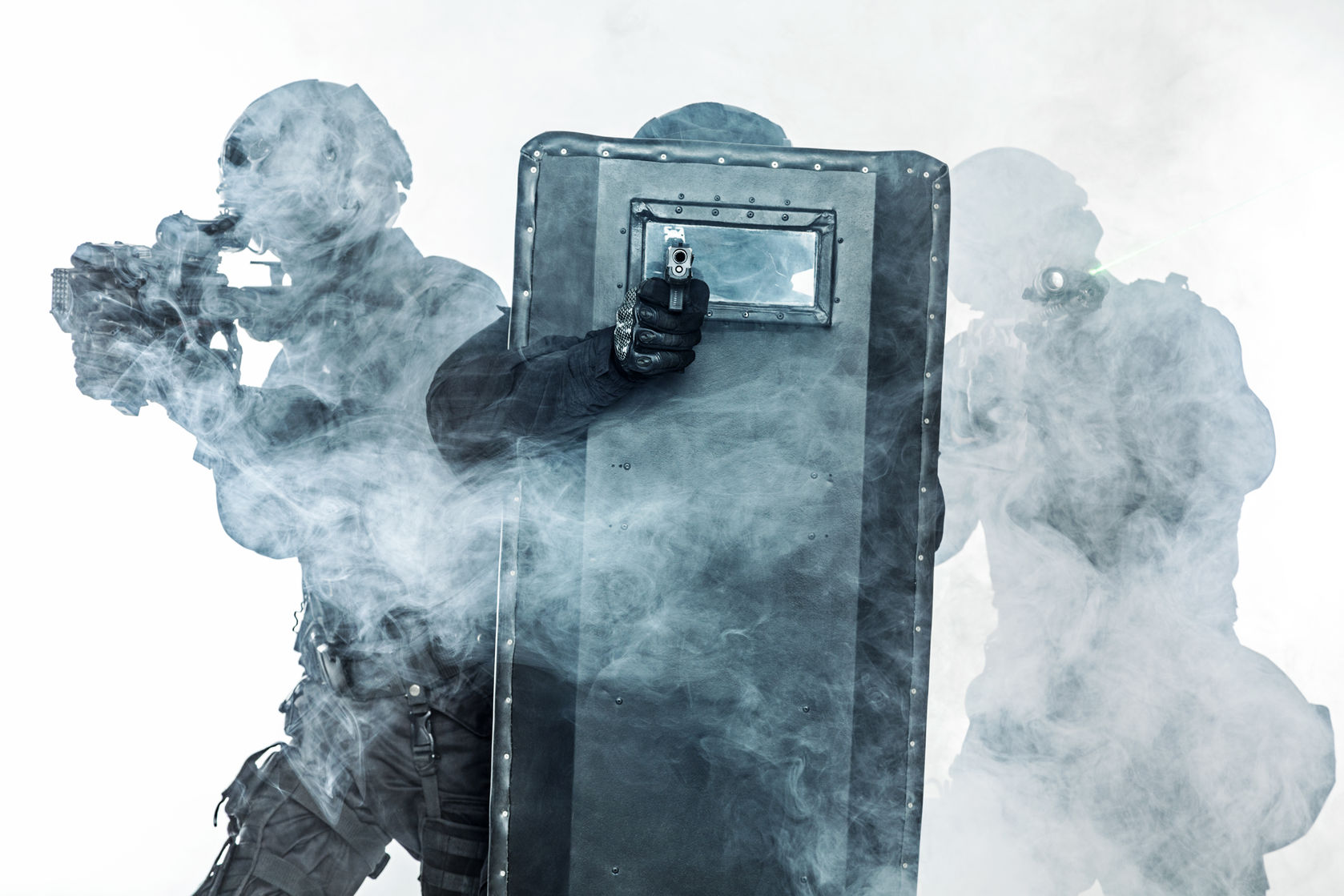
For years, American police officers resembled that quintessential small-town cop Andy Griffith. Their mission, to protect and serve, only rarely called for automatic weapons and virtually never required military-style assault vehicles. Today, however, police officers look less like Andy Griffith and more like Judge Dredd.
 report from Open the Books, a nonprofit focused on government transparency, between 2006 and 2015, “$2.2 billion worth of military gear including helicopters and airplanes, armored trucks and cars, tens of thousands of M16/M14 rifles, thousands of bayonets, mine detectors, and many other types of weaponry” were transferred from the Department of Defense to local police departments.
To put this in perspective, the Washington Post notes that the value of military equipment transferred to law enforcement agencies in 1998 totaled just $9.4 million. By 2014, that number had grown to $796.8 million. Some might argue that such tools are necessary if violent crimes are on the rise, but no such increase can be seen in crime statistics. In fact, according to the Federal Bureau of Investigation (FBI), crime rates have been steadily falling since the early 1990s. In 1993, the FBI reported 747.1 violent crimes per 100,000 residents. By 2016, that number had dropped to 386.3 violent crimes per 100,000 residents.
Furthermore, as police stations gained access to more and more military weapons and gear, their use of SWAT (Special Weapons and Tactics) raids have increased. Pioneered in big cities, such as Los Angeles, in the late 1960s and early 1970s, SWAT teams were intended to be responsive to dangerous firefights and civil unrest. However, as the drug war was ramping up, the use of these units continued to grow, with deployments for increasingly trivial suspected crimes.
SWAT actions have garnered some gruesome headlines over the years, particularly when paired with the increasing frequency of “no-knock” raids. In 2003, Alberta Spruill—a 57-year-old Harlem woman—suffered a fatal heart attack after police, looking for a suspected drug dealer, executed a no-knock raid on her apartment and tossed in a stun grenade. In 2014, Georgia police officers mistakenly threw a flash-bang grenade into the crib of a 19-month-old during a SWAT raid, resulting in severe burns. Unfortunately, these stories are tragically common, and have been extensively documented by researchers, such as Radley Balko, author of Rise of the Warrior Cop. Although exact numbers are difficult to obtain, since law enforcement is rarely required to report the use of such tactics, experts estimate that between 1980 and 2000 alone, police paramilitary deployments (read: SWAT raids) have increased by 1,400 percent.
The men and women who put their lives on the line to protect their fellow citizens deserve our respect and gratitude. But they are human, and humans make mistakes. Keeping perspective is important. With the ubiquity of cell phone cameras, incidents of police misconduct now have the ability to “go viral” via social media and sometimes paint a darker picture than truly exists. Nevertheless, these trends are worrying, and anyone seriously concerned with protecting civil liberties should watch carefully. Scaling back the adoption and use of military equipment and weapons—as well as seriously examining the overuse of SWAT raids—is essential in ensuring a better and more effective police force.
Gifs Source: CBS DNA / Via Tenor.com