President Trump Simply Loves Tariffs
He told us, and he wasn’t lying.
August 14, 2026
News Article
He told us, and he wasn’t lying.
Since the beginning of the Iran War, we have been told by pundits that President Trump betrayed his base. We have been told the president was an ardent Ron Paul-esque non-interventionist who had been brainwashed or blackmailed by Benjamin Netanyahu, AIPAC, Mark Levin, or Jews generally, depending on how long you allow yourself to scroll X (formerly Twitter.) Of course, this is ridiculous.
Trump campaigned against the Bush 43 and Obama-era wars in Afghanistan, Iraq, Syria, and Libya, all while maintaining pro-Israel and hardline anti-Iran positions. In fact, Donald Trump has spoken publicly about taking military action against the Mullahs since October 1980, in the midst of the hostage crisis, a stance he reiterated and expanded upon in a 1987 ABC interview with Barbara Walters, and has maintained ever since.
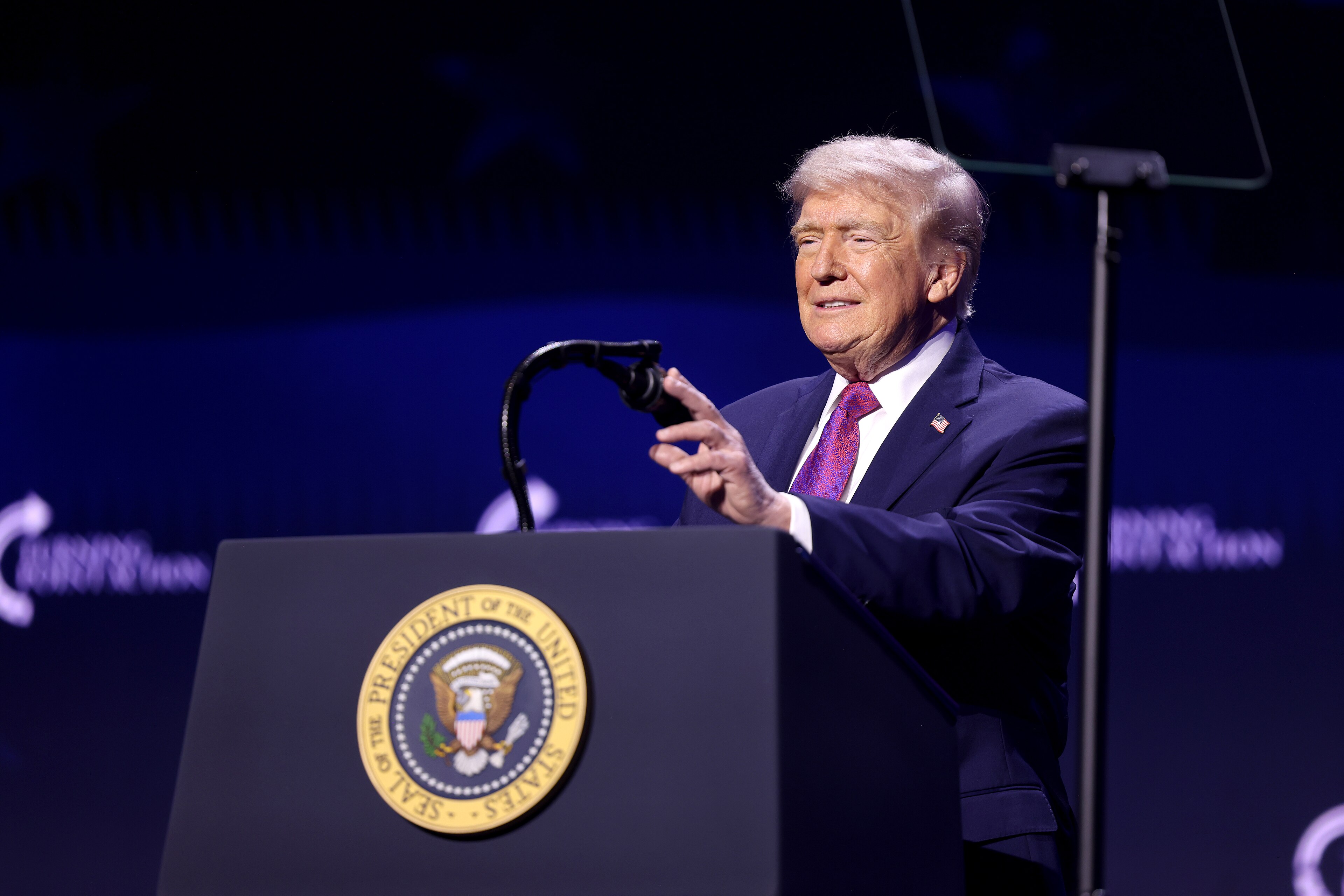
The 47th president has a habit of waffling on important issues ranging from abortion to gun rights, but another position he has long maintained is his commitment to protectionism. Not only did Trump use executive action during his first term to impose tariffs on aluminum, steel, and other products, he also promised the nation that tariffs would be a centerpiece of his second-term economic vision. “To me the most beautiful word in the dictionary is ‘tariff.’ It’s my favorite word,” he said in a 2024 interview. Occam’s razor suggests the president was not duped by Commerce Secretary Howard Lutnick, White House advisor Peter Navarro, or postliberal pseudo-economists (to be generous) such as Oren Cass any more than he was “fooled” by Bibi Netanyahu or the late-Senator Lindsey Graham. The man just loves tariffs, despite the data.
The legal acrobatics employed by the White House this year prove President Trump’s commitment to his tariff regime, regardless of the economic and political costs. In February, the Supreme Court ruled in Learning Resources, Inc. v. Trump against the president’s “liberation day” tariffs. The Court concluded that the IEEPA’s authorization to regulate importation does not extend to levying taxes or tariffs. The administration immediately imposed a new near-global 10% tariff under Section 122 of the 1974 Trade Act, which expired on July 24th. Not to be outdone, Team Trump immediately pivoted to a new set of Section 301 tariffs targeting over 60 trading partners, allegedly over forced-labor enforcement failures. On August 5th, 25 states filed a lawsuit in the U.S. Court of International Trade challenging the new tariffs. The suit claims the White House is misusing forced-labor justifications in order to bypass the courts.
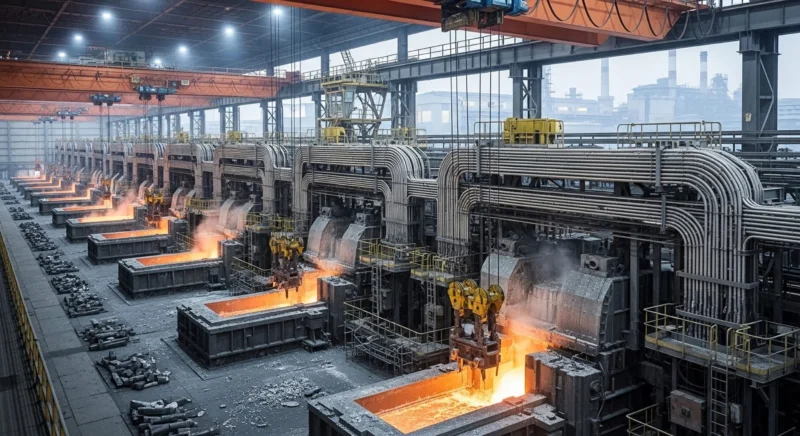
The primary policy justification for Trump’s “liberation day” tariffs was to bring back manufacturing jobs to the American heartland, but, predictably, the U.S. economy lost 108,000 manufacturing jobs in 2025. Peterson Institute for International Economics estimates that Trump’s tariffs impose an annual tax burden between $1,700-$2,600 on a typical middle class family, and since lower and middle class Americans spend a larger percentage of their annual income on physical goods (cars, clothes, food, appliances, etc.) compared to high income families, tariffs act as a regressive consumption tax. Since the U.S. Court of International Trade ordered the government to begin reimbursing importers in the wake of Learning Resources; the refunds have essentially erased all tariff revenue. WalMart, Apple, and Ford are currently awaiting refund payments of $2.4, $2.2, and $1.3 billion, respectively.
Politically, protectionism has been an unmitigated disaster for the president and his party. President Trump’s approval rating never recovered from the “liberation day” trade war in April of last year, and now sits at around 39% according to the Real Clear Politics polling average. Trump is underwater by 24.6 points on the economy and 37.2 points on his handling of inflation. 64% of Americans oppose the president’s tariffs. Democrats currently lead Republicans by seven points on the generic congressional ballot three months out from the Midterms, and for the first time in decades now lead Republicans on the issue of the economy, 37% to 36%.
President Trump’s tariff regime failed to produce any of its objectives, increased inflation, and politically could push the president into lame duck status for the rest of his term. Multiple courts have given Trump and his team off-ramps, just to see the White House go pedal to the metal off the cliff of public opinion and economic reality. Like a spouse who repeatedly returns to a degenerate abuser, President Trump simply loves his tariffs, and, at this point, I doubt anyone or anything can change his mind.