Trump’s Tariffs Ruled Illegal Again
Court rejects Trump’s attempt to stretch Section 122 into broad tariff authority.
May 7, 2026
News Article
Court rejects Trump’s attempt to stretch Section 122 into broad tariff authority.
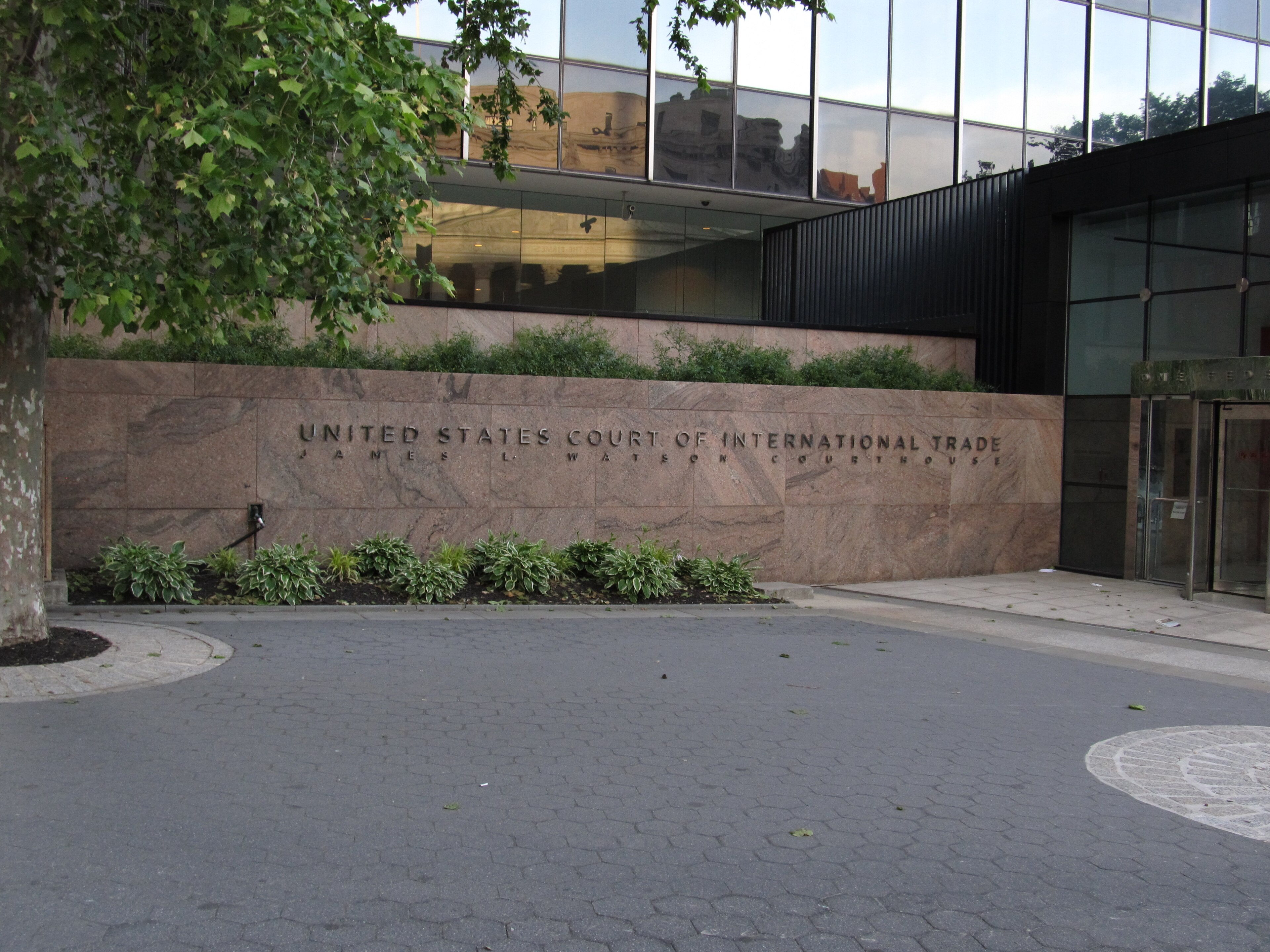
The U.S. Court of International Trade ruled 2-1 against the Trump administration’s invocation of Section 122 of the Trade Act of 1974 to implement a 10% global tariff today. The ruling brings America one step closer to being free from President Trump’s executive overreach and harmful economic policies.
The use of Section 122 to impose 10% global tariffs was deemed illegal because the condition for allowing executive imposition of tariffs is not met in the current state of the American economy. Section 122 allows the president to impose tariffs in response to “large and serious United States balance-of-payments deficits.” The Trump Administration conflated balance-of-payments deficits with trade deficits to justify the tariffs.
The United States does not, and cannot, while maintaining floating exchange rates, have a balance-of-payments deficit. As Philip Magness observes, the “term referred to a drawdown on official gold and other currency reserves of the United States under the old Bretton Woods currency peg system, which was abandoned in the early 1970s and officially terminated in 1976.” Congress did not intend for Section 122 to apply to trade deficits when it passed the Trade Act of 1974.
Along with the ruling that the tariffs are illegal, the court issued a permanent injunction against the tariffs on the three importer plaintiffs (Burlap and Barrel, Inc., Basic Fun, Inc., and The State of Washington. The injunction means that the Section 122 tariffs are no longer in effect against those plaintiffs, but remain in effect for all other importers. All other importers have to either file their own lawsuits or wait for an appeal to a court that would issue a broader injunction.
The injunction is an indication that the court was more confident in its ability to curtail executive overreach in Congress’s tariff authority. When the U.S. Court of International Trade and U.S. District Court for the District of Columbia ruled against the International Emergency Economic Powers Act (IEEPA) tariffs last year, they refused to issue an injunction on the tariffs. Although a universal injunction would have been more beneficial, the limited injunction is a step in the right direction.
President Trump has been far more willing to overstep the limits of his authority in his second term regarding tariffs. He implemented tariffs on steel and aluminum against China in his first term, which, although economically harmful, were done within his powers as President. His use of IEEPA and Section 122 to impose sweeping tariffs has gone far beyond his powers and has been considerably more economically harmful than his more limited tariffs in his first term.
The courts have rightfully struck down these attempts. However, Congress has done almost nothing to hold back President Trump from usurping its tariff authority. Congress needs to be more proactive in defending its constitutional powers.
The case will likely be appealed, where there will hopefully be a more definitive judgment. After that, assuming that the higher courts uphold the ruling, it is unclear what the Trump administration will do next. The tariffs are unpopular and are hurting the economy as the midterm elections are approaching quickly. Despite their illegality and unpopularity, the Trump administration seems committed to imposing burdensome and illegal tariffs. Only time will tell what the administration will do next.