Parents and Students Come Second in Randi Weingarten’s Teachers Union
What measures define a successful labor boss?
November 12, 2025
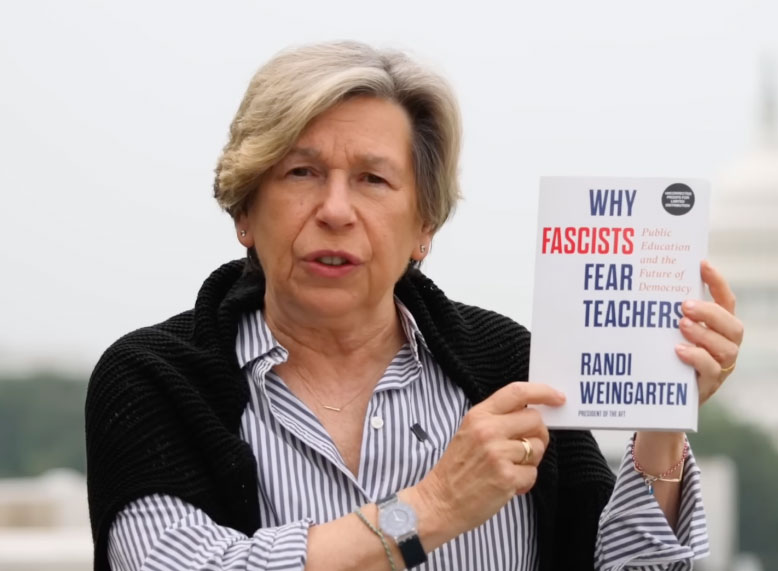
Randi Weingarten
News Article
What measures define a successful labor boss?
Randi Weingarten, national president of the American Federation of Teachers, has a new book out, “Why Fascists Fear Teachers.” Its publication offers a good opportunity to consider how the union has changed since she took over in 2008.
I read “Why Fascists Fear Teachers” so you don’t have to, but here’s the bottom line: Under Weingarten, the AFT has increased its power, and she has increased her own influence. But it has come at the expense of parental options and student learning.
There was a time when America’s second largest union of educators managed to advocate both for the perceived interests of its members and for better educational outcomes for the students they teach. Under Albert Shanker, one of Weingarten’s predecessors, the AFT published reports comparing the quality of academic standards in the 50 states. The Shanker-era union also published booklets evaluating content standards and comparing questions asked on U.S. achievement tests to tests used in other countries.
Additionally, the AFT once called for “an incentive and accountability system,” based in part on test results. The union used to stand for having “well-designed tests” to have “an objective measure” of how well students were learning and to give students “a strong incentive” to work hard and achieve.
That was because the most effective accountability comes from tests that measure whether students have learned the material they’ve been taught. But though she claims to support accountability, in “Why Fascists Fear Teachers,” Weingarten heralds the teachers’ unions’ defeat of testing in Massachusetts. That’s in line with the AFT’s position since 2012 opposing using testing results for accountability. The union says results should be used only to inform teachers about how their students are doing.
Further, Shanker began American Educator, the AFT’s quarterly magazine on educational issues in 1977. Ruth Wattenberg, who adhered to Shaker’s advocacy of effective teaching practices and robust subject-matter content, became editor in 2002, before Weingarten became AFT president.
When Wattenberg was editor, the magazine was a repository of evidence-based information on effective teaching and school reform. For example, the magazine promoted E.D. Hirsch’s sound ideas on how background knowledge is a necessity for reading comprehension. But today, under Weingarten’s aegis, American Educator is a shadow of its once-glorious past.
Turning to options for parents seeking better schools, Shanker promoted the idea of charter schools in the late 1980s. But in Weingarten’s book, we read about her strong misgivings, despite the gap-closing academic achievement of students attending charter schools. She attacks the changeover to charter schools in New Orleans after Hurricane Katrina, despite the astonishing jump in performance that resulted from it.
The AFT’s opposition to school choice extends well beyond what Weingarten covers in her book, however. In what was clearly an effort to curry favor with Weingarten’s AFT and the National Education Association, President Barack Obama unsuccessfully attempted to defund the Opportunity Scholarship Program in Washington. The AFT’s New York City affiliate also endorsed socialist Democrat Zohran Mamdani as its preferred candidate for mayor; during his campaign, Mamdani reportedly said he is “skeptical” of charter schools, and he opposes expanding their number, even though a large contingent of parents in the city clearly want more of them.
But the raw political power that Weingarten and the AFT have accumulated was on clearest display during covid-19 lockdowns—once again at the expense of children.
The union and Weingarten in particular argued against reopening schools, even though it was safe to do so. In her book, she tells a quite different story, claiming the AFT sought rapid reopening. In reality, Weingarten and the AFT pushed the Biden administration to change the language of federal guidance on reopening. The AFT’s Los Angeles affiliate demanded expensive and unneeded physical and procedural changes in schools and tacked on a political wish list that had nothing to do with public health.
Former Los Angeles mayor Antonio Villaraigosa, once an organizer for the AFT’s Los Angeles affiliate and currently a gubernatorial candidate in California, has in recent years called the union “the largest obstacle to creating quality schools.”
Under Weingarten’s presidency, the American Federation of Teachers has reduced the intellectual level of its publications. It has aided a slide away from accountability based on measurable student performance. It was also responsible for massive learning loss during the covid lockdown and is working to limit school options desired by parents. On the other hand, the union now enjoys greater political clout than ever.
Does that all add up to the record of a successful union leader? As with a teacher’s performance, it depends on how and what you measure.