President Trump’s Foreign Policy Should Surprise No One
The president’s positions on Iran and Israel have not changed in ten years.
July 4, 2025
It is never wise to project your own opinions onto political leaders, but when Donald Trump burst onto the scene in 2015, he was a political outsider who held heterodox views compared to his Republican contemporaries on a myriad of issues ranging from economics to American involvement in foreign conflicts.
Trump crossed several lines during the 2016 GOP presidential primaries that his competitors were unwilling to touch, for instance, in a decision that will almost certainly affect the economy detrimentally, he pledged never to reform failing entitlement programs. Trump also signaled early on that his foreign policy would differ from former President George W. Bush, and recent GOP standard-bearers John McCain and Mitt Romney, when he called the Iraq war “a big, fat mistake” and accused the Bush administration of lying about the existence of weapons of mass destruction in Iraq. “They lied. They said there were weapons of mass destruction, and there were none. And they knew there were none. There were no weapons of mass destruction,” Trump said in the 2016 South Carolina presidential primary debate.
Trump represented something new and different in presidential politics, and many supporters and detractors, both in politics and in the media, saw his willingness to buck the status quo and his lack of interest in policy on many of the issues, and began to turn the man Donald Trump into a caricature representing their own pet policy positions.
Fast forward almost a decade, and pundits on all sides of the issues are still trying to fit the 45th and 47th president into their own personal molds, which makes even less sense now than it did at the beginning of his first term. Sure, the president has waffled on several issues, such as trade, firearms policy, and various cultural topics, but a few of his core beliefs have remained remarkably consistent over the years. Chief among those beliefs are, obviously, the president’s disdain for illegal immigration, and his views towards Israel and Iran: specifically, the red line of preventing the Iranian regime from developing a nuclear weapon.
When the president expressed explicit support for Israel’s Operation Rising Lion—a massive series of airstrikes targeting Iranian nuclear facilities, military assets and infrastructure, and senior members of the Iranian regime and nuclear program—many of Trump’s allies in the media began to feign outrage. Former cable news host and podcaster Tucker Calson, an ally or former ally of the White House, called Trump “complicit in the act of war.” Comic and commentator Dave Smith, who endorsed Trump in the 2024 presidential election, denounced his former support, calling Trump’s support of Israel’s actions an “absolute betrayal of everything that he ran and campaigned on.”
Carlson is an isolationist in terms of both trade and the use of military force, although those appear to be recent developments, and Smith is a non-interventionist, anarcho-capitalist, so it is no surprise that they would take exception with the president’s support of the Israelis. But Trump is no isolationist, certainly is no libertarian, and never claimed to be either. In fact, as the White House rapid response team pointed out on X, the president has explicitly reiterated dozens of times on the campaign trail, and otherwise, that he would not allow the Iranian regime to develop nukes. In January 2020, Trump ordered the assassination of Iranian General Qasem Soleimani, via drone strike in Baghdad, Iraq, and in 2018 he withdrew the United States from the Joint Comprehensive Plan of Action (JCPOA) calling the deal—which aimed to constrain Iran’s nuclear capabilities—“a horrible one-sided deal that should have never, ever been made.”
In 2018, the first Trump administration moved the American embassy in Israel from Tel Aviv to Jerusalem, and in 2020 brokered the Abraham Accords, diplomatic agreements that normalized relations between Israel and its Arab neighbors Bahrain and United Arab Emirates, as well as Morocco and Sudan. As unpredictable a world leader as Donald Trump has been, his support of Israel and hardline stance against a nuclearized Iran are exactly what you would expect from the 47th president.
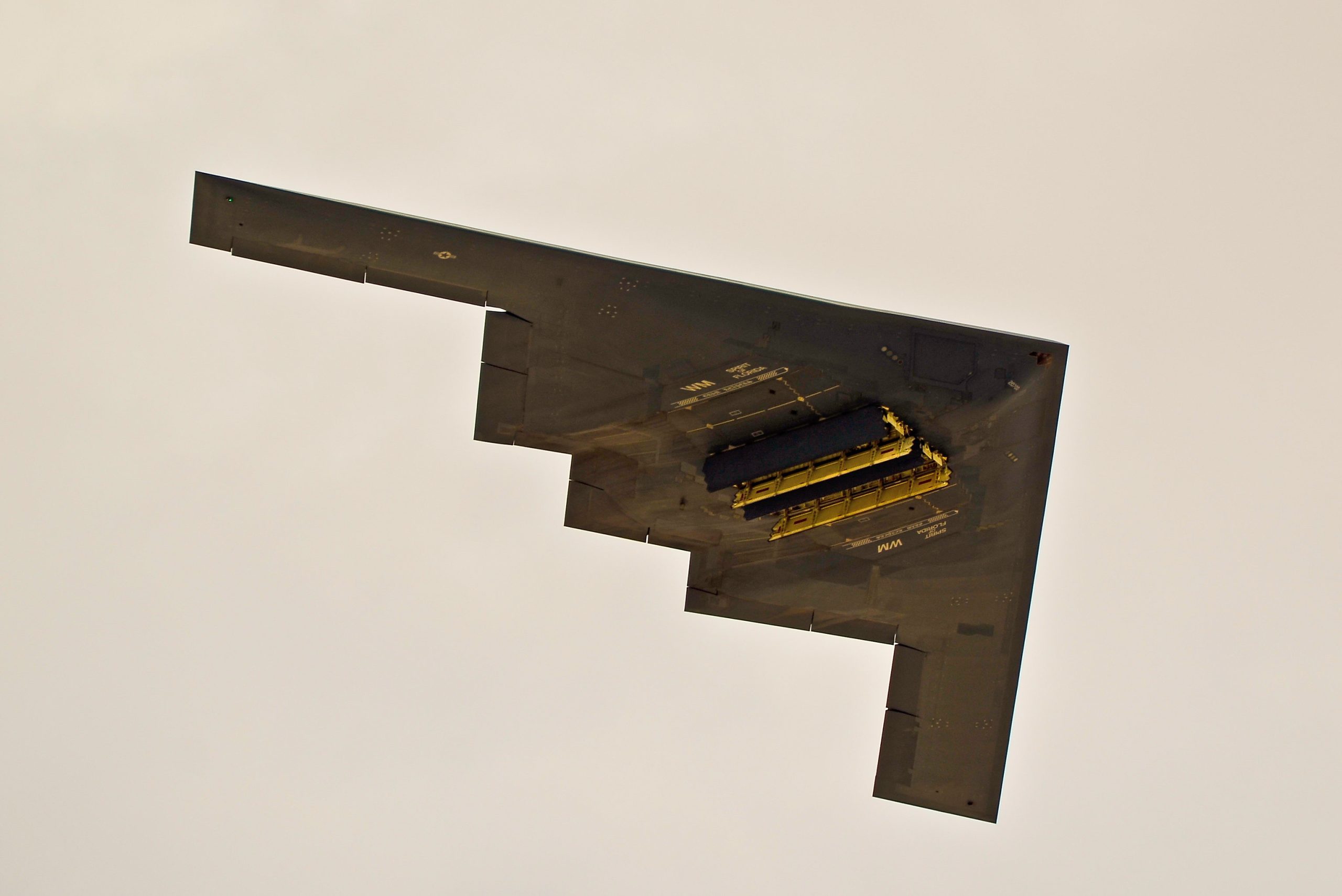
Trump’s actions after the U.S. entered the “12 Day War” resembled his assassination of Soleimani: no “boots on the ground,” troop build-ups, or talk of nation building. America’s involvement lasted as long as it took for B-2 bombers to fly from Whiteman Air Force Base in Missouri to Iran, and back. “Operation Midnight Hammer” was a success, by any standard held by any military in the history of armed combat; Iran’s uranium enrichment facility at Fordow, as well as its nuclear facilities at Natanz and Isfahan, were destroyed or heavily damaged, setting the country’s nuclear program back years, possibly decades.
If Trump abandons his tariff regime (here’s to hoping) in favor of free trade, or reverses course on something as pivotal to his agenda as immigration policy, that would be a shock, but continuing his first administration’s foreign policy doctrine should only surprise the irreparably delusional. The president is not George W. Bush, and he is not Ron Paul. He is somewhere in the middle, and the media should have figured that out by now.