

Banning Politician Bets on Prediction Markets
May 11, 2026
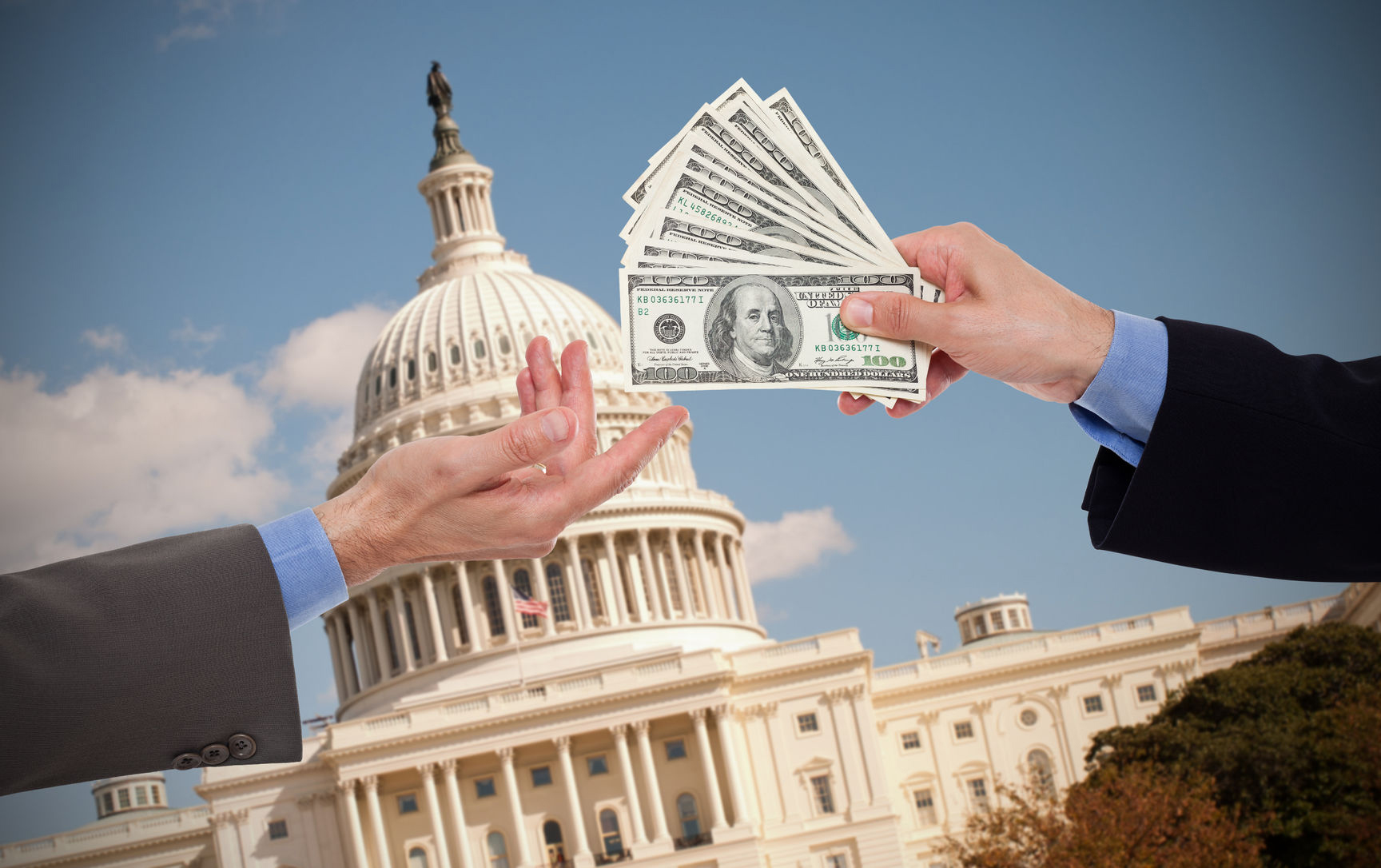
Insider trading runs rampant in Washington, D.C. For years, unusually profitable stock trading by politicians and the other “Wolves of Capitol Hill” has drawn fire from public integrity advocates. Some, like trades reported by former House Speaker Nancy Pelosi (D-CA), have been so profitable that they have inspired a stock tracking index.
But now, there’s a new kind of market that’s almost tailor-made for politicians and bureaucrats who can collect big money gains as a perk of their power to influence events. While prediction markets have only been open for business in the U.S. since 2024, because they allow wagering on public policy, they’re becoming catnip for the politically corrupt. Here is some background on what they are from Investopedia:
Prediction markets, sometimes called betting markets, are similar to futures markets for commodities or other financial asset prices. In futures markets, traders bid up or down the price of a future contract based on their expectation of what the future price of the underlying asset will be. Prediction markets are just futures markets where the future event being traded upon is something other than the price of an asset at some point in the future. Prediction markets involve a collection of people speculating on a variety of events—exchange averages, election results, quarterly sales results, or even gross movie receipts.
Prediction markets clearly fall into the category of gambling and cannot be considered a form of investing, as Jonathan M. Craig of Charles Schwab puts it, “the allocation of capital to a business or asset with the expectation that it will generate income or appreciate in value.” Over time, the value of an investor’s investment in businesses or assets that achieve this outcome grows because the capital they provided in return for an ownership stake is directed to productive activities that grow the business or the value of the asset.
Gambling, on the other hand, doesn’t involve any ownership at all. For a prediction market, the gambler is wagering on an outcome, which either happens or doesn’t happen. If things go the way the gambler hopes, they’ll make money. But if it doesn’t, they lose their entire stake.
The Insider Advantage
Unless they have an inside edge. Like a politician or bureaucrat might, because of what they know about what they control. Here are two recent examples of where the suspicion of ethical lines being crossed by government officials appears likely:
One Polymarket user, with the username “Magamyman,” made more than $553,000 for betting that Iranian Ayatollah Ali Khamenei would be out of power hours before U.S. strikes killed him on Feb. 28. Another Polymarket user won over $400,000 on bets related to Venezuela in the lead up to the U.S.’s capture of Venezuelan dictator Nicolas Maduro.
These examples have put pressure on politicians to prevent both themselves and their peers from cashing in on their insider knowledge. The U.S. Senate just passed a rule that would ban senators and staffers from participating in prediction markets, while the House of Representatives is expected to soon take up a similar measure.
The Washington Examiner‘s Hailey Bullis reports on the action in the House:
Rep. Ashley Hinson (R-IA) introduced a resolution on Thursday that would amend House rules to prohibit members and their staff from placing bets on the occurrence of specific events on prediction market platforms, such as Polymarket or Kalshi.
Hinson, who is running for Senate, called on House GOP leadership to bring the measure to the floor “immediately.” The House is on recess until May 12….
“Members of Congress shouldn’t be able to use insider knowledge to make a profit,” Hinson said in a statement. “We should take immediate action to ensure DC politicians can’t make money off of policies they are influencing.”
Hinson’s resolution also calls on both the White House and the judicial branch to establish similar rules for themselves.
Action Needs to Go Beyond Just the Politicians
Tellingly, the proposed bans seek to block politicians and bureaucrats from profiting from their insider knowledge by betting on prediction markets. Including staffers and bureaucrats in the bans is necessary because of the insider knowledge they possess. Any serious measure to rein in the Wolves of Capitol Hill’s traditional path to excessive profits from their “investing” activities for themselves and their family members needs to apply to the exact same people.