Preemptive Lessons for the Iran Campaign
March 1, 2026

News Article
TO: All Members of the National Security Elite
FROM: Narrative Risk Management Partners
SUBJECT: Preemptive Lessons for the Iran Campaign
Dear members of the National Security Elite,
The scene in Iran continues to unfold. Early this morning (Eastern Time), the United States and Israel launched coordinated air and missile strikes against the Iranian regime, targeting several major cities, including Tehran.
Iran responded by launching missiles at U.S. bases in Gulf states including Bahrain, Kuwait, United Arab Emirates (UAE), and Qatar. While some of these missiles were intercepted, at least one death occurred in the UAE as a result of shrapnel. The regime warned their retaliation would be “crushing.”
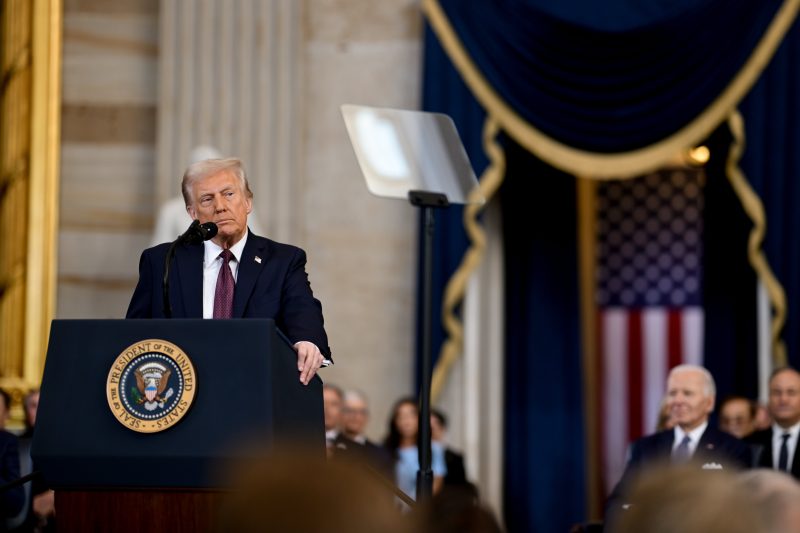
In announcing the strikes, President Trump framed the military operations as necessary for curbing Iran’s long-problematic nuclear ambitions and reducing the threat posed by Iran’s ballistic missiles. Of course, regime change is also desirable.
The president was clear at what the Iranian people must do, “When we are finished,” he said, “take over your government. It will be yours to take. This will be probably your only chance for generations.”
We commend the president for his careful tone setting here. If history is any indicator, it will prove a wise and important statement.
The United States has a long history of engaging in both overt and covert regime change, but long-term success has proved elusive. Just looking from 1960, we can consider the Bay of Pigs invasion, Vietnam, Laos, Cambodia, Iran (post-1979 revolution), Nicaragua, Afghanistan, Iraq, Libya, and Syria. While these attempts at removing or shaping foreign regimes were admirable, they didn’t yield the desired results.
Given that failure in Iran is likely, it’s important to remember that, if (when) our operations do not go according to plan, you need an escape plan—not just militarily, but narratively.
Thankfully, we have options here. One will be to blame our allies—namely the Israelis. Certainly, there will be many margins where they might be criticized (e.g., commitment, funding, personnel, communications, etc.). If necessary, we can assist you in crafting these critiques. Depending on how this scenario unfolds, political rivals may provide another alternative. The president stated the strikes are part of a “major combat operation.” In other words, this may be prolonged. If so, Congress is likely to get involved with questions of funding. Subsequent failures may be blamed on lack of funding or other support (inhibited by the political opposition, of course).
But the president’s remarks to the Iranian people set the stage for a tried-and-true method of shifting responsibility when things go wrong—blame the civilians on the receiving end of the intervention.
Since the start of the Global War on Terror in 2001, this method has been deployed by multiple presidents in both parties. Consider a few examples:
We trained and equipped an Afghan military force of some 300,000 strong—incredibly well equipped—a force larger in size than the militaries of many of our NATO allies. We gave them every tool they could need. We paid their salaries, provided for the maintenance of their air force— something the Taliban doesn’t have. … We gave them every chance to determine their own future. What we could not provide them was the will to fight for that future. … It is wrong to order American troops to step up when Afghanistan’s own armed forces would not.
–President Joe Biden, 2021
“We gave Iraq the chance to have an inclusive democracy.”
–President Obama, 2014
We [the U.S. government] gave the Afghan people a chance to live in a free and democratic society,”
–President George W. Bush, 2005
Today, President Trump offered the Iranian people a gift in the form of attacking their government. What happens next is ultimately up to them.