Does Ousting Maduro Mean Regime Change or Something Else?
Maduro’s removal leaves Venezuela in limbo, exposing unanswered questions about U.S. authority, legality, and the country’s political future.
January 3, 2026

Nicolas Maduro on board the USS Iwo Jima following his capture
News Article
Maduro’s removal leaves Venezuela in limbo, exposing unanswered questions about U.S. authority, legality, and the country’s political future.
The justifications for President Donald Trump’s military policies toward Venezuela have ranged from stopping narco-terrorism, to reducing oil revenues going to the Nicolas Maduro regime by interdicting the country’s oil tankers, to removing Maduro from power. Maduro is a socialist and criminal who has wrecked the Venezuelan economy and caused a massive outflow of the country’s population. Following a unilateral military extraction on the morning of January 3, 2026, Maduro has been removed from office and is now in U.S. custody.
The White House’s actions only raise uncertainty about what happens next. Although the strike involved a military incursion into Venezuela, Congress does not appear to have been briefed as required by law. When asked about what comes next for Venezuela, Trump left the door open for a sustained U.S. presence in the country, stating “we’re going to run it” and “we’re going to stay until such time as the proper transition can take place.” Curiously, however, the Trump administration stayed away from using the term “regime change.”
It is unclear what the White House envisions for the transition now that Maduro is gone. From Trump’s rambling news conference, it was difficult to determine what was actually happening on the ground in Venezuela. “Transition to what?” might be the most important question at the moment, especially because it seems that the military raid was merely a “smash and grab” to snatch Maduro, with no significant U.S. military presence remaining on the ground (only threats of a larger second strike if Venezuela did not do what the United States wanted).
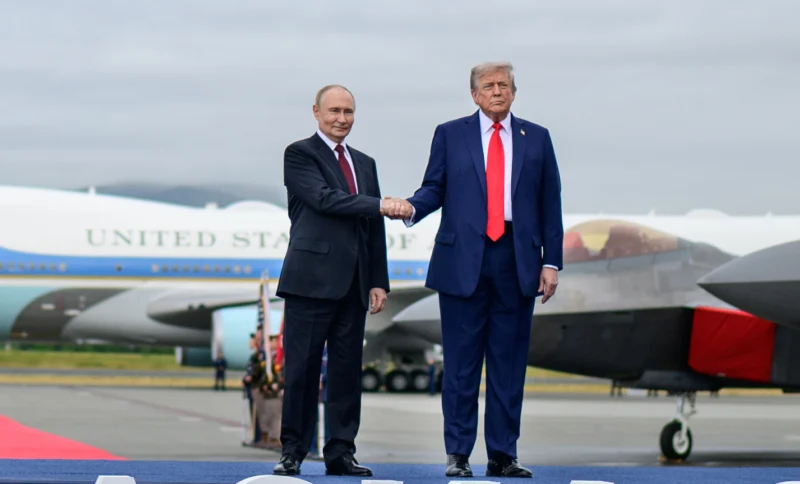
Most noteworthy, Trump disparaged Maria Corina Machado, the leader of the democratic opposition. Machado’s party won the last Venezuelan election in 2024, only to be prevented from taking office. Instead, Maduro produced a fraudulent vote count that declared himself the winner. Trump’s comments totally ignored the winning candidate from that election, Edmundo Gonzalez Urrutia—a strange omission, considering that most western governments including the United States have previously recognized Gonzalez as the legitimate winner. In contrast, Trump appeared to praise Maduro’s hand-picked socialist vice president Delcy Rodriguez as “willing to do what the U.S. wants.” Trump also noted that the regime’s remnants are now “acting very differently.” For her own part, Rodriguez has claimed the title of “interim” president, but she immediately defied Trump by issuing a demand for Maduro’s release.
The ensuing chaos, and claims that the United States could “run the place,” raises an alarming set of options. Does Trump envision committing massive numbers of military forces on the ground? Is he holding out to cut a deal that removes Maduro, but not the socialist Chavista machine? Is he trying to negotiate an arrangement that lets in U.S. oil companies to repair the decrepit Venezuelan oil infrastructure and grab a chunk of the future export proceeds? Trump has often hinted at this latter objective by talking of getting “reimbursement to the United States for stealing our oil.”
In any event, at first blush, it seems that Trump’s version of the Monroe Doctrine is a return to bald resource and commercial imperialism using unilateral military force. Such a development would be even more blatant than U.S. “dollar diplomacy” in Latin America in the 1920s. Of equal alarm, the operation in Caracas occurred without prior congressional approval, which is both illegal and unconstitutional. Maduro may be gone, but the path ahead is fraught with uncertainty about the U.S. government’s intentions—or even a coherent game plan for what happens next. Thus, Venezuela will not be the only country where the rule of law has been undermined.