Twelve Votes vs. the Market
December 8, 2025

In late October, the Federal Reserve adjusted its target interest rate downward. The decision was reached with some dissent, showing a divergence of economic perspectives among the Federal Reserve’s members. Soon afterward, some Fed officials voiced divergent views about what to do in December.
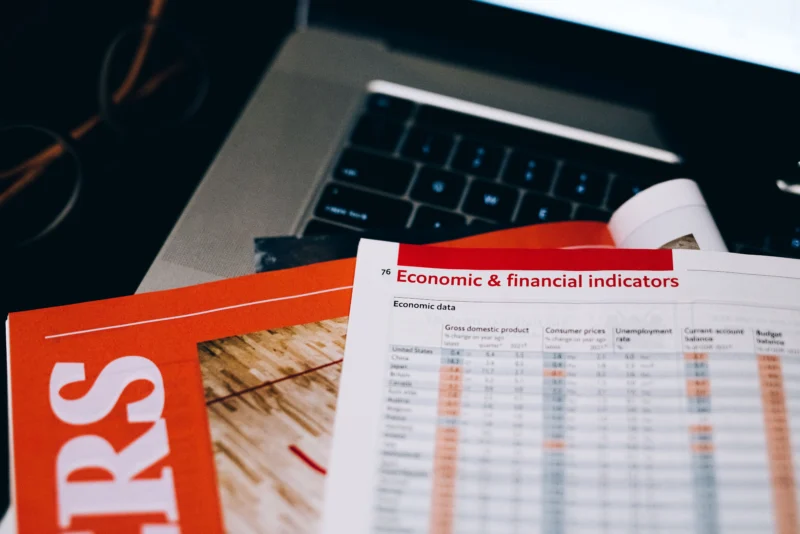
Due to the recent government shutdown, key economic data, including inflation reports, unemployment statistics, and GDP growth numbers, were delayed or canceled, thereby complicating the Federal Reserve’s ability to make informed decisions based on comprehensive data.
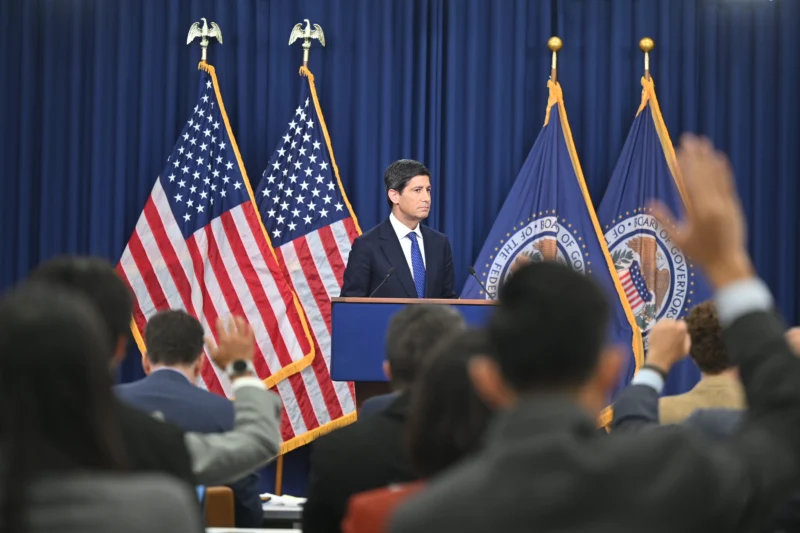
However, even if the Fed had all the necessary data, it would once again face a fundamental problem: the same twelve people, examining lagging data, are expected to set a rate of short-term credit that affects borrowing costs for the entire economy. That task amounts to deciding the price of money for all. Those twelve are comprised of seven members of the Board of Governors, the president of the Federal Reserve Bank of New York, and four rotating regional Fed bank presidents.
Watching this reminds me of a comedy skit in my student days. In it, a group of “meteorologists” tried to predict tomorrow’s weather. Three predicted sun, and seven predicted rain. At the end, they delivered their forecast: “Tomorrow will be sunny, with a 70% chance of rain.” In this scene, the students laughed wittily at the misapplication of the probability concept. This is ridiculous because probabilities cannot be applied to mutually exclusive forecasts in this way. The probability of rain does not depend on meteorologists’ opinions and voting patterns.
Yet something similar happens at Federal Reserve meetings. Twelve people examine questionable and incomplete data from different perspectives and apply various theories. Some are driven by pure politics, either to appease Trump’s vision or, on the contrary, to oppose it. As the famous maxim says: “Some see the glass as half full; others as half empty.”
Eventually, the Fed decides on interest rate changes by a simple majority vote. In the case of a tie vote, the Chairman, Jerome Powell, has the right to cast an additional vote to break a stalemate.
But the joke turns serious when one remembers what is at stake. These twelve people are not superhumans; they are regular individuals. Their decision eventually determines the cost of credit for millions of borrowers, shapes investment decisions for businesses, affects wages, and influences the cost of homes, loans, mortgages, and the stability of entire industries. Their collective vote replaces the decentralized outcome that thousands or millions of independent market actors would otherwise achieve by deciding for themselves whether to lend or borrow at any given moment.
From the standpoint of the Austrian School of Economics, which argues that central planning distorts market signals by interfering with the natural balance of supply and demand, the central planning of interest rates is deeply problematic, as it can lead to the misallocation of resources and economic instability. Interest rates are not just technical numbers. They are intertemporal prices that connect present spending and saving to future consumption and investment. When a central authority sets that price artificially low over a long period, it sends a false signal to entrepreneurs, investors, and consumers. Projects get started that would have been unsustainable under natural interest rates. Capital becomes misallocated. Resources get directed into sectors that seem profitable under a bubble but are unviable in the long run.
Austrian economists point to history as clear evidence of this dynamic—for example, the central bank cut rates aggressively after the dot-com bust and the shocks of 9/11. The low rates helped fuel a real estate bubble. Easy mortgages and heavy borrowing created a housing boom that eventually burst, triggering the recession in 2008. Once prices fell and defaults started, entire financial institutions collapsed, credit froze, unemployment rose, and the economy plunged into a deep slump.
In a truly free market, interest rates would emerge from the decentralized decisions of lenders and borrowers acting on their own subjective valuations, including time preferences, risk assessments, and expectations about the future. Those individual choices generate real price signals. They coordinate production, consumption, investment, and savings in a way that reflects actual needs, risks, and preferences. When a central authority sets its price for the entire economy, it overrides those subjective valuations with its own assumptions. That may feel efficient and stabilizing. However, such actions inadvertently suppress individual coordination, essential for reflecting genuine needs, risks, aspirations, and strategic plans.
What would happen in the overnight borrowing market without the Fed’s input? Banks with a shortage of funds would borrow funds from banks with a surplus at a certain percentage rate. That rate would be established naturally in the market through the bid-ask mechanism. There are no caps or ranges on rates; borrowing rates would be determined solely by supply and demand, reflecting the preferences of each and every market participant. In a truly free market, banks would not rely on twelve votes; they would rely on many individual choices expressing themselves in real time.
However, this is not to claim that markets always get it right. People may act irrationally or mistakenly. Fear, panic, herd behavior, bubbles, crashes, and other factors can lead to complex economic situations. Markets are susceptible to psychological influences, political events, and social dynamics, thereby challenging the notion of markets as perfectly efficient mechanisms. The proponents of central banking might say, “Exactly! The Fed is established first and foremost to soften market irregularities.” As history shows, central banking is often responsible for exacerbating economic situations in many cases. And secondly, one cannot argue that individual decisions are predominantly irrational and lead to dangerous irregularities.
Thus, it may be plausible to try an intermediate and compromised variant that partially satisfies both opposing camps. Perhaps central intervention has a limited role only as a backstop, in truly catastrophic events: wars, pandemics, natural catastrophes, systemic collapse, hyperinflation, or major financial meltdown. But as a daily instrument shaping the economy, central bank interest-rate setting has to be stopped as it is deeply flawed. By limiting central intervention to rare extremes, we might avoid the recurring cycles of boom and bust, fostering an economy where true market signals prevail over the judgments of a select few.