Does Tourism Really Hurt Third World Cities?
Western criticism of tourism in poor nations ignores the economic stimulus the industry provides.
November 13, 2023

News Article
Western criticism of tourism in poor nations ignores the economic stimulus the industry provides.
There’s a certain Western cultural meme, popular with the anti-capitalist left, which says that too much tourism ruins a city. The French Quarter and Times Square aren’t “authentic” due to excess outsiders, and this becomes even more a crime when it occurs in certain preferred foreign cities. This xenophobic, fundamentally aesthetic critique then bleeds over into economic analysis, as tourists are blamed for longstanding policy problems.I can’t help but think this is what drove a recent article over at Bloomberg CityLab reporting on unease from Medellin’s tourism boom. According to the piece, long-term foreign visitors, namely well-off remote workers, are displacing locals. This concern comes up a lot, namely regarding Third World tourism (just a few years ago, CityLab wrote a similar piece on Mexico City). Development catering to tourists supposedly makes housing and cost-of-living more expensive for natives. But this argument, which echoes U.S. anti-gentrification debates, is not economically sound. Moreover, it doesn’t reflect my experience traveling through the Global South, where tourists are scarce and heavily courted when they arrive.Medellin, like most Global South cities, is far cheaper than its Western peers. The dollar goes further, with a single Colombian peso carrying $0.00023 a dollar’s worth. The city is also enjoying a resurgence thanks to a dramatic taming of cartel violence. CityLab reports that in 2022, “the city had a record 1.4 million visitors from overseas, mostly from the U.S.” 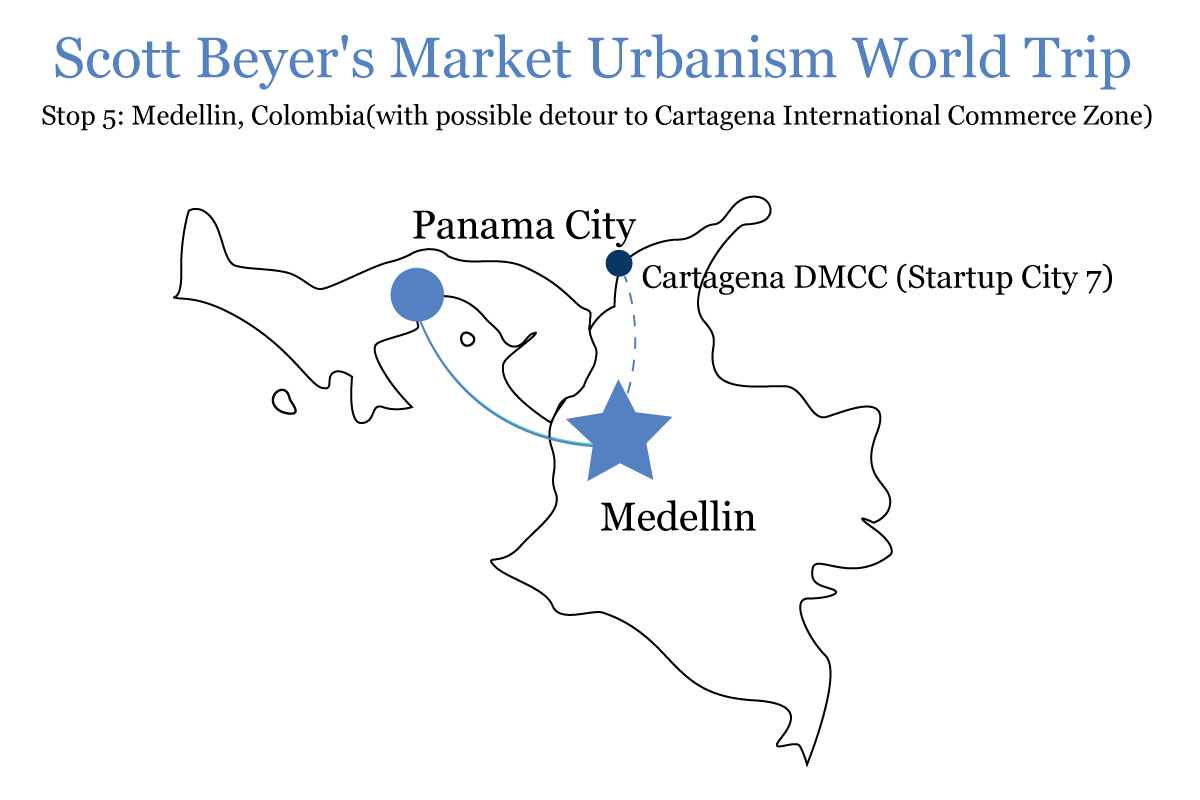 But the region had a housing crisis long before this influx. In 2019, the World Bank claimed that Colombia needed to build an estimated 300,000 units annually to keep pace with demand. Mexico had an even larger housing gap, needing around 800,000 new units each year. It should be noted that at the beginning of 2023, year-over-year home prices in Medellin were 7% lower. The CityLab article implicates short-term rentals catering to well-off foreigners. But restricting STRs ultimately won’t increase the overall housing supply; at most, it’ll add units back to previously insufficient levels, while restricting the economic benefits that STR owners now enjoy.It’s unclear what, exactly, the tourism critics want to do. As of 2019, tourism accounted for nearly 4% of Colombia’s GDP and 1.4 million jobs, in a country with a $6k GDP per capita. CityLab notes that some measures have included barricades at tourist destinations, but there’d be a real economic hit from taking that mindset too far.Nepal, which I visited recently, is more open to tourists than what CityLab claims is the common sentiment around Medellin. Despite obvious poverty, Nepal brings in lots of visitors who flock to the Himalayas. Local climbers, known as sherpas, serve as guides for visiting Mt. Everest climbers; others visit the Hindu and Buddhist temples; and the Thamel neighborhood has been popular dating back to the 1960s counterculture.Tourism is Nepal’s fourth largest employer, accounting for over 11% of jobs. The Nepalese government actively promotes it; there is even a state-sponsored university called the Nepal Academy of Tourism and Hospitality (NATH).
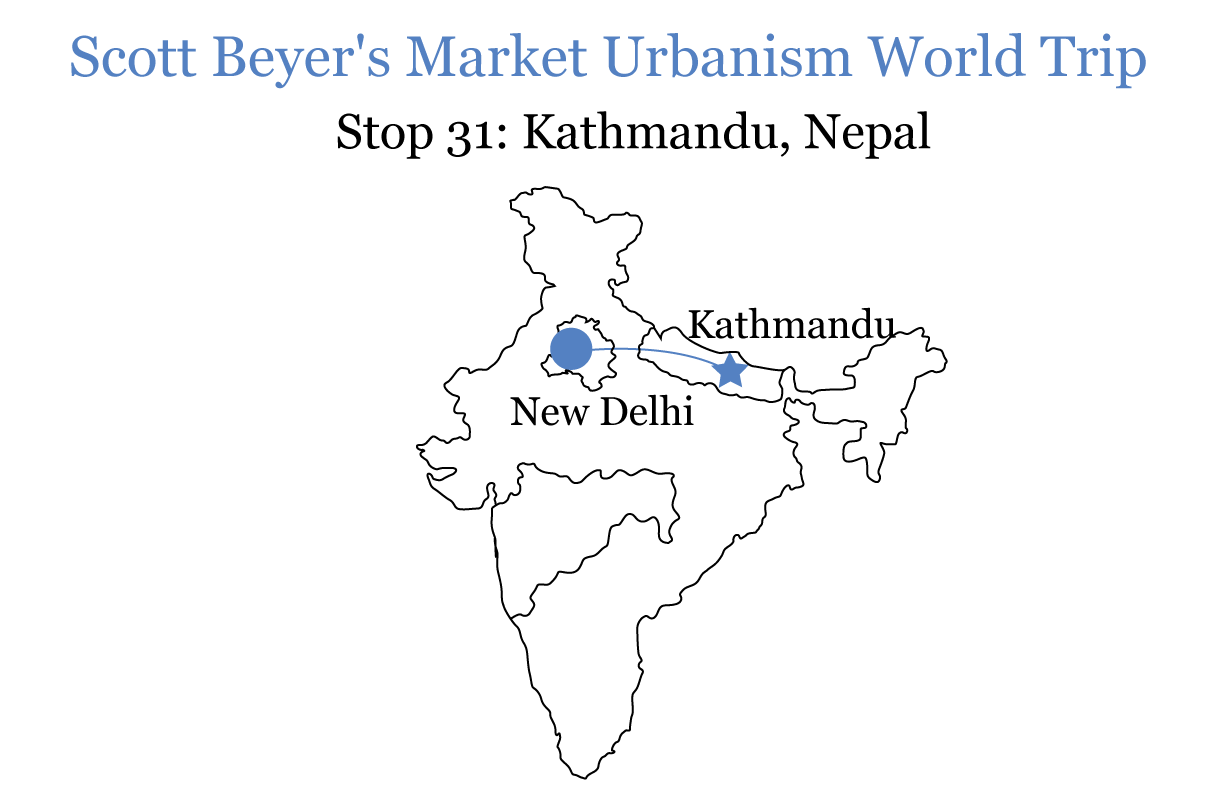 How do residents view tourists? So favorably, it turns out, that they are actually considered minor gods.“The economic side, the development side, the local people love it,” said Mahendra Shrestha, a NATH professor. “You guests are the god.” He spoke of tourism’s economic benefits. The downsides, to echo the problem in Medellin, is that housing in some upscale neighborhoods is getting bid upwards by foreign investors. Shrestha also said Westerners bring on unwanted cultural change, whether it’s culinary, or more meaningful traditions relating to religion and society.There have been concerns about the impact of tourism on Nepal’s environment. The country has thus grown interested in “ecotourism” that focuses on conserving biodiversity and protecting endangered species. Nepal’s government even encourages tourists to go into remote natural areas to raise awareness, and is training locals in these townships to accommodate them.
*
16 months into my Global South tour, I’ll add my own 2 cents on the subject.First, the impact tourists and expats have on local housing markets is likely small, because they remain a small fraction of the population. One striking thing about the Third World is just how minimal the tourist presence is. In Nepal, Medellin and Mexico City they are confined to a few neighborhoods; in less on-the-radar countries like Paraguay and Nigeria, they’re basically non-existent. So it’s unfair to blame them for a housing shortage that’s long existed in most big cities.Second, the sentiment towards tourists in these places is overwhelmingly positive—because they’re so rare. People are genuinely interested when learning that I’m from the U.S., given how underrepresented Americans are, and they are anxious to accommodate. In countries where most people still live on a few dollars per day, tourists are viewed as an economic lifeline and given the royal treatment. CityLab’s suggestion that tourists are ubiquitous in these cities is not accurate, and suggesting that tourists are unwanted is a blatant falsehood, a way of projecting First World biases onto Third World people who have much different economic priorities. Graphic Credit: The Market Urbanist.