What the United States Can Learn from Ancient Civilizations
Long-lived civilizations thrived by welcoming global trade and talent, while self-imposed isolation routinely triggered their decline.
October 19, 2026

News Article
Long-lived civilizations thrived by welcoming global trade and talent, while self-imposed isolation routinely triggered their decline.
The Roman world lasted 2,000 years, transforming from a kingdom to a republic and finally to an empire. At 250, what can the United States, which has been through its own stages, learn from Rome?
As Americans prepare for what seems like a pivotal election—amid not just rising prices but, more seriously, rapid systemic decay—they may profit from an examination of what made the long-lasting Roman and Chinese civilizations so successful.
Rome was far from perfect. Hereditary succession, even during the kingdom and empire phases, was only a suggestion. No matter how powerful, the ruler was an officer of the whole people, not of any one family or clan. Thus, the transfer of power could be violent among such clans. Yet for much of Rome’s tenure, it had two advantages that other states lacked: the rule of law and the ability to incorporate foreign peoples, ideas, and technology into its expanding purview. For example, Roman law was updated as the centuries passed. As for assimilation, the Roman armies and navies, respectively, picked up the phalanx battle formation and “Greek fire” from Greece, and Rome incorporated elements of religion and culture from conquered nations.
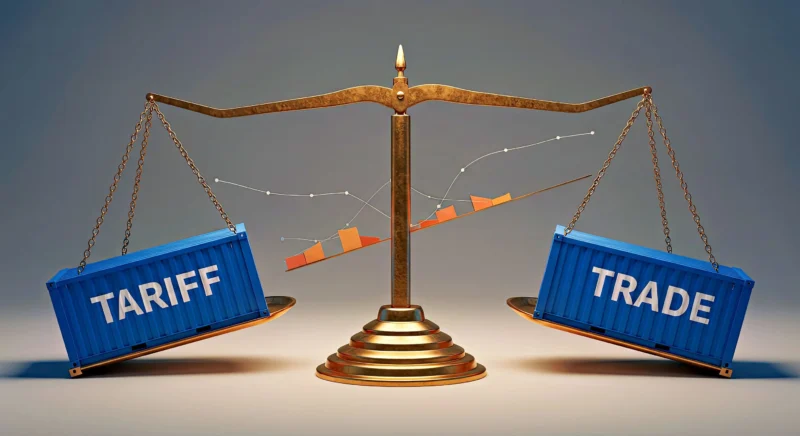
Throughout its history, the United States has exhibited the same advantages; at least theoretically, it has had equality under the law, as well as the ability to assimilate foreign peoples, ideas, and technology into its political, economic, and social systems. But recently, both advantages have decayed. The United States has declined in global indices of freedom, democracy, and the rule of law. Polls indicate a dramatic decline in confidence in American institutions. A market economy with robust competition is being replaced by blatant crony capitalism, whereby the ruler’s relatives or those who bow to the ruler are privileged over those who don’t qualify. Major companies, universities, and media organizations have been sucked into playing this corrupt game. Meanwhile, the U.S. economy is being closed off from the lifeblood of world commerce by high tariffs and rogue immigration enforcement. Violent enforcement, by masked and poorly trained thugs, of comparatively minor immigration violations and accelerated deportation without due process, threatens the rule of law and the opportunity to assimilate new ideas and technologies into the U.S. economic system.
The ruler’s penchant for stirring up animus against the “other,” both legally and economically, will hurt the United States, which has depended on immigration to stay younger than aging competitors, such as Italy, Japan, Russia, and even China—all of which have or likely will have labor shortages. Soon, America’s annual deaths will exceed its births; without substantial immigration, a declining population will also begin to hurt the U.S. economy.
Ancient Rome is not the only long-lived system to benefit from staying open to the world. For most of recorded history, China has been the dominant power (except for the Roman period and the last 500 years). But when China began to close itself off from the world, it declined vis-à-vis the West. It only began its resurgence when it partially opened its economy to the world in the late 1970s after Mao Zedong died.
For most of their long-lived dominant periods, both Rome and China (with Confucian values and “Confucianization” of the law in the Tang Code) had advanced legal systems and incorporated new ideas and technology through open interaction with the world. America grew powerful in the 19th and 20th centuries for the same reasons. It needs to reverse its current course and arrest the decay induced by ignorance of how it became the dominant global political and economic power.