Should The U.S. Follow Britain’s Extradition Requests?
Extradition is based on the premise that the receiving country has a valid justice system. That is questionable with the UK.
July 24, 2026
News Article
Extradition is based on the premise that the receiving country has a valid justice system. That is questionable with the UK.
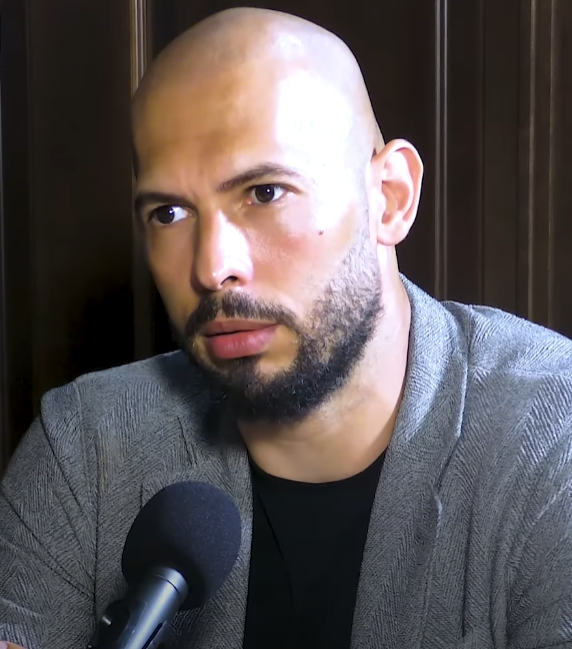
The arrest of Andrew and Tristan Tate in Florida has raised a question that is larger than the Tates themselves: when should the United States trust a foreign government enough to surrender someone for prosecution? The question matters because extradition is not simply an international version of serving a subpoena. It’s a major act of state power, as a person is uprooted from his current territory and handed to another government. That arrangement rests on an implicit premise: that the requesting country has a fair justice system the U.S. can trust.
The Tates are now testing whether Britain still meets that standard.
How extradition works
The U.S. does not extradite people simply because a foreign government asks.
Extradition is generally treaty-based. The foreign government submits a request, the Justice Department’s Office of International Affairs reviews it, and a U.S. judge conducts a hearing. The court considers whether the treaty and the case seem valid, and whether the evidence establishes probable cause. The hearing is not a full criminal trial.
If the judge finds the person extraditable, the case moves to the executive branch, with the Secretary of State making the final decision to surrender the person, using his or her own discretion.
So what type of country should receive someone? The obvious answer is: one with a legit legal system.
The U.S. does not treat North Korea and Western Europe, for example, as morally or institutionally interchangeable. If North Korea demanded the surrender of an ex-pat, the U.S. would weigh its decision based on whether this individual might be subjected to political imprisonment, torture or an unfair trial upon being sent back.
Historical examples of U.S. denial in fact include the U.K.—for example, when it requested Irish Republican Army members in the 1980s; and in 2019 when it requested Anne Sacoolas, a U.S. diplomat’s wife involved in a fatal car crash there. The U.S. has also been cautious with countries that show patterns of judicial or human rights abuses, routinely denying extradition requests from China, Russia, Cuba and Iran. During the Cold War, the U.S. protected individuals from eastern bloc countries.
While U.S. extradition policy does not require that the receiving country be perfect, there must be confidence that the requesting state is pursuing a genuine criminal prosecution through a functioning judicial system.
This is where Britain becomes uncomfortable.
Britain’s Slide Toward Illiberalism
Recent years have seen the UK exhibit authoritarian and even anarcho-tyrannic tendencies: lax enforcement against certain outsiders or favored groups, paired with aggressive policing of native citizens for minor infractions.
Thousands of people have been arrested in recent years for social media posts—even posts that raise concerns about valid issues such as the Southport stabbings or the Muslim rape scandal. Police pursued individuals for “stirring up racial hatred” online, under laws like the Communications Act 2003. Freedom House, an organization dedicated to defending democracy, noted a decline in internet freedom due to these crackdowns.
Protests have faced disproportionate responses, with accusations of two-tier policing—harsher on native demonstrators than on others. During the 2024 riots that ensued after the stabbings, UK police utilized facial recognition, CCTV and swift court hearings to throw thousands of people in prison.
The UK has some of the world’s strictest gun control laws following mass shootings in the 1980s and 90s, effectively disarming the law-abiding population. This has left citizens reliant on a police force that sometimes appears more focused on speech violations than street-level disorder. Critics argue this creates a state that tolerates havoc from outsiders, while cracking down on those who complain publicly about it—a truly chilling combination.
These trends paint a picture of a nation adrift from its liberal heritage. In such an environment, extraditing people like the Tates, who are politically-charged public figures, is questionable.
The Tate Case: Smoke, Fire, or Persecution?
The Tate brothers’ history complicates the issue. Andrew Tate, a former kickboxer turned influencer, built a massive following with a hyper-masculine brand that criticizes feminism, Western weakness and elite hypocrisy.
His charges are serious: multiple counts of rape, trafficking for sexual exploitation, assault, and more, involving several alleged victims. He and his brother Tristan have fought similar cases in Romania.
Andrew’s past suggests that he might be the type of guy to commit such crimes—a possible case of smoke leading to fire. Along with many great motivational videos, he mixes in ones that degrade women, chastise effeminate men, and push societal boundaries.
But context matters here. The Tates also issue valid political commentary—repeatedly mocking politicians; criticizing their UK homeland’s totalitarian drift; and challenging the West’s woke social orthodoxy. They are deeply influential—Kamala Harris, in her biography, partially blamed Andrew for her election loss.
Thus, the timing of this prosecution, which focuses on charges against the Tates solely from the 2010s, seems suspect. Western countries have become polarized; the types of places where high-profile dissidents are often targeted. A fair trial in today’s UK seems unlikely—or the charges could be a sham to begin with.
America’s Message and Soft Power
The U.S. Secretary of State—currently Marco Rubio—holds the ultimate card.
If the U.S. simply extradites the Tates, it sends an implicit message: that Britain is sufficiently trustworthy and America is comfortable allowing British institutions to handle this case.
If the U.S. declines the extradition, that would suggest that the Trump administration no longer believes this about Britain.
That latter move would be a wake-up call. Britain has long been a U.S. ally, but allies should also hold each other accountable. Britain originated many Enlightenment principles that America inherited, but has now become something that Americans themselves would not tolerate in their own country.
“Soft power” is often used as a term to describe how America advances liberal values abroad subtly, without force. The Tate extradition seems like one such opportunity. More than celebrity drama, it tests whether the U.S. should reflexively honor requests from allies showing signs of illiberal decay. Western nations are not immune to authoritarian creep, and when governments prioritize narrative control over individual rights, the distinction between liberal democracies and dictatorships is blurred. By denying Britain’s request, or conditioning extradition on rigorous safeguards, America encourages reform of our neighbors across the pond while protecting its own brand as a safe haven from political persecution.
Cover Image Authorization: CC BY 3.0 license.