California’s Wildfire Cocktail Remains a Dangerous Mix
California has made progress since the 2025 firestorms, but ignition risks, fuel buildup, and vulnerable development remain.
July 21, 2026
News Article
California has made progress since the 2025 firestorms, but ignition risks, fuel buildup, and vulnerable development remain.
Every catastrophic wildfire cocktail requires the same dangerous mix: an ignition source, abundant fuel, and people or property in harm’s way. California has long had the perfect blend of these ingredients. Since the devastating Los Angeles wildfires of 2025, the state has taken steps to dilute this dangerous mix, but it remains far too potent.
To understand why, consider the 2025 Eaton Fire, the second most destructive wildfire in California history.
The first ingredient is ignition. According to the U.S. Department of Justice, the Eaton Fire was ignited by faulty transmission equipment owned and operated by Southern California Edison (SCE). One of the most effective ways to reduce this risk is to bury power lines in the state’s highest fire-threat areas.
In response, California’s major utilities expanded their undergrounding programs. Southern California Edison installed 57 miles of underground power lines in 2025 and plans to reach a total of 212 miles by 2028. Pacific Gas & Electric (PG&E) completed approximately 240 miles between October 2025 and April 2026 and aims to have nearly 1,900 miles underground by the end of 2027. Other utilities have announced similar initiatives.
These investments represent progress, but they cover only a small fraction of the infrastructure most vulnerable to sparking wildfires. SCE operates roughly 9,342 miles of overhead lines in High Fire Threat Districts (HFTDs). Even if it reaches its 2028 target, only about 2 percent of those lines will be underground. PG&E’s plan would cover roughly 7 percent of its approximately 25,500 miles of overhead lines in high fire-risk areas. San Diego Gas & Electric has made the greatest progress, with about 2,800 of its 9,047 miles in HFTDs already underground—roughly 31 percent. Taken together, the Big Three utilities have undergrounded only about 11 percent of their power lines in the state’s highest-risk areas. The direction is encouraging, but the pace remains slow.
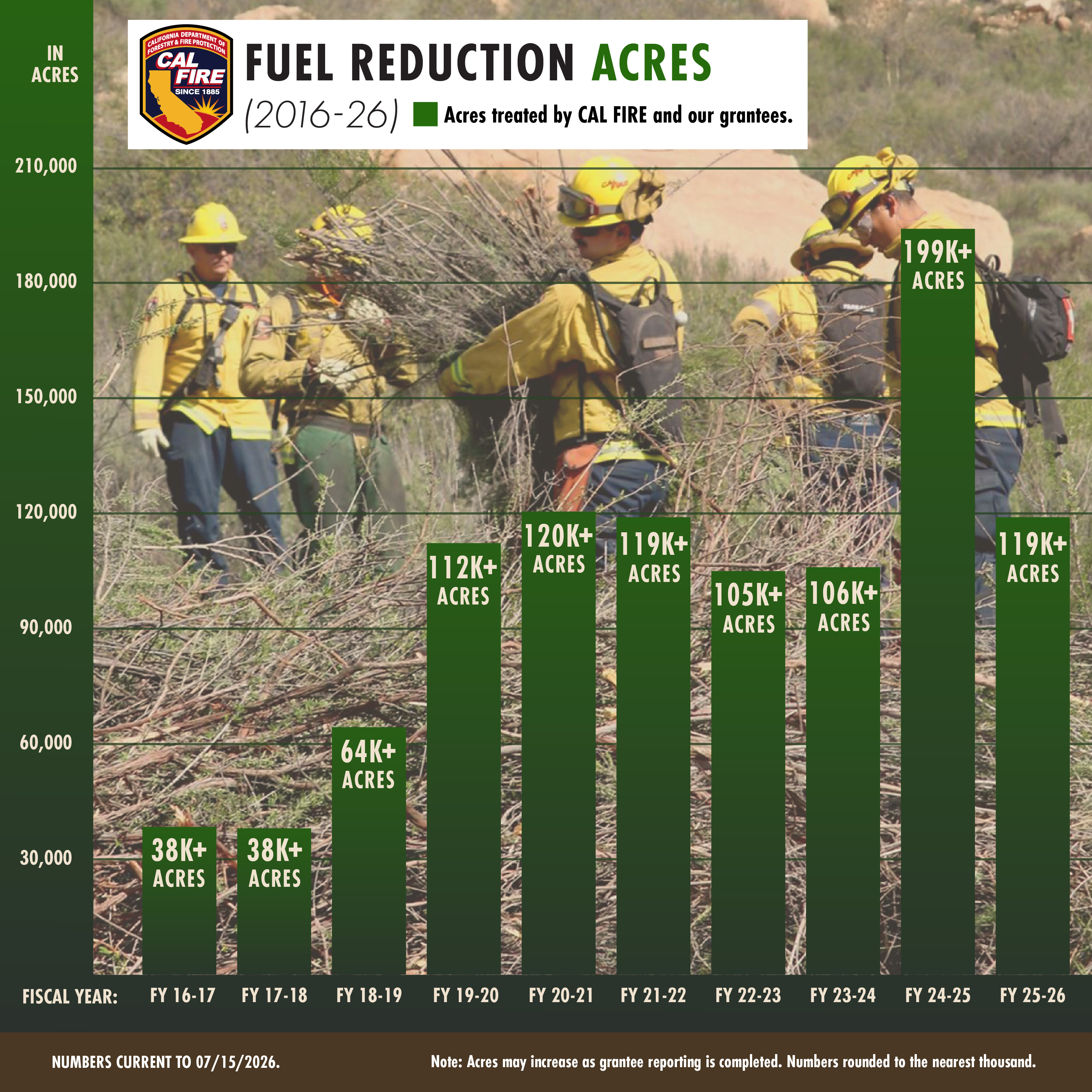
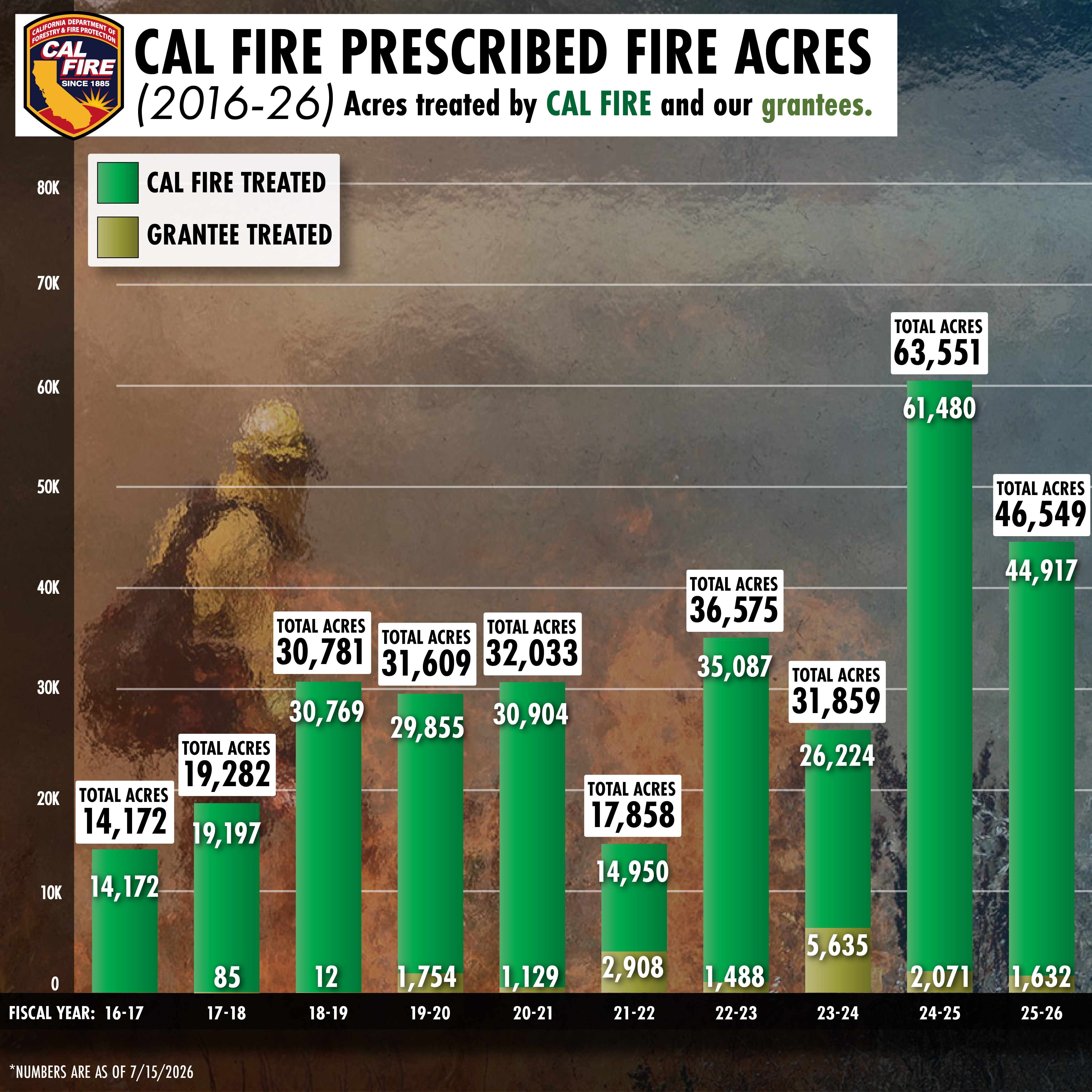
The second ingredient is fuel. California’s forests and shrublands naturally accumulate combustible vegetation. Indigenous Californians managed these landscapes through regular prescribed burning, a practice modern forest management now seeks to replicate with controlled burns and mechanical thinning.
Here, too, progress has fallen short. California and the U.S. Forest Service pledged to jointly treat one million acres annually—500,000 acres each—but they have historically failed to meet that goal. For example, the California Department of Forestry and Fire Protection has treated only about 166,000 acres so far this year, well below the state’s annual target.
The final ingredient is exposure. Roughly one-third of California’s housing units are located in the Wildland-Urban Interface (WUI), where development meets fire-prone vegetation. Even after the 2025 firestorms, rebuilding permits continue to be issued in WUI neighborhoods throughout Los Angeles County.
Rebuilding communities is understandable, but restoring or expanding housing in high-risk areas without proportionate investments in wildfire mitigation leaves more people and property exposed to future disasters. Every additional home in the WUI increases the potential cost of the next catastrophic wildfire.
California has also devoted substantially more resources to wildfire response, with larger budgets and more firefighters than ever before. These investments may improve emergency response, but they do little to reduce the conditions that allow catastrophic fires to occur in the first place. While emergency response will always be necessary, additional resources are likely to yield greater returns when devoted to preventing catastrophic fires than simply responding to them once they ignite.
California has begun to dilute its wildfire cocktail, but the mix remains dangerously strong. Ignition risks persist, hazardous fuels continue to accumulate, and development in fire-prone landscapes continues to place more lives and property in harm’s way. Until the state addresses all three ingredients simultaneously, the recipe for the next catastrophic wildfire will remain largely unchanged.