Understanding Inflation: Causes, Mechanisms, and Interconnections
June 14, 2025

News Article
Inflation is the rate at which the general level of prices for goods and services in an economy increases over time, eroding purchasing power. When inflation occurs, each unit of currency buys fewer goods and services, impacting consumers and businesses. Governments track inflation using indices like the Consumer Price Index (CPI) and the Producer Price Index (PPI).
The CPI measures the average change in prices paid by urban consumers for a basket of goods and services, such as food, housing, and transportation, while the PPI tracks wholesale price changes. In the U.S., the Bureau of Labor Statistics (BLS) compiles these indices monthly, with CPI often serving as the headline inflation metric. For example, a CPI increase of 3% annually means a typical basket of goods costs 3% more than the previous year.
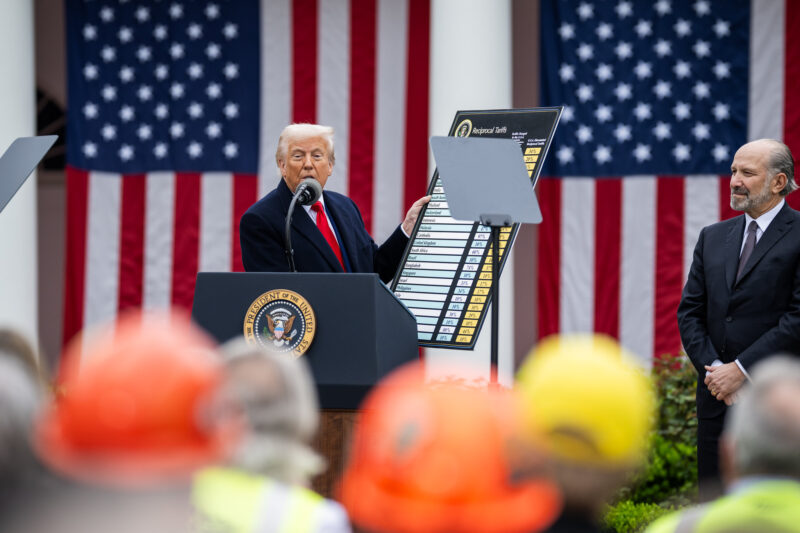
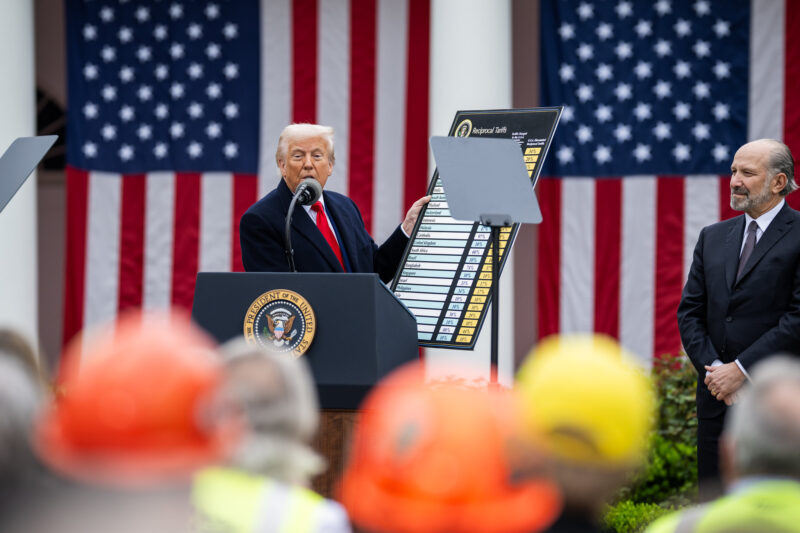
Recently, Commerce Secretary Lutnick argued that “you can’t produce inflation without printing money.” He also posited that tariffs would not lead to inflation either. While this addresses one cause—monetary inflation—it overlooks a broader web of inflationary drivers, which we explore in this article.
Demand-Pull Inflation: Too Much Money Chasing Too Few Goods
Demand-pull inflation arises when aggregate demand exceeds an economy’s capacity to produce goods and services. This imbalance often occurs during economic booms, where consumer and business spending surges. For instance, post-COVID stimulus packages in the U.S. flooded households with cash, spurring spending on everything from electronics to home renovations. With supply chains still recovering, demand outstripped supply, driving prices upward. This type of inflation is demand-side, rooted in excessive liquidity or confidence in the economy. It interlinks with monetary and fiscal policies, as low interest rates or government stimulus can amplify consumer spending, creating the conditions for demand-pull pressures. When central banks keep rates low, borrowing becomes cheaper, further fueling demand. The 2021 economic recovery, with its robust consumer spending, exemplifies how demand-pull inflation can take hold when money chases limited goods.
Cost-Push Inflation: Rising Input Costs
On the supply side, cost-push inflation occurs when the costs of production inputs—like wages, raw materials, or energy—increase, forcing producers to raise prices to maintain profit margins. The 2021 global supply chain crisis, marked by semiconductor shortages and shipping delays, illustrates this dynamic. Similarly, the 1970s oil embargo, when OPEC restricted oil supplies, sent energy prices soaring, rippling through industries reliant on fuel. Tariffs, such as those Secretary Lutnick referenced, can also contribute to cost-push inflation by raising the cost of imported goods or inputs. For example, a tariff on imported steel increases costs for manufacturers, who may pass these on to consumers. Cost-push inflation often interlinks with supply shocks, as sudden disruptions (e.g., a natural disaster affecting oil production) can exacerbate input cost increases. Unlike demand-pull inflation, which stems from excessive demand, cost-push inflation reflects supply-side constraints, making it harder to address without improving production or supply chains.
Monetary Inflation: The Role of Money Supply
Monetary inflation results from an expansion of the money supply, often driven by central bank policies like quantitative easing (QE) or low interest rates. When the Federal Reserve lowers rates or purchases assets, it injects liquidity into the economy, increasing credit availability. From 2008 to 2022, prolonged low interest rates and QE programs expanded the U.S. money supply, contributing to asset price inflation and, later, consumer price inflation.
Milton Friedman, a prominent economist, argued that “inflation is always and everywhere a monetary phenomenon,” encapsulated in the Quantity Theory of Money, expressed through the equation of exchange: MV = PQ. Here, M represents the money supply, V is the velocity of money (the rate at which money circulates), P is the price level, and Q is the real output (goods and services produced). The equation states that the total amount of money spent (money supply times velocity) equals the total value of goods and services sold (price level times output). Friedman emphasized that, assuming velocity (V) and output (Q) are relatively stable in the short run, an increase in the money supply (M) directly leads to a rise in the price level (P), causing inflation.
For example, if the Fed doubles the money supply while output and velocity remain constant, prices would theoretically double. Historical cases like the Weimar Republic’s hyperinflation illustrate this, where excessive money printing led to soaring prices. However, velocity can fluctuate (e.g., during crises, people hoard cash, slowing circulation), and output can change due to supply shocks or technological advances, limiting the formula’s universality.
Monetary inflation does not operate in isolation—it can amplify demand-pull inflation by enabling more borrowing and spending, or exacerbate cost-push inflation if excess liquidity drives up commodity prices. For example, during the COVID era, QE increased liquidity, fueling both consumer spending (demand-pull) and commodity price hikes (cost-push), showing how monetary policy can ignite multiple inflationary channels.
Fiscal Inflation: Government Spending and Deficits
Fiscal inflation emerges when government spending outpaces revenue, creating deficits that stimulate demand without a corresponding increase in supply. Historical examples include wartime spending, where governments borrow heavily to finance military efforts, or large-scale infrastructure programs that inject money into the economy. In the 2020s, expansive fiscal policies, such as U.S. stimulus checks and subsidies, boosted demand, contributing to post-COVID inflation. Fiscal inflation often works in tandem with monetary inflation, as governments may rely on central banks to finance deficits through money creation, aligning with Friedman’s focus on money supply growth. It also connects to demand-pull inflation, as increased public spending can overheat the economy. For instance, a government-funded infrastructure boom might increase demand for construction materials, driving up prices if supply is constrained. This interplay shows how fiscal policy can ripple through multiple inflationary mechanisms.
Supply Shocks: External Disruptions
Supply shocks are sudden, external events that disrupt the availability of goods or services, pushing prices upward. The Russia-Ukraine war, which began in 2022, disrupted global food and energy markets, causing wheat and oil prices to spike. Similarly, COVID lockdowns in China halted manufacturing, creating shortages of everything from electronics to medical supplies. These shocks directly contribute to cost-push inflation by raising input costs, but they can also trigger secondary effects. For example, higher energy prices from a supply shock increase transportation costs, which feed into the prices of countless goods. Supply shocks also interact with inflation expectations, as businesses and consumers, anticipating prolonged shortages, may preemptively raise prices or hoard goods, further fueling inflation. Unlike other causes, supply shocks are often beyond domestic policy control, making them particularly challenging to mitigate.
Wage-Price Spiral: A Self-Reinforcing Cycle
The wage-price spiral occurs when rising wages, often driven by inflation expectations, lead businesses to increase prices to cover labor costs, which in turn prompts workers to demand higher wages. This cycle was prevalent in the 1970s U.S., where labor contracts included cost-of-living adjustments, automatically raising wages as inflation climbed. The spiral links labor market dynamics to psychological factors, as workers’ expectations of future inflation drive their wage demands. It also connects to cost-push inflation, as higher wages act as a production cost. For example, if a tight labor market pushes wages up, manufacturers may raise prices, which can then amplify demand-pull inflation if consumers continue spending. Breaking this cycle often requires cooling the labor market or anchoring inflation expectations, both of which are complex tasks for policymakers.
Inflation Expectations: The Psychological Driver
Inflation expectations reflect the public’s belief about future price increases, influencing their behavior today. If consumers expect higher inflation, they may buy goods preemptively, driving up demand and prices. Similarly, businesses anticipating cost increases may raise prices early, while workers may demand higher wages. This psychological factor can perpetuate inflation, even without immediate economic pressures. For instance, market speculation in commodities like oil can inflate prices based on expected shortages. Inflation expectations interlink with nearly all other causes: they can amplify demand-pull inflation (through preemptive buying), cost-push inflation (through proactive price hikes), and wage-price spirals (through wage demands). Central banks often target these expectations through clear communication or rate hikes to signal that inflation will be controlled, as unanchored expectations can make inflation self-fulfilling.
Currency Depreciation: Imported Inflation
Currency depreciation occurs when a nation’s currency loses value relative to others, making imports more expensive. This “imported inflation” raises the cost of foreign goods, from consumer products to raw materials. Countries like Turkey and Argentina have faced rampant inflation due to weakening currencies, which increase the price of everything from fuel to food. Currency depreciation often stems from monetary or fiscal mismanagement, such as excessive money printing (as Friedman’s formula suggests) or unsustainable deficits, linking it to monetary and fiscal inflation. It also contributes to cost-push inflation, as pricier imported inputs raise production costs. For example, a weaker U.S. dollar could increase the cost of imported oil, pushing up gasoline prices and affecting industries reliant on fuel. In a globalized economy, currency movements can thus have far-reaching inflationary effects.
Rapid Dumping of U.S. Debt: A Financial Shock
A rapid sell-off of U.S. Treasury securities by major foreign holders, such as Japan or China, could trigger significant inflationary pressures. The U.S. relies on foreign investors to purchase its debt, with Japan and China holding trillions in Treasury bonds. If these nations were to dump these securities en masse—perhaps due to geopolitical tensions, economic rebalancing, or loss of confidence in U.S. fiscal stability—it would flood the market with bonds, driving down their prices and pushing up yields. Higher yields increase borrowing costs for the U.S. government, potentially forcing the Federal Reserve to intervene by purchasing bonds (effectively printing money), which could fuel monetary inflation as Friedman’s formula predicts.
Additionally, a sell-off could weaken the U.S. dollar, as declining demand for dollar-denominated assets reduces its value, leading to currency depreciation and imported inflation. For example, higher costs for imported goods like electronics or oil would raise consumer prices. This dynamic also interlinks with inflation expectations, as markets anticipating further debt dumping may preemptively adjust prices upward. The 1980s Latin American debt crisis, where rapid capital flight destabilized currencies, offers a partial parallel, though the scale of U.S. debt makes this scenario uniquely potent. Such a financial shock could thus cascade through monetary, currency, and expectation-driven channels, amplifying inflation.
Interconnections and Policy Challenges
The causes of inflation are deeply interconnected, creating a complex web that defies simple solutions. Monetary and fiscal policies can spark demand-pull or fiscal inflation, which may then trigger wage-price spirals or inflation expectations. Supply shocks and currency depreciation can drive cost-push inflation, which feeds into inflation expectations and wage demands. A rapid dumping of U.S. debt by foreign holders introduces a financial shock that could ignite monetary inflation (via Fed intervention), currency depreciation (via a weaker dollar), and inflation expectations (via market panic). Friedman’s Quantity Theory of Money highlights the role of money supply in driving inflation, but its assumptions of stable velocity and output can be disrupted by supply shocks, debt crises, or shifts in expectations. Tariffs may primarily cause cost-push inflation by raising import costs, but their effects can ripple through supply chains, influence expectations, or interact with currency dynamics. For example, a tariff-induced price hike could lead consumers to expect broader inflation, prompting preemptive buying that fuels demand-pull pressures. Similarly, a supply shock like an oil embargo can raise production costs (cost-push), reduce supply (supply shock), and weaken a currency if trade balances worsen (currency depreciation).
Policymakers face significant challenges in addressing this interplay. Central banks can raise interest rates to curb demand-pull and monetary inflation, but this risks slowing economic growth and exacerbating cost-push pressures by strengthening the currency, which can hurt exporters. Fiscal restraint can mitigate fiscal inflation, but cutting spending during a crisis may be politically untenable. Supply-side interventions, like improving infrastructure or diversifying supply chains, can address cost-push inflation and supply shocks, but these take time. Managing a debt dumping scenario would require coordinated action to stabilize bond markets and the dollar, potentially involving international diplomacy to reassure foreign investors. Meanwhile, managing inflation expectations requires credible communication and policy consistency, as public trust is easily lost.