Trump Should Welcome the EU to the Ukraine-Russia War Peace Talks
Europe’s growing role in Ukraine makes it a necessary participant in peace negotiations.
June 23, 2026
News Article
Europe’s growing role in Ukraine makes it a necessary participant in peace negotiations.
The U.S.-Iran War and the Israel-Gaza War have diverted the world’s attention from the still ongoing brutal Ukraine-Russia War. Western media reports, which tend to be more favorable to Ukraine, indicate that the country now has longer-range missiles, kamikaze drones, and decoy drones that have allowed Ukraine to hit oil refineries, other energy targets, and missile bases deeper inside Russia, including near Moscow and in Russian-occupied Ukrainian Crimea. These longer-range strikes have harmed Russia’s economy and brought the horrors of the previously faraway conflict, which was mainly on Ukrainian territory, home to the Russian public. Also, Russian gains along the front in Ukraine have diminished as Elon Musk cut off Starlink Internet service to Russia.
These Ukrainian gains have once again begun to affect U.S. policy toward the war. Under the Biden administration, the United States wholeheartedly supported Ukraine. Since the Russian invasion in February 2022, the United States has supported Ukraine to the tune of $180 billion worth of aid that was military-heavy but also involved some economic and humanitarian assistance. European countries also contributed significant aid that was initially heavier on economic aid.
However, after Donald Trump began his second term, he abruptly and significantly curtailed aid to Ukraine. He said that from then on, the United States would sell weapons to European nations, and those countries could either give them or sell them to Ukraine. Trump correctly realized that wealthy Europeans (the combined European Union GDP is up to 9 times Russia’s) had a greater stake in Russia’s defeat in the war than did the United States. However, he then went further and began pressuring Ukraine to sign the one-sided peace deal that Vladimir Putin, Russia’s leader, proposed to end the war. Outrageously, Putin’s plan, among other biased outcomes, would have required Ukraine to relinquish parts of its territory that the Russian military had not won in combat and did not occupy.
Now, the edge in the war seems to be flowing to Ukraine, with Putin and his spokesman both admitting that Russia is being adversely affected by the longer-range Ukrainian strikes, with Putin even acknowledging that the Russian economy had been damaged. As a result, Trump appeared to be tacking U.S. policy a bit back toward Ukraine at the recent G7 summit in Evian, France. He hinted that he might be willing to reimpose sanctions on Russian oil that he had previously lifted.
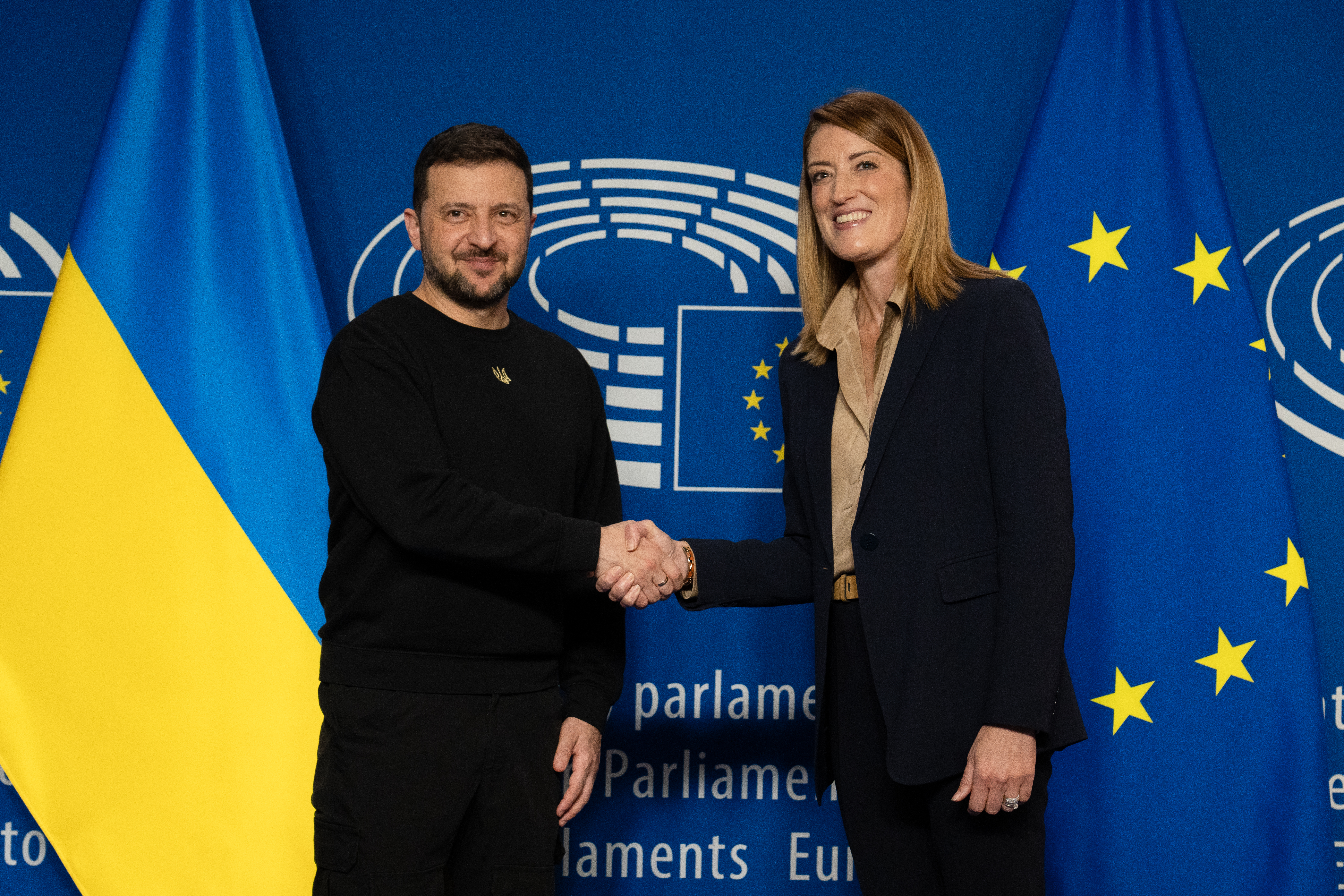
The United States should not in any way assist Vladimir Putin, the clear aggressor in the conflict, by putting more pressure on Ukrainian President Volodymyr Zelenskyy to accept a one-sided peace deal in favor of Russia. Reducing the prospects of any Trump effort to rush through such a bad peace deal for Ukraine, Zelenskyy mentioned he thinks peace talks will resume, but that this time the European Union would be included.
The Europeans have earned the right to be there by taking over the heavy lifting in providing aid to Ukraine. Trump should embrace rather than reject this development. It would allow him to reach his seeming goal of letting Europeans take on a greater role in providing European security, while steadying U.S. policy as the mediator at the talks.