


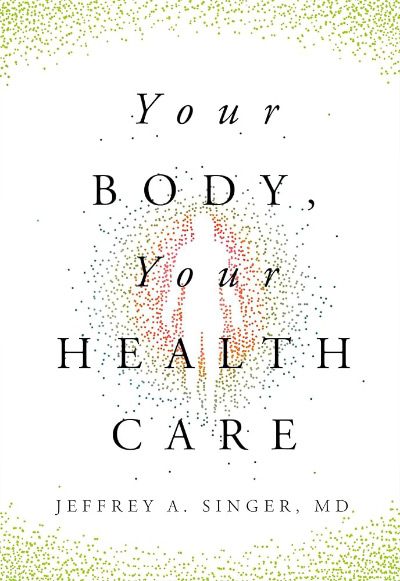
Your Body, Your Health Care
Book Review
Reviewed by
This book review is a web exclusive for the Winter 2025/26 issue of The Independent Review.
This book has an unusually clear, and consistent, organon: Adults own their bodies; therefore, health policy must be guided by patient sovereignty and informed consent, rather than deferring to professional guilds or the administrative state.
The chapters of the book then document the way that, in area after area, the US steadily has displaced the patient–clinician relationship with prescriptive rules. Examples include the FDA’s drug-approval monopoly and prescription requirements; state licensing and certificate-of-need regimes; and a whole dog’s breakfast of criminal prohibitions that frustrate harm-reduction strategies, causing unnecessary and avoidable pain and suffering on a massive scale.
The patient-practitioner relationship has been overshadowed by paternalistic and overbearing government intervention, even though the state is often flat wrong on large matters—I’m looking at you, Food Pyramid—and has no possible way of discriminating among local and individual needs with massive mandates that rule out individual differences in physiology and needs.
Singer is a practicing general surgeon turned policy analyst, blending clinical narrative with political philosophy and very interesting and detailed regulatory histories. His recurring strategy is to pair case-based illustrations, such as pain management and opioid policy or access to harm-reduction tools, with institutional critiques of the rules that channel behavior. In interviews and public discussions surrounding the book’s release, he reiterates his claim that FDA gatekeeping, licensing, and certificate-of-need laws function as protectionist barriers that limit competition and patient choice—positions he frames as both ethically and economically suspect. Methodologically, the book is as normative as empirical, resting on a presumption of self-ownership and the ethical centrality of informed consent in medicine, then evaluating institutions against those yardsticks.
Singer begins from the claim that competent adults should decide what may be done to their bodies. If one accepts that axiom, then restrictions that require clinician or state intermediation—especially categorical bans—bear a heavy justificatory burden. This principle leads directly to his defense of the right to self-medicate and to try emerging therapies. Singer criticizes the FDA’s centralized approval monopoly and prescription-only rules as denying patients agency over risk, delaying beneficial therapies, and cementing status-quo bias. Similarly, his critique of professional licensing and certificate-of-need laws presents them as protectionist devices that constrain supply, inflate costs, and disempower patients by narrowing their choices.
Harm reduction and drug policy also receive sustained attention, in keeping with Singer’s broader policy portfolio. He defends harm-reduction approaches—such as easier access to naloxone and supervised consumption services—and critiques punitive controls that, in his view, worsen morbidity while violating autonomy. Pandemic-era paternalism becomes another illustrative case, with Singer situating recent policy controversies within a longer history of public health overreach, which he argues corrodes trust and short-circuits informed consent.
The book’s contributions include reframing disparate policy debates—drug approval, scope of practice, pain management, harm reduction—under a single ethical principle of patient sovereignty, yielding a consistent evaluative standard. It also foregrounds the opportunity costs of precaution: delays, access barriers, and substitution into riskier black-market behavior. At the same time, precisely because the book is normatively forthright, some empirical claims invite further testing. Questions remain about how to address third-party effects, such as antimicrobial resistance and vaccination externalities, within an autonomy-first framework, and about what institutional substitutes could replace premarket review without exacerbating inequalities in health literacy.
Singer’s prose is accessible without sacrificing argumentation, making the work appealing to health-law scholars, economists of regulation, and clinicians frustrated by one-size-fits-all mandates. His own background strengthens the book’s credibility: Singer is a senior fellow at the Cato Institute’s Department of Health Policy Studies, President Emeritus and founder of Valley Surgical Clinics in Phoenix, and a practicing general surgeon with over 35 years in private practice. He has served as a visiting fellow at the Goldwater Institute, testified before Congress, and written extensively on drug policy, pain management, and medical regulation. This combination of clinical experience and policy engagement gives Your Body, Your Health Care both an insider’s grasp of medical realities and a reformer’s critique of the systems in which those realities unfold.
Singer argues for re-centering patient autonomy in American health policy. The book is a clear statement of the autonomy-first position that sharpens the debate about paternalism, risk, and the institutional design of medicine. I thought the best example of the application of this reasoning is on the (informative and well-researched) chapter on tobacco.
On one hand, Singer notes that “Big Tobacco” has no right to distort, mislead, or control perceptions and use of tobacco products. But then he points out that “Big Government” (my words) doesn’t have that right, either. It’s just as wrong—and for the same reasons—for the state to manipulate public perceptions and use of products as it is for the manufacturer to do that. Outlawing tobacco products of different sorts has led to enormous enforcement expense by state and municipal governments, and increased costs to people who are going to smoke anyway. Ultimately, in a democracy, individuals have to be trusted to decide—whether that choice is about elections or our bodies.
Comments
Related Book Reviews


Independent Review Issues
Articles by Issue