You Can Buy a Mansion, But Can You Really Own It?
Estate and property taxes turn ownership into a conditional privilege subject to government claims.
August 12, 2026

News Article
Estate and property taxes turn ownership into a conditional privilege subject to government claims.
Imagine dying and leaving your children a $13 million tax bill. What the heck? Did you cheat the IRS? Did you run an illegal business? Nope. It’s just that the government couldn’t agree with your family about where you lived.
That’s what happened after Jack Anderson died in 2015. His estate said his home was in Florida. Connecticut disagreed, pointing to the time he spent there. Because the deceased owned condominiums in that state, his kids were ordered to pay $13.2 million in estate and gift taxes.
Anderson had a 9,700-square-foot oceanfront house in Vero Beach, Florida, complete with a custom observatory. He had a Florida driver’s license and voter registration. His family celebrated Christmas there.
Connecticut, however, argued that the most important evidence of his domicile was where he spent his time. The dispute is far from getting resolved after the Connecticut Supreme Court changed the legal standard governing the estate’s challenge.
You might see in this story a complicated question of state tax law. I call it a warning about the essence of property rights. Because if the government can confiscate your parents’ house over such residency disputes, what exactly does “ownership” mean?
Property and inheritance taxes turn ownership into a conditional privilege. You paid a tax when you bought the property, using money that had already been taxed as it was earned. Then you paid property taxes for decades while owning the house. Now you die and get another tax bill?
Economists Moretti and Wilson found that estate taxes have a significant effect on where billionaires live. One in three local billionaires lives in a state with an estate tax. A tax is what a tax does. It’s not merely extracting money. It’s changing behavior.
That’s especially important when the thing being taxed is a person’s accumulated wealth.
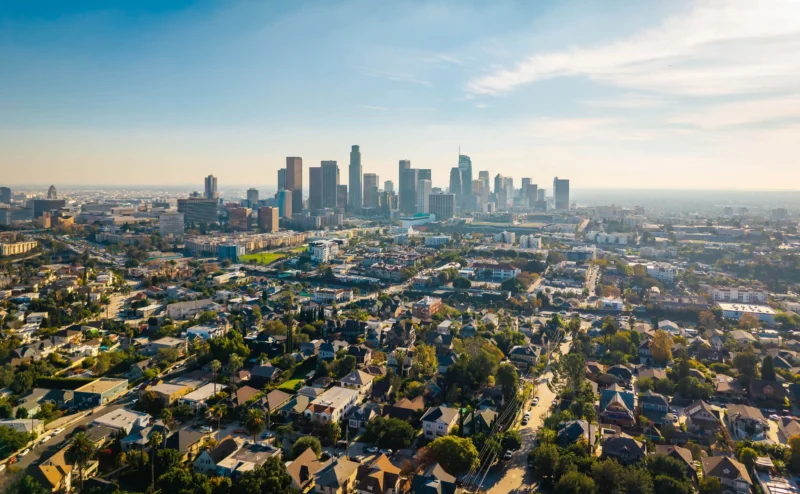
The Los Angeles “mansion tax” imposes a 4 percent transfer tax on property sales above $5 million and 5.5 percent above $10 million. The tax is supposed to raise money for housing and homelessness programs. Great intentions. What could possibly go wrong?
A 2025 UCLA-RAND analysis (reported in the Los Angeles Times) found that the tax had reduced apartment construction. By 2026, the city was considering exempting new buildings because it was suppressing housing construction and worsening the affordability crisis.
Taxing something makes it more expensive to produce? Who could have thought? You’d think that the Golden State has learned a lesson? You’d be wrong. California is now flirting with the next brilliant idea: a one-time 5 percent tax on the assets of the state’s billionaires.
The proposal targets roughly 200 people. Supporters say the rich can afford it. Therefore, we should squeeze them. Socialist Logic 101. Dumb enough that even Governor Newsom worries that the confiscation would drive the biggest wealth and job creators out of California.
A free society and a fair law should not discriminate against you based on your economic success or failure. It must protect the rights of all property owners. Public servants shouldn’t get to decide how much of what you own they are entitled to take and redistribute.
When a state increasingly relies on a small number of extraordinarily successful individuals, its tax base becomes overly sensitive to financial markets and taxpayer mobility. The Manhattan Institute has documented the limitations of New York’s strategy of eating their rich.
High-income taxpayers are treated as immovable pieces in the blueprint of tax-and-spend politicians and college sophomores who have skipped taking economics courses. Wealthy people can leave and take their investments with them.
Every now and then, the net effect on tax revenue turns out to be positive for a time. As the Laffer curve proves and data confirms, higher taxes can raise revenue. Once in a blue moon, the arithmetic effect turns out to be stronger than the economic effect.
The question isn’t whether the taxman can successfully bleed the rich. The question is whether the government should have a perpetual claim on things that belong to you and me. If you sell me a house and I gift it to my children, does the government have a claim on any of it?
Suppose you buy a house for $500,000. Thirty years later, after adjusting for inflation (which is another tax abuse altogether), it is worth $2 million. Your house isn’t bigger or better; it just happens to be in a neighborhood that became more desirable.
The government demands more money every year. If you can’t pay, the government will take your house. It’s like the government owns everything and you pay rent to a super landlord. It’s an arrangement in which private property rights are contingent on arbitrary political decisions.
If the state can demand millions from your children because you died owning valuable assets, your savings were never entirely yours. If government lawyers can fight your family in court over whether you really lived in Florida or Connecticut, your domicile isn’t yours either.
The same incentive that makes consumers buy less when prices rise makes entrepreneurs invest elsewhere when taxes rise. Retirees reconsider where they live. Wealthy people think twice about spending their golden years in jurisdictions that demand a final pound of flesh.
Private property is a human right. But in many places in America today, when you declare, “I own this home,” it is really just another way of saying “the government hasn’t taken it yet.” Property and estate taxes are an abomination that must end.