The Venezuelan Pirouette
The future of Latin American populism
February 16, 2026

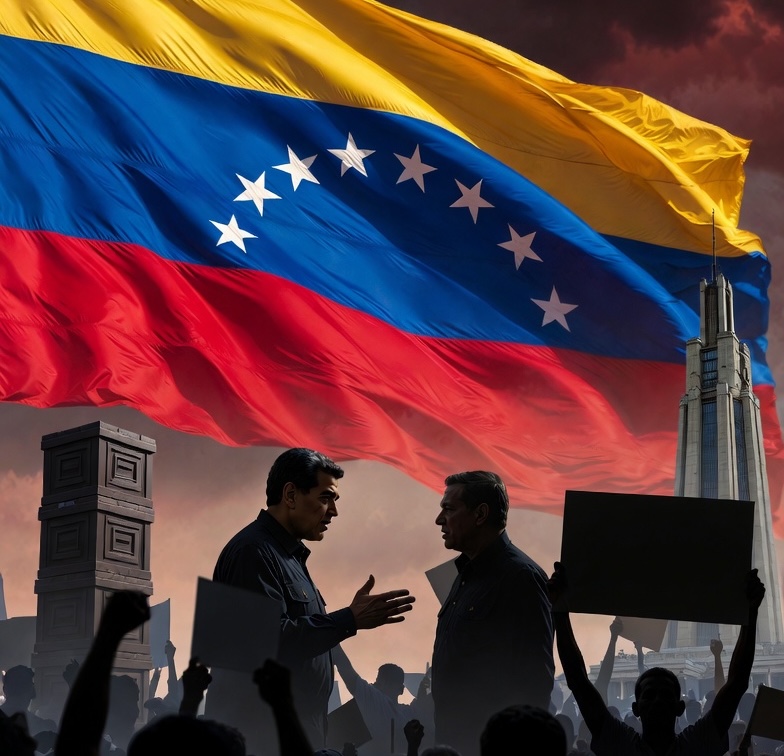
For a subcontinent known for holding “honor” and “dignity” in (disproportionately) high esteem, as seen in everything from pop culture, including soap operas, to political discourse, the turn of events in Venezuela is fascinating.
The speed and ease with which the regime’s top figures (interim president Delcy Rodriguez, minister of the Interior Diosdado Cabello, minister of Defense Vladimir Padrino and the president of the National Assembly, Jorge Rodriguez) have become the incarnation of everything they once despised should put the last nail in the coffin of the myth that the Latin American revolutionary left stands, well, for honor and dignity. Their current—and blatantly happy—role as lackeys of the empire, to use the expression that they and other Latin American anti-imperialists have used ad nauseam for so long, betrays their real nature. Their farcical regime was never about ideological conviction. To the extent that there was any conviction, it was clearly subordinated to more pedestrian considerations of naked personal ambition and fear.
The trajectory of anti-Americanism in Latin America has been a long one. Its intellectual roots lie in José Enrique Rodo’s “Ariel”, a famous essay published at the turn of the 20th century in which the Uruguayan author uses Shakespeare’s “The Tempest” to contrast the materialism of “Caliban,” embodied by the United States, with the spiritual values of civilization uncorrupted by utilitarianism. The book inspired generations of idealistic Latin Americans who saw the subcontinent as the refuge of spiritual values against the evil materialism of the U.S. and, by extension, of North American imperialism.
It was published just after the Spanish-American War of 1898, arguably the political root of the region’s anti-Americanism. Since then, several political movements, including the Mexican revolution, Argentina’s Peronism, the Cuban revolution and, in the 21st century, the Chavista revolution, among others, embodied, in various degrees, the anti-American ethos.
The fact that U.S. imperialism was a real thing notwithstanding, anti-Americanism served as a political cover for communism, socialism, left-wing populism and “developmentalism” (“desarrollismo”), the economic doctrine that justified major government interventionism in the economy as a way of “correcting” imbalances produced by the unfair distribution of the roles played by developed and underdeveloped nations in the international marketplace. Arguably, Latin America owes a good part of its inability to achieve political and economic development to anti-Americanism, regardless of the stupidity of U.S. foreign policy at various times during the 20th century.
But at least one could say about old-school revolutionaries that they were willing to risk their lives—and many actually made the ultimate sacrifice—in the pursuit of their crooked goals. The late president Salvador Allende of Chile, who committed suicide rather than face defeat at the hands of Pinochet during the 1973 coup d’Etat, or the murderous Che Guevara, who got himself killed in the jungles of Bolivia trying to ignite a revolution that was utterly chimeric since Bolivia’s peasants had just benefited from an agrarian reform and the last thing they wanted was a communist takeover, gave their lives for an idea in which they were invested in body and soul.
Contrast this with Nicolás Maduro and his wife’s meek, cowardly capitulation in the face of U.S. Delta Force soldiers. The least one would have expected from a couple responsible for so much suffering inflicted on millions of Venezuelans in the name of an idea was an act of self-immolation or martyrdom, not to let themselves be humiliatingly dragged into a vessel bound for the enemy empire.
Not to speak of those who stayed behind and became Washington’s stooges overnight. Rodriguez, Cabello, Padrino and the other Rodriguez pirouetted into the pro-American, pro-capitalist regime they are fast trying to become in order to preserve power or avoid being shipped to a New York court like the illegal president they likely betrayed in secret negotiations.
One hopes that the dishonor, cowardice, hypocrisy and servility that they are showing these days will put off current and future generations of Latin Americans from thinking that the path to political glory lies in revolutionary socialist politics and anti-imperialist populism. If this were to be the outcome of what we are seeing in Venezuela, where the very same people who destroyed the country continue to enjoy the cornucopia of power with Washington’s blessing, then this surreal outcome is perhaps, temporarily, worth the moral price.