Iran Doesn’t Need a King. It Needs Freedom
January 15, 2026

Iran’s authoritarian regime and failed economy have finally reached a breaking point. Due to drought and hyperinflation, which are causing an extreme cost-of-living crisis, protests have erupted throughout the country. The Iranian government has responded by killing protestors in an extreme crackdown. As of January 15th, the death count of protestors killed by the Iranian Revolutionary Guard (IRGC) ranges from approximately 600 to as high as 12,000 people. Body bags are lining the streets outside of medical centers, and there are reports of protester executions already being scheduled for this week. These events are all unfolding in darkness as the Iranian government has also implemented a country-wide internet blackout to prevent footage of these events from leaking. While the current situation is a frightening testament to the horrors of the Islamic Regime, Western calls to reinstate “the Shah of Iran” are misguided and only serve to reinforce the real issue that has scourged Iran for the last 100 years—authoritarianism.
Operation Ajax
Before the current Islamic Iranian regime, which was established in 1979, Iran was ruled by Shah Mohammad Reza Pahlavi. The Shah initially ruled over Iran as a semi-constitutional monarch until 1951, when he seized full monarchical control during Operation Ajax. The coup d’etat was a joint military operation conducted by the United States and Great Britain to centralize Iranian power in response to Iranian parliamentary efforts to nationalize resources, specifically the Anglo-Persian Oil Company. In the years preceding Western intervention, power in Iran had slowly but surely been moving away from the monarchy and towards left-leaning social and labor reforms.
The years following the Shah’s consolidation of power are the subject of much praise in the Iranian diaspora community. During this period, the Shah instituted land reforms, helped modernize and industrialize the Iranian Army through deals with the United States, and built a nationwide education system. Additionally, under the Shah, women received greater autonomy and rights, even the right to vote. However, this was mostly ceremonial, as voting for a nationwide leader was out of the question. Economic investment in the country soared, but while Western businesses flourished in Iran, this influx of capital created a greater divide between the “haves and have-nots” of Iran.
It’s important to contextualize the opulence and development seen in Iran before 1978 with the often unseen costs they entailed for the urban and rural poor. While those loyal to the Shah were rewarded with an influx of Western contracts and capital, freedoms of speech were all but eliminated and protests by those loyal to the puppet parliament were brutally suppressed. Political dissidents were killed and the wealth gap soared. Hatred of the Shah grew even greater as he built palaces and threw lavish parties in the desert against the backdrop of starving masses.
The rise of the current Islamic Republic, while horrible in its own right, was in fact a symptom of the dark ages brought on by the political cronyism evidenced during the Shah’s reign. Again, authoritarianism only begets itself.
Diaspora Politics
Within the Persian diaspora, there is a key distinction between Persian and Iranian, with many preferring to identify as Persian to distance themselves from the current Islamic regime and align with “The Kingdom of Persia.” Many of these same people love the Shah because, for them, it was a profitable time. The Shah created an economy that made a lot of money for those in power—money that enabled Shah loyalists to afford to leave the country during the civil unrest of the late 1970s. As such, there should be skepticism toward calls advocating the return of a Western-financed monarch to take control of Iran. We know from history that this will leave us right back where we started in 1951.
At the basis of every Iranian revolution has been the desire to share in the fruits of the land. The constitutional revolution of 1906 and the Islamic revolution of 1978, even the initial policies of the Shah’s Industrial “White Revolution” (the Persian Great Leap Forward), share this undertone. The people of Iran have always yearned to break free from authoritarianism, to advocate for authoritarianism under a different name, dooms us to repeat the mistakes of our past.
Between June of 2023 and April of 2024, I served as an Infantry Officer on a remote US outstation in Northern Syria where I witnessed the ramifications of American invention and regime change—millions of people displaced, hundreds of thousands dead, and thousands more in refugee camps, all complemented by a power vacuum that allowed for the rise of militant factions across the country. As it relates to Iran, beginning shortly after October 7th, 2023, American outstations came under near constant threat of attack by IRGC rockets and one-way drones. Coincidentally, I also happen to be half-Iranian, somewhat famously leading to a humorous incident where my commander referred to me as his “favorite insider threat.”
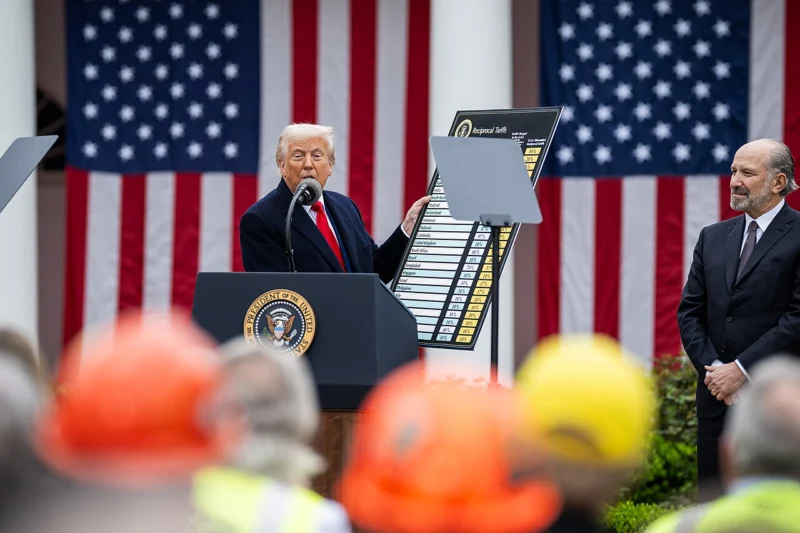
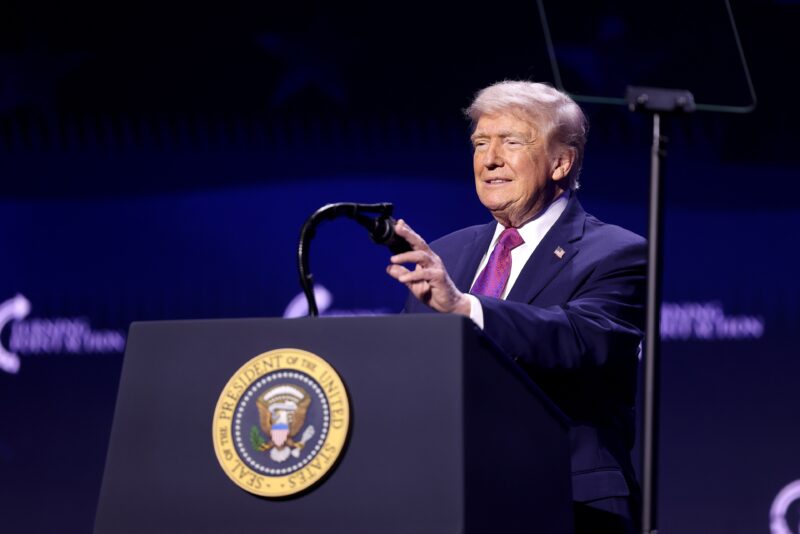
President Trump has taken to Truth Social and has announced his intent to intervene, sending the United States down a similar path to that of Iraq and Syria. In the wake of the US capture of Nicholas Maduro, the US is likely considering targeted military strikes against the Iranian high command. It’s reported that the Trump administration has also been meeting with Reza Pahlavi, the son of the ousted Shah, mirroring the failed attempt to install Ahmad Chalabi in Iraq.
A Path Forward
Taking into consideration its previous foreign policy failures, the United States needs to distance itself from the idea of a future military or corporate governance of Iran. Installing the Shah, or any other puppet leader, will be met with resentment as a simple “oil grab.” We’ve seen this play out recently in the dialogue surrounding events in Venezuela. Real revolutionary momentum is with those on the ground in Iran, not a King. Existing government structures will be instrumental in maintaining order post any possible collapse or decapitation strike on the Islamic Regime’s military apparatus. Additionally, pursuing non-military options, such as lifting sanctions, could serve as a golden olive branch to normalize American-Iranian relations.
To be successful, hope needs to be inspired in the people of a future free of authoritarianism. Iran needs a new government, by the people and for the people, not a Shah nor the Clergy.