The 2025 Los Angeles Wildfires: Lessons and Key Recommendations
January 7, 2026

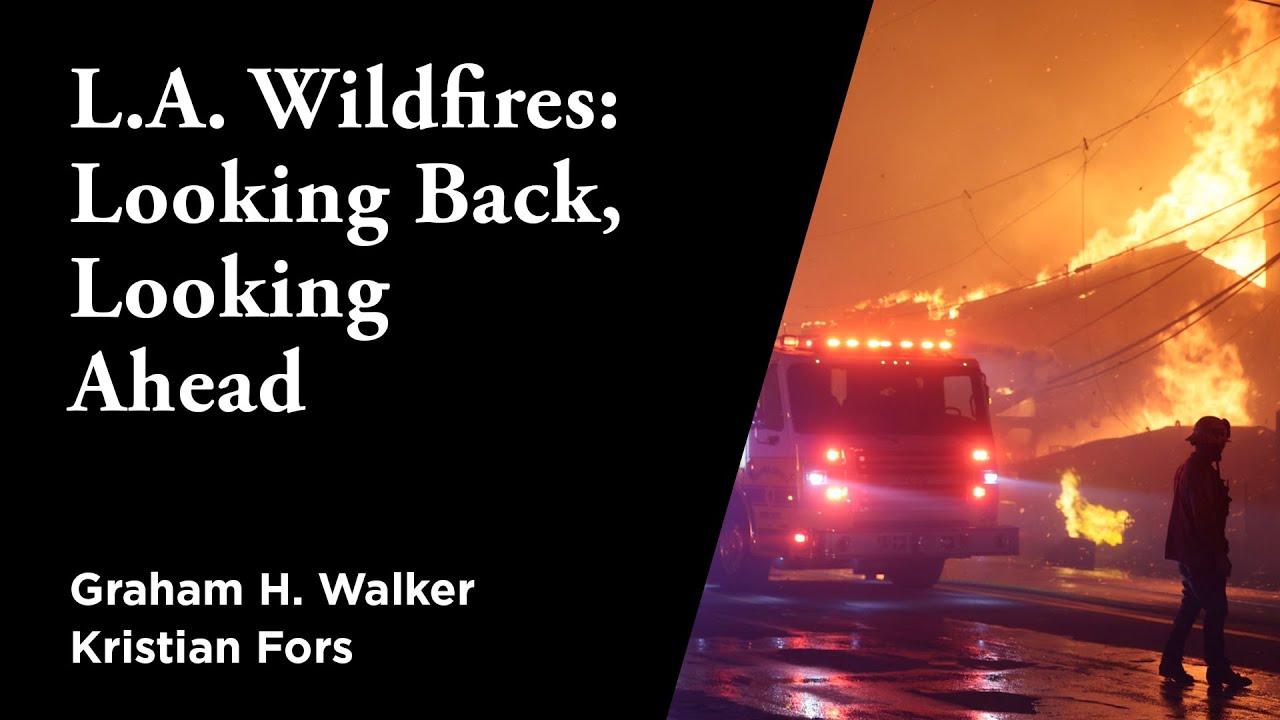
The Palisades Fire, January 7, 2025.
Policy Report


Contents
- Overview
- Background
- Contributing Risk Factors
- The Risky Ecology of Los Angeles and the Danger of Living in the Wildland-Urban Interface
- Zoning Restrictions Fuel Growth in the Wildland-Urban Interface
- The Dangers of Exposed Utility Lines
- The Rekindle Theory
- The Los Angeles Water System
- Mismanagement of Taxpayer Resources
- Mismanagement of Public Land
- Lack of Vegetation Removal on Private Property
- The Consequences of California’s Dysfunctional Insurance Regulation
- California’s Extensive Barriers to Land Management and Housing Development
- Key Recommendations
- Conclusion
Acknowledgments
I. Overview
In January 2025, Los Angeles experienced some of the worst wildfires in California history. The wildfires claimed more than two dozen lives and destroyed thousands of structures (see Table 1). Rankings from the California Department of Forestry and Fire Protection (Cal Fire) indicate that the Eaton Fire in Altadena was the second most destructive fire in state history, and the Pacific Palisades fire was third. Researchers at the University of California, Los Angeles (UCLA), estimate that the total property and capital losses from those fires range from $76 billion to $131 billion, with insured losses estimated at up to $45 billion. The total area burned in the wildfires was more than double the size of Manhattan Island.
Table 1. Overview of the January 2025 Los Angeles Wildfires

Sources: Cal Fire, “Eaton Fire,” 2025; Cal Fire, “Palisades Fire,” 2025; Cal Fire, Top 20 Most Destructive California Wildfires, 2025.
The January 2025 wildfires exposed the risks associated with living in Southern California and the institutional and policy failures that compounded the crisis. The devastation caused by the conflagrations, combined with the apparent lack of preparation by city leaders and public agencies, ignited public anger in Los Angeles and raised pressing questions. For those reasons, the Independent Institute has awarded its nineteenth California Golden Fleece® Award jointly to Southern California Edison, the Los Angeles Fire Department, the Los Angeles Department of Water and Power, Los Angeles Mayor Karen Bass, zoning restrictions, Proposition 103, Harvey Rosenfield, California insurance commissioners, the California Environmental Quality Act, and the California Coastal Commission.
Californians must understand the lessons revealed by the wildfires and identify the actions required by governments and private actors to prevent a tragedy of this scale from happening again.
II. Background
The 2025 Los Angeles wildfires began on January 7, when ferocious “hurricane strength” Santa Ana winds swept through Los Angeles. Before the winds blew, the National Weather Service of Los Angeles warned on January 6 that destructive, life-threatening winds were expected to hit the region on the 7th and 8th of the month. It was forecast that 80–100 mph winds could potentially hit some of LA’s most fire-prone areas—the San Fernando and San Gabriel foothills. Tragically, the prediction proved to be correct, and the windstorm ultimately led to the ignition of fires that devastated Altadena, Malibu, and Pacific Palisades.
According to the Department of Justice, the Palisades Fire is thought to have been caused by the reignition of the Lachman Fire, an 8-acre blaze that burned six days earlier. The Lachman Fire was allegedly caused by intentional and malicious arson. In October 2025, authorities arrested Jonathan Rinderknecht in connection with the Palisades Fire; he has pleaded not guilty and faces trial beginning on April 21, 2026. The Palisades Fire began on the morning of the 7th and was noticed by residents around 10:30 a.m. The Eaton Fire in Altadena started around 6:00 p.m. on the same day, and the leading theory is that the fire was caused by failed power transmission lines. Because the wildfires erupted on opposite ends of Los Angeles, the emergency response was stretched thin, fighting what was effectively a war on two fronts.
Many people unfamiliar with the layout of Los Angeles falsely assumed that the two fires must have been close to one another, but they were forty miles apart. Altadena is serviced by the Los Angeles County Fire Department, which was already assisting the Los Angeles [City] Fire Department (LAFD) with the Palisades Fire. According to the Los Angeles Times, the confluence of events raised “questions about how much Altadena suffered from the misfortune of being the second catastrophic blaze to break out that day.”
After the fires had started, the wind caused them to spread rapidly. The winds were so strong that they prevented the deployment of aerial firefighting aircraft—an essential wildfire suppression tool. Helicopters were grounded by 7:00 p.m. on the first day of the wildfires and were not allowed to operate until the following afternoon.
Jon Keeley, a research ecologist with the US Geological Survey, told The Conversation that “when the wind is blowing like this, there’s very little chance of stopping it until the wind subsides.” It was primarily due to the inability to engage in aerial firefighting that the blazes expanded so rapidly. Riva Duncan, a former manager and firefighter in the US Forest Service, told MS NOW that “wildfires like this, driven by 70 to 100 mph winds, couldn’t be ‘put out’ if every firefighter in the West were in Los Angeles.”
Other challenges impeded the response, such as fire hydrants running dry in Pacific Palisades. After consulting with experts, CNN concluded that the Los Angeles wildfires were so destructive that “no ‘water system in the world’ could have handled the LA fires.” According to Gregory Pierce, the co-director of UCLA’s Water Resources Group, creating a hydrant system to handle fires akin to the January wildfires would “cost an incredible amount” and “be unlike anything that exists in the world.”
The combination of factors hampered response efforts so much that even on the afternoon of January 9, both fires were 0 percent contained. Neither fire reached any level of containment for more than forty-eight hours after they started.
During the wildfires, nearly 180,000 people were placed under evacuation orders and forced to leave their homes. The delivery of those evacuation notices, which primarily relied on mobile phone notifications, was carried out ineffectively. Some residents did not receive notifications at all, while others received false evacuation notices. Other residents received delayed evacuation orders, such as in West Altadena, where residents did not receive an evacuation order until hours after fires had reached their neighborhood. This may have had tragic consequences; all but one of the Eaton Fire fatalities were in West Altadena. In the aftermath of the fires, Los Angeles County is working to make its emergency notification system more coordinated and effective. Using sirens could also provide a clear, unambiguous evacuation signal for residents and minimize the risk of people mistakenly staying behind.
The Eaton and Palisades Fires were the tragic result of a perfect storm that made both more devastating. When low humidity, high temperatures, extended drought, and severe winds align, fires are incredibly difficult to control, especially when they enter communities and turn into urban conflagrations. The most effective form of wildfire suppression is prevention. In any event, analyzing the factors that contributed to the January 2025 catastrophe is essential to prevent such fires in the future and to protect lives and property going forward. The following ten sections discuss wildfire risks specific to Los Angeles that were not properly addressed before the January conflagrations.
III. Contributing Risk Factors
A. The Risky Ecology of Los Angeles and the Danger of Living in the Wildland-Urban Interface
On the surface, Los Angeles appears to be a green paradise lush with trees and foliage. What is less obvious is that the city’s climate is arid. As indicated by Dr. Volker Radeloff, a professor of forest ecology at the University of Wisconsin–Madison, had someone walked through the affected communities before the wildfires, they would never have imagined that those areas were fire-prone.
Los Angeles is often falsely labeled as a desert, but unlike deserts, which rarely have enough fuel to burn, Los Angeles’s chaparral biome, which is shaped by its Mediterranean climate and abundance of shrubs, bushes, and trees, is highly fire-prone. According to the National Park Service (NPS), chaparral biomes possess some of the “most flammable type of vegetation found in the United States,” many of which are “well-adapted to fire and some actually possess traits that encourage fire.” Chaparral vegetation is also well-adapted to extreme fluctuations in inter-annual precipitation—another characteristic of Los Angeles’s climate that increases wildfire risk.
The “exceptionally dry” 2024–25 winter followed two winters of heavy rainfall, which created abundant vegetation and increased wildfire risk significantly. Rainforests do not burn. Deserts do not typically burn. An environment in which vegetation grows—only to then become dry from a subsequent lack of rainfall—burns. Human settlement in such a climate, unless the residents are proper stewards of that land, is risky.
The combustibility and risk of LA’s biome is not distributed evenly. Wildfire risk is predominantly concentrated in the areas around the foothills in a zone known as the “wildland-urban interface” (WUI). According to the Federal Emergency Management Agency, the WUI is the “zone of transition between unoccupied land and human development” wherein development meets or intermingles with “undeveloped wildland or vegetative fuels.” The proximity of a transition zone to nature and flammable materials significantly increases the risk of wildfires. In fact, more than 80 percent of the total building destruction caused by wildfires in California from 1985 to 2013 occurred in the state’s WUIs. An analysis by CalMatters found that as of 2020, one in three Californians live in a WUI. All of the areas affected by the January 2025 wildfires are located in Los Angeles’s WUI.
The wildfire risk associated with living in the WUI is clearly demonstrated in data released by the FAIR Plan, California’s “insurer of last resort,” a syndicated insurance pool intended for residents who cannot obtain insurance through a regular company. In July 2025, the plan released data showing the cost of premiums in different California zip codes and the level of exposure in each area. Those data revealed that premiums for properties in the WUI were significantly higher, reflecting the greater exposure to wildfire risk. In Altadena, properties with “low wildfire risk” had an average annual premium of $1,342. Meanwhile, in Montebello, a Los Angeles neighborhood far from the WUI, the premium was only $381, despite having coverage levels similar to Altadena.
B. Zoning Restrictions Fuel Growth in the Wildland-Urban Interface
Researchers at the University of California, Santa Cruz, have argued that the rapid population growth in WUIs across the country since the 1990s, especially in California, has been driven by an affordable housing crisis. In 2025, The New York Times echoed a similar sentiment, reporting that “Americans often move to the WUI . . . because homes are cheaper. In California, many cities have restricted development in downtown areas, pushing people to the fringes.”
California, like the rest of the United States, has extensive single-family zoning. In fact, as of 2024, more than 95 percent of residential property in the Golden State was zoned as single-family housing only, meaning that when places like Los Angeles were being developed, no option to build upward was available. Developers built outwards instead. The inability to develop multifamily properties in California’s metropolitan cores led to urban sprawl, and urban sprawl eventually made its way into the WUI, creating new housing in areas with substantial wildfire risk.
Before the Eaton Fire in Altadena, Los Angeles County officials approved a new land-use plan for the community to mitigate wildfire risk. The plan was to restrict development in the foothills and to increase housing density in Altadena’s core. Tragically, the plan came too late. Just weeks later, the devastating consequences of the community’s risky geography would become evident.
C. The Dangers of Exposed Utility Lines
While the exact cause of the Eaton Fire in Altadena is not confirmed, a large body of evidence suggests that the fire was started by exposed utility lines. Los Angeles County is currently suing Southern California Edison (SCE), alleging that the company’s equipment caused the deadly wildfire. If the Eaton Fire was caused by failed transmission lines, it would have striking similarities to the Lahaina Fire in Hawaii, which began when faulty utility equipment ignited overgrown vegetation during a windstorm. The Department of Justice is also suing SCE for allegedly causing the Eaton Fire. While the lawsuits are still ongoing, SCE wants to bury its electrical lines underground when both Altadena and Malibu are rebuilt and is offering to pay fire victims’ damages to avoid litigation. Even if the investigation ultimately concludes that exposed utility lines did not cause Altadena’s fire, the company’s concessions amount to a tacit admission that power lines pose a genuine wildfire risk. Both moves are potential indicators of the company’s responsibility for the tragic events in Altadena.
The CEO of SCE, Steven Powell, told the Los Angeles Times that the Altadena winds were not strong enough to warrant de-energizing the utility’s power lines and that winds would have to be 60–80 mph to justify cutting customers’ power. Not only were 59 mph winds detected right before the fire began, but winds exceeding 60 mph were detected earlier in the day, around 2:00 p.m. Moreover, as mentioned previously, weather forecasts warned that winds between 80 and 100 mph were expected in the San Fernando and San Gabriel foothills, including Altadena. A Red Flag Warning was issued for all of Los Angeles County on the morning of the fire, signifying elevated risk of extreme winds and fire hazards. Firsthand accounts from wildfire evacuees, including my own, indicated that even after the Eaton Fire began, power had not been cut in the areas surrounding Altadena.
Pedro Pizarro, the CEO of Edison International, SCE’s parent company, stated that a leading theory is that an unused, decades-old transmission line in Eaton Canyon re-energized and started the fire. He stated that the line in question could have been activated through induction, a phenomenon wherein the magnetic field of an active power line can induce a current into an unconnected line. It is believed that this potential induction may have caused an electric arc that sparked the Eaton Fire. The line had been out of commission since 1971 and could have been removed years ago. It was also discovered that the line’s grounding equipment, which is meant to send induced current into the ground, was damaged on a line segment. If SCE is deemed to be responsible for the Eaton Fire, the damage claims could exhaust California’s $21 billion wildfire fund, an account that was established in 2019 after Pacific Gas & Electric went bankrupt from its liability for the 2018 Camp Fire in Butte County, which was the deadliest and most destructive wildfire in California history.
While SCE provides electricity to the community of Altadena, the City of Los Angeles, including Pacific Palisades, gets its power from the Los Angeles Department of Water and Power (LADWP). Information produced through a Public Records Act request shows an order was issued to shut off power in Pacific Palisades at 1:49 p.m. on January 7, while the fire raged. The same information also reveals that the technician who was responsible for turning the power off did so at 6:18 p.m., but retroactively changed the log entry to 1:47 p.m., twenty-two days later. LADWP is now facing a lawsuit alleging that the department’s failure to turn the power off led to several spot fires throughout the community because of energized powerlines.
Data from Cal Fire reveal that from 2016 to 2020, electrical power caused roughly 10 percent of the wildfires in the areas for which the agency is responsible. Two of the most devastating fires in California history—the 2017 Thomas Fire and the 2021 Dixie Fire—were both caused by utilities, and both burned hundreds of thousands of acres. The Los Angeles Times reported in 2020 that the worst wildfires in “the Southland” are “almost always caused by people, downed power lines or equipment sparks.” When living in a tinder box, all it takes is one spark for everything to go up in flames, and the origin of that spark is often electrical.
D. The Rekindle Theory
The most serious accusation against LAFD is that its negligence resulted in the Palisades Fire. An ongoing lawsuit against California State Parks alleges that the failure to monitor the Lachman Fire contributed to the outbreak of the Palisades Fire (the lawsuit is not against LAFD because state laws provide immunity to firefighters). LAFD did not use thermal imaging to confirm that the fire was extinguished, which is considered standard protocol to prevent fires from rekindling. Furthermore, the Los Angeles Times reports that firefighter texts reveal that they were ordered to leave even though “they complained the ground was still smoldering and rocks remained hot to the touch.” The firefighters proceeded to leave the scene. These texts reveal that the battalion chief had been told that it was a bad idea to leave the site unprotected because of the “visible signs of smoldering terrain.” The federal Bureau of Alcohol, Tobacco, Firearms, and Explosives (ATF) is currently conducting an investigation into the fire’s causes. As it stands, the leading hypothesis for the origins of the Palisades Fire is that it was a rekindle of the Lachman Fire, which means that LAFD may share much of the blame.
E. The Los Angeles Water System
During the LA wildfires, roughly 20 percent of the fire hydrants in Pacific Palisades eventually ran dry. In response, Governor Gavin Newsom called for an investigation, stating in an open letter to the leadership of LADWP and LA County Public Works, “While water supplies from local hydrants are not designed to extinguish wildfires over large areas, losing supplies from fire hydrants likely impaired the effort to protect some homes and evacuation corridors.”
The water ran dry because the hydrants are connected to the municipal water supply, which is not designed to fight wildfires. According to the LADWP, the problem was not a lack of water, but that the elevated demand for water rendered the water pressure insufficient to fight the fires. The demand was equivalent to four times normal levels for fifteen hours straight. Fire hydrants typically receive their water from storage tanks situated at higher elevations. The tanks are filled with water from reservoirs or underground sources after it has been treated at water treatment plants. When water from storage tanks is depleted rapidly, water pressure to the entire system is reduced and can render fire hydrants useless. Constraints bind how quickly water can be restored to the system because the treatment process takes time. For Palisades specifically, limits arose on how quickly water was restored for the three tanks servicing the fire hydrants because the water had to be pumped uphill.
After the hydrants ran dry, public outrage surfaced over the fact that the 117-million-gallon Santa Ynez Reservoir in upper Pacific Palisades had been emptied in February 2024 for repairs to its cover so as to “meet safe drinking water regulations,” in accordance with federal guidelines. The public was quick to identify the empty reservoir as the reason why the hydrants ran dry, but the truth is not so simple. According to Martin Adams, a former LADWP manager, even if the Santa Ynez Reservoir had been filled, the firefighting benefits would have been marginal, at best. Adams told the Los Angeles Times that “you still would have ended up with serious drops in pressure.” A full reservoir would have helped but would not have saved the day. This repair also took more than a year to complete, which is excessive.
F. Mismanagement of Taxpayer Resources
California has very high taxes. According to the Tax Foundation, the state ranks third worst in the nation in terms of tax competitiveness. Data from 2020 reveals that the average tax burden from California’s individual income tax is 9.24 percent, the eighth highest in the nation. For high earners, the rate can be even steeper. California has the highest marginal state income tax rate in the country—13.3 percent for households in the top income bracket. While the state’s effective property tax has been suppressed for longtime homeowners because of Proposition 13, the state’s 1 percent property tax amounts to an extortionate annual liability for new homebuyers—nearly $9,000 per year based on the 2024 median price of homes sold. California also has the highest sales tax in the nation.
Considering that Californians pay so much in taxes, many residents of the state were outraged by 2025’s wildfire management and what it revealed about how taxpayer resources are allocated. Political commentator Ana Kasparian displayed such anger when she posted during the wildfires that “We’re the highest taxed yet … we don’t have enough firefighters to respond to the absolute disaster we’re experiencing right now.” The same sentiment was also expressed by Pacific Palisades resident Nicole Perri, who, after losing her home, told AFP news that “our city has completely let us down,” and “things should have been in place that could have prevented this.”
California has consistently mismanaged taxpayer resources. The American Legislative Exchange Council reports that “For years, California’s leadership has prioritized programs that generate headlines and cater to special interest groups,” instead of focusing on core government functions, such as “forest management, water infrastructure, and wildfire mitigation . . . the bare minimum that residents should expect from their government.”
The perverse nature of California politics was on full display in the absence of Los Angeles’s mayor, Karen Bass, during the outbreak of the wildfires. As the tragic events unfolded, Bass was in Ghana as part of a delegation to attend the inauguration of the new Ghanaian president. The fact that she was so far away during the crisis illustrates “the extent to which California’s political class engages in political theater rather than the real work of running a city,” as stated by Will Swaim, president of the California Policy Center.
Both the city and county of Los Angeles have dedicated enormous funds to non-critical functions, allocating hard-earned tax dollars away from essential duties, such as fire protection. After cutting the LAFD budget by $17.5 million, the City of LA’s budget for FY 2024–25 allocated $100 million more to homeless initiatives than to its fire department. In FY 2023–24, the difference was even starker, when the city’s homelessness budget amounted to $1.3 billion, $400 million more than the fire department’s $869 million budget. The homelessness budget was used to fund many assistance programs, which—according to a 2025 audit commissioned by a federal judge—were carried out with “insufficient financial accountability” and an “inability to trace substantial funds.”
After the wildfires ended, Bass fired Kristin Crowley, LAFD’s fire chief during the disaster. Despite Crowley’s defense that she was fired on false grounds, Crowley’s dismissal was upheld by the City Council. One of the reasons that Crowley was fired is that the chief sent one thousand firefighters home on the morning of the Palisades Fire, before it started. Crowley defended her decision, claiming that not enough operable fire engines were available to deploy. The Los Angeles Times reported, however, that according to former LAFD chiefs, the department could have pre-deployed ten more firefighting rigs to the “city’s five wildland corridors, including the Palisades, most at risk for fires.”
Evidently, LAFD had dozens of emergency vehicles, including fire trucks and ambulances, sitting unused in a maintenance yard during the wildfires. Crowley told CNN that the department had “over 100 fire apparatus out of service” and that “having these apparatus, and the proper amount of mechanics would have helped.” She also claimed the department’s $17 million budget cut affected its ability to prepare for the wildfires, indicating that the cut impacted mechanics and fire engines and ambulances that needed repair.
While it is true that the city allocated more to questionable homelessness initiatives than to its fire department, the idea that this budget was entirely responsible for LAFD’s inability to respond to the wildfires seems far-fetched. With its hundreds of millions of dollars, LAFD should have been able to properly maintain its equipment. This budget should have also been more than sufficient to ensure that the Lachman Fire burn scar was monitored for longer and that thermal imaging was used to confirm that the fire was sufficiently extinguished.
G. Mismanagement of Public Land
Indigenous communities around the world, including Native Americans in North America, have used controlled burns for thousands of years to manage land and reduce wildfire risk. That practice, which was once prohibited in California, is now being used to mitigate wildfire risk. According to a study by researchers at Stanford and Columbia universities, low-intensity wildfires—which include controlled burns and prescribed fires—reduce the risk of catastrophic wildfires by 60 percent.
Despite such benefits, federal and state land management agencies restricted controlled burns for decades, resulting in the accumulation of excess vegetation. After the 1910 wildfires that burned millions of acres in Idaho and Montana, the US Forest Service’s policy was to categorically prevent any fires from occurring. It was not until 1968, when the National Park Service lifted its fire ban, accepting a “more natural role for fire in park ecosystems,” that the Forest Service and Cal Fire began to gradually reintroduce fire into California’s ecosystems over the subsequent fifteen years.
While the state may have finally moved away from its categorical opposition to controlled burns, it continues to fall short of the treatment targets necessary to effectively mitigate wildfire risk in the state. In 2020, the State of California signed a memorandum of understanding with the US Forest Service that both parties would carry out controlled burns and mechanical thinning to “treat” 500,000 acres of forest land per year in order to mitigate wildfire risk. According to Governor Newsom’s office, that number was agreed upon because “experts agree that at least one million acres of California forest and wildlands must be treated annually across jurisdictions.” Neither the Forest Service nor the State of California has adhered to their 2020 agreement. As of 2024, the State of California was treating just over 100,000 acres of land per year, on average, and the Forest Service was treating approximately 200,000. To its credit, the Forest Service did treat 325,000 acres of land during the 2024 fiscal year, which marked significant progress toward its 2020 commitment.
The Wall Street Journal reports that even though Los Angeles has some of the strictest vegetation-management rules in the country, Palisades residents have long complained that local and state governments don’t follow these same rules on their land. If lands are to be publicly owned, governments need to be responsible owners and manage the lands effectively to mitigate risk.
Unfortunately, as put by Independent Institute Senior Fellow Lawrence J. McQuillan, the federal and state governments that own more than half of California’s forests have “proven to be poor stewards.” Fuel loads will be reduced one way or another—either through methodical, planned, controlled burns, or through wild, uncontrollable, and destructive wildfires that can destroy hundreds of thousands of acres, as occurred during both the August Complex Fire and the Dixie Fire in the Mendocino and Shasta-Trinity forests.
H. Lack of Vegetation Removal on Private Property
Wildfire risk exists at both the individual property level and the broader community level. When individual property owners are negligent, wildfire risk for the entire community is elevated. After the wildfires, a KCAL News investigation discovered that many homeowners in Pacific Palisades had been negligent in clearing brush from their properties. More than one-third of those properties had to be cited and cleared more than once. The presence of this type of flammable vegetation can magnify wildfire risk.
I. The Consequences of California’s Dysfunctional Insurance Regulation
California’s homeowners’ insurance market is in a state of crisis. During the past several years, many of the largest insurers in the state have stopped issuing new policies or renewing existing policies. Some companies, such as State Farm General, the state’s largest insurer, responded to the dysfunctional regulatory regime and unprofitable market by non-renewing tens of thousands of . As identified in the published by the Independent Institute titled Why California’s Homeowners’ Insurance Market Collapsed—and How to Fix It, the cause of this insurance crisis is Proposition 103, which has distorted insurance rates relative to the risks to which insurers in the state are exposed.
The proposition requires that all rate changes be approved by an elected insurance commissioner before their adoption. The proposition also imposes extensive restrictions on the variables insurers are allowed to consider in their rate models. It does not allow any rate changes exceeding 6.9 percent to be approved without a hearing. Rate approvals in this system, if allowed, have been plagued by significant regulatory delays, often taking several months.
Actuarially sound rates require prices set in accordance with risk. Regulatory rate suppression refers to the difference between these rates and the rates permitted by regulators. Research by the International Center for Law & Economics reveals that California has the worst regulatory rate suppression in the nation for both home and auto insurance.
As mentioned previously, FAIR Plan data reveals that the premiums for homes in WUIs throughout the state are significantly higher than for properties located in the state’s urban cores. California’s insurance rate suppression has meant that homeowners in high-wildfire-risk areas have not had to pay rates that reflect the actual level of risk to which they are exposing insurance companies.
In a free market, homeowners in fire-prone areas would pay premiums that account for the risks of their geographic locations. In such a scenario, property owners would receive price signals that incentivize them to protect their property or live elsewhere. The financial liability associated with living in wildfire-prone areas would be reflected in insurance costs, especially if zoning requirements were also abolished and developers were allowed to build freely in less risky urban cores.
Proposition 103 has also discouraged property owners from “home hardening,” making their properties more resilient to wildfires. Under California’s current system, insurers cannot offer meaningful discounts to homeowners who proactively strengthen their homes, because their rates are not sound to begin with. In 2022, California Insurance Commissioner Ricardo Lara mandated that homeowners who implement certain risk-mitigation practices, such as having a Class A fire-rated roof, must be given discounts by insurance companies. The discounts that insurance companies are giving for these practices are relatively small compared to the cost of retrofitting a house for fire protection.
In a free market wherein insurers are permitted to set sound rates, insurance companies would be motivated by competitive pressures to give discounts to those who have actually mitigated their level of risk. If they did not, their competitors would see it as an opportunity to win their customers’ business and increase their market share. Unfortunately, Lara and Proposition 103 have subverted those incentives and precluded an organic path toward improving wildfire resilience throughout the state, led by the private sector developing innovative solutions at zero cost to taxpayers or low-risk homeowners.
J. California’s Extensive Barriers to Land Management and Housing Development
In the wake of the wildfires, Governor Newsom issued an executive order in January 2025 to suspend compliance requirements of the California Environmental Quality Act (CEQA) and the California Coastal Act (CCA) in the LA area burn zones in order to accelerate rebuilding. In doing so, he shielded the burn zones from two laws that function as tools for NIMBY (“not in my backyard”) activists and special-interest groups to prevent fuels reduction and housing development in California. Governor Newsom also issued an emergency proclamation in March 2025 to allow prescribed burns and other wildfire risk-mitigation projects to be exempt from CEQA and CCA. Exempting wildfire risk reduction projects from CEQA was further enshrined into law later in the year when SB 131 was approved.
CEQA, enacted in 1970, is a set of regulations intended to inform government decision-makers and the public about environmental impacts and prevent environmental damage. While that goal sounds laudable on paper, CEQA has become a tool for special interests to achieve goals that have little to do with the environment. Newsom even stated on a recent podcast that regulatory abuse has been California’s “biggest damn problem,” also stating that “people using CEQA” are “just holding up projects for years, and years, and years, and years,” which “has significantly slowed down housing construction in our state.”
CEQA compliance can be incredibly expensive in terms of both time and money. Certain projects require environmental impact reports (EIRs), which can cost anywhere from $200,000 to millions of dollars and can take more than two and a half years to complete. Not all projects require an EIR; some projects are categorically exempt, exempt by statute, or qualify for negative declarations. Interest groups often attempt to delay projects under CEQA by either compelling developers to prepare an EIR or to contest the validity of an EIR after it has been completed.
The California Coastal Act, despite having a narrower scope than CEQA, is also an impediment to development in California. CCA is enforced by the California Coastal Commission (CCC). The organization oversees land-use decisions in the Coastal Zone, which consists of more than one thousand miles of shoreline in the Golden State. CCA directs local governments to form local coastal programs (LCPs) to ensure that the provisions of the law are being enforced. Projects in those zones cannot proceed until a coastal development permit from their local government has been issued. Even after a permit has been approved by LCPs, the CCC can appeal the decision. If a substantial issue is found, the CCC takes complete control over the permitting process, and the application begins de novo, from scratch. The CCC is regarded as the most powerful land-use organization in the nation.
CEQA and CCA, in addition to other regulations, such as zoning restrictions, restrictive building codes, and lengthy permitting processes, have stifled development in the Golden State and have contributed to the state’s monumental housing shortage. In fact, more than two months after the wildfires, only four permits to rebuild had been issued in Pacific Palisades. As of October 2025, 758 permits have been approved in Pacific Palisades and 568 in Altadena—less than 10 percent of the homes damaged or destroyed in those areas.
California’s extensive land-use regulations have made it challenging to undertake projects related to risk mitigation. For example, in 2019, the LADWP began a fire-mitigation project in Topanga Canyon, located near Pacific Palisades, to replace wooden power poles with fire-resistant steel poles and widen fire-access lanes. The project was halted owing to the presence of an endangered plant, Braunton’s milkvetch. As a result, LADWP paid almost $2 million in fines to the CCC, reversed the project, and replanted the herb. According to The New York Post, “that work saved about 200 Braunton’s milkvetch plants—almost all of which have now likely been torched in the wildfires that consumed Topanga Canyon.”
CEQA amplifies wildfire risk by making it more difficult to build projects in urban areas, especially multifamily housing—a common target of CEQA lawsuits. This pushes development further into WUIs. A 2015 Holland & Knight report revealed that 80 percent of the projects targeted by CEQA lawsuits are in “infill” locations (located in established communities), and only 13 percent of cases are initiated by established environmental organizations. This data revealed that CEQA is not being used by those with legitimate environmental interests to dispute projects in rural areas, but rather by those seeking to block urban development.
IV. Key Recommendations
In order to make Los Angeles and California more resilient to wildfires, we propose the following ten recommendations. These solutions relate directly to the risk factors discussed in the sections above (see Table 2).
Table 2. Wildfire Risk Factors and Solutions

1. Abolish zoning restrictions to enable the creation of housing in low-fire-risk urban areas.
California’s governments should eliminate zoning restrictions and other land-use controls, such as height restrictions and minimum parking requirements. Those reforms would enable the development of California’s urban cores and allow more people to live in areas farther from wildfire risks. Doing so would also ensure that, as the burn zones are repaired, the properties in those areas will be built in accordance with organic market demand, rather than restrictive zoning laws.
The ability to develop residential property from a blank slate could enable the creation of new multifamily housing, which would significantly contribute to easing the state’s housing crisis. The National Multifamily Housing Council reports that detached, single-family homes typically only allow for three housing units per acre, whereas multifamily housing can contain as many as 176 units per acre, meaning that the latter housing type is far better equipped to house large populations.
2. Utility companies should prioritize three wildfire-risk-mitigation strategies.
After the Lahaina wildfire in Hawaii, Lawrence J. McQuillan outlined multiple strategies for reducing the wildfire risk posed by transmission lines in a 2024 article. McQuillan identifies that implementing public safety power shutoffs (PSPSs), moving power lines underground, and utilizing technology that de-energizes power lines before they fall are effective risk-mitigation techniques. Of those strategies, the last one is the most cost-effective.
Relying on nearly a decade of data on power-line-caused wildfires, researchers at the University of California, Berkeley, created a machine-learning model of baseline ignition risk and quasi-experimental variation to compare the effectiveness of different risk-mitigation treatments. Their model found that 80 percent of the reduction in ignitions is attributable to “fast-trip settings,” which “rapidly de-energize power lines when a fault is detected.” Their analysis indicates that fast-trip technology has the potential to inexpensively reduce ignition risk and save tens of billions of dollars compared to other risk-mitigation strategies, such as moving power lines underground.
3. Remove decommissioned utility lines.
In 2001, the state Public Utilities Commission proposed a rule requiring utility companies to remove decommissioned power lines unless they could demonstrate that they would use them in the future. Following fierce lobbying efforts by utility companies, the rule was revised before being passed in 2005 so that decommissioned lines did not have to be removed unless they were deemed “permanently abandoned” by the owner. Currently, no timeline requirement to remove abandoned lines is in place, which means that lines are allowed to sit dormant, just like the lines at the center of the Altadena controversy, which were unused for more than fifty years. The transmission tower that is believed to have started the Eaton Fire has since been removed and is being studied.
The Public Utilities Commission should revisit that rule and require companies to show evidence of future use before allowing them to keep abandoned lines in place. Timelines should also be established for companies to determine whether a line is permanently abandoned and, if so, to remove it. Even without a formal rule, utility companies have a responsibility to remove abandoned lines to protect lives, property, and themselves from substantial financial liability.
4. Sufficiently monitor contained wildfires and use thermal imaging to confirm that fires are fully extinguished.
If the Palisades Fire was caused by LAFD’s failure to properly monitor the Lachman Fire and prevent rekindling, then the Palisades Fire was entirely preventable. While the precise causes of a possible reignition will likely be discussed in the forthcoming ATF report, it is clear that failure to monitor fires can have devastating consequences. Fire departments in California should closely monitor recently contained fires for an adequate period, especially during Red Flag events in high-risk zones such as chaparral biomes and the wildland-urban interfaces. They should also follow standard protocol and use thermal imaging to confirm that fires are sufficiently extinguished.
5. Fire hydrant water systems should be separate from potable water systems.
The depleted water pressure in Pacific Palisades was exacerbated by residents leaving their hoses and sprinklers on before leaving their houses, which put additional strain on the municipal water system. Creating a hydrant system separate from civilian water demands would help to alleviate this problem. Furthermore, in communities like Pacific Palisades, where uphill terrain can affect how quickly water can be replenished to hydrant systems, tanks should be situated at a high elevation, and individual tanks should provide water to different elevation zones. Such siting would prevent substantial drops in pressure when demand in low-elevation zones is high. This water would also not have to be of drinking quality.
According to UCLA researchers, “no amount of water supply can prevent or end the scale of the January 2025 LA fires,” and “there are few, if any, cheap and easy answers to make water systems more effective in fighting fires.” The most effective way to fight wildfires is to ensure that they do not start. In terms of suppressing such wildfires, aerial firefighting is one of the most crucial factors. That being said, if residents of Los Angeles want a hydrant system that is better equipped to deal with wildfires, which could help on the margin, they should build a hydrant system that is separate from the civilian municipal water system. One example of a city that successfully revamped its water system is San Francisco, where a “portable” hydrant system was created in the 1980s.
6. California governments should reevaluate their role and spend public funds on essential services above all else.
Using taxpayer dollars to fund non-essential projects is disrespectful to the citizens from whom those funds originated. If Californians are forced to pay some of the highest taxes in the nation, state and local governments must prioritize core responsibilities, such as fire risk mitigation. If taxpayer resources continue to be misallocated, the state should at least lower tax rates so that residents are not forced to pay into a system that provides them with little real benefit.
7. Conduct controlled burns and treat wildlands.
To effectively protect lives and communities, California must prioritize wildfire prevention over wildfire suppression. It can begin to do so by honoring its 2020 agreement with the US Forest Service and treating 500,000 acres annually.
For Southern California, a heated debate rages about whether or not the region’s chaparral (shrubland) biome should be treated in the same way as Northern California’s conifer forests. As reported by the NPS, “unnaturally frequent fires” in chaparrals can lead to a situation in which “exotic species are able to overtake and change the fire regime.” While the growth of invasive grasses can, in fact, increase wildfire risk, treatment methods that consider the chaparral biome’s unique characteristics can be effective and reduce the growth of invasive vegetation.
Studying more than thirteen years of data, researchers at the University of California, Berkeley, and Audubon Canyon Ranch found that the most effective form of treatment for chaparral’s unique ecological characteristics is to do controlled burns in the fall. The researchers recommend that such re-treatments will be needed every ten to twenty years. The authors also indicate that while prescribed burns reduce fuel hazard for shorter periods, this treatment fosters native plant richness. Mastication, on the other hand—the use of heavy machinery to shred vegetation—leaves the environment ripe for invasion by non-native species. Given those findings, controlled burns in accordance with the conditions identified in the study should be carried out in Los Angeles.
8. Mitigate community-level wildfire risk through HOAs and direct access to magistrates.
To lower wildfire risk at the community level, California has enacted regulations such as defensible space requirements. When applicable, homeowner associations (HOAs) should establish rules for their members to promote best practices. In non-HOA communities, direct access to magistrates to expedite the clearing of fire-prone materials would help to lower wildfire risk.
9. Repeal Proposition 103.
By severing the connection between risk and insurance premiums, the state’s regulatory framework has both undermined the incentive to harden homes and obscured the actual danger of living in wildfire-prone areas. To save California’s insurance market, Proposition 103, originally written by Harvey Rosenfield, must be repealed by voters through a ballot initiative. Doing so will enable rates to be set in accordance with risk, thereby stabilizing the insurance market and stopping the subsidization of home ownership in more fire-prone areas.
10. Abolish the California Environmental Quality Act and the California Coastal Act, and streamline permitting processes throughout the state.
The January 2025 wildfires have exposed the state’s restrictive development policies, prompting regulators to relax these barriers to make rebuilding in affected areas feasible. These moves are an admission that CEQA and CCA are always impediments to development and wildfire risk mitigation, not only in the wake of wildfires. To enable growth and prosperity in California and to allow housing supply to meet market demand, the California Environmental Quality Act should be repealed, and the California Coastal Act should be abolished. Doing so will also make the state a safer place to live by enabling the creation of more housing in lower-risk urban areas. It will also allow wildfire risk reduction projects to be conducted without unnecessary preventions and delays.
Furthermore, the number of housing permits issued in the burn zones in the months following the wildfires is unacceptably low. For many housing types, many California cities, such as San Francisco, currently have a discretionary permitting process through which decision-makers may deny projects for subjective reasons. If California is to have any hope of meeting its housing goals, the permitting process must undergo radical reform.
In a 2025 policy report, Not in Anybody’s Backyard: How NIMBY Activism Worsens California’s Housing Crisis, Independent Institute research fellow Christopher J. Calton argues that to solve California’s housing crisis, the state must implement “by-right” or “ministerial” permitting. Under a by-right system, code-compliant projects could not be denied by city officials, which, according to Calton, “dramatically accelerates approval times.” Another solution is to implement a “right-to-build” amendment to the California Constitution, as proposed by Lawrence J. McQuillan. Such reforms would enable property owners to fully utilize their private property, contribute housing to the market, and help alleviate the state’s housing shortage.
V. Conclusion
The January 2025 wildfires in Los Angeles were a tragedy, and similar tragedies will recur if California does not learn lessons from this catastrophe and implement necessary reforms to prevent something like this from happening again. While California cannot prevent major windstorms, it can decide how to manage its resources and whether to adopt the reforms necessary to reduce wildfire risk. Unless significant reforms are implemented, the immense losses wreaked by the Los Angeles wildfires will have been paid in vain, and Californians will remain vulnerable to another severe wildfire with devastating consequences.
Acknowledgments
I thank Christopher J. Calton, Devin Stein, Jonathan Hofer, Lawrence J. McQuillan, Sara Sutherland, William F. Shughart II, and an anonymous reviewer for their contributions to the refinement of this report.