2025’s Festivus Airing of Grievances for Wasteful Government Spending
December 30, 2025

The Festivus season has arrived and as has become a Washington, D.C. tradition, so has Senator Rand Paul’s Festivus Report. This is a special occasion for everyone who celebrates fiscal responsibility and wishes all the politicians and bureaucrats would join in that celebration. That far too many politicians and bureaucrats don’t believe in fiscal sanity, however, is evident in Senator Paul’s letter introducing the 2025 report and starting the Festivus’ holiday’s Airing of Grievances:
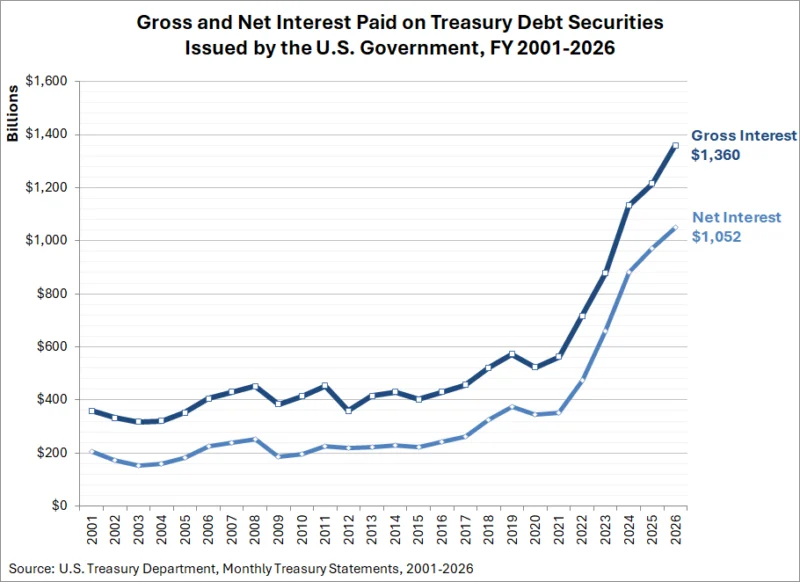
This year, I’m spotlighting a jaw-dropping amount of government waste—the kind that makes you wonder if anyone in Washington has ever heard the word “priorities.” A grand total of $1,639,135,969,608, which includes $1.22 trillion in interest payments on the debt.
We discovered cash going toward experiments teaching ferrets to binge drink alcohol and dosing dogs with cocaine (again). Then there were taxpayer dollars spent on safe spaces at a private university. It wouldn’t be a Festivus Waste celebration without mentioning the $2.1 million spent for researchers to collect saliva samples and survey partiers at EDM clubs and festivals in New York City about their drug use. White Coat Waste helped us uncover hundreds of millions of your hard-earned tax dollars funding labs, gain-of-function research, and brutal experiments on dogs, monkeys, and rats. That includes over $13.8 million on beagle experiments, $14,643,280 to make monkeys play a “Price Is Right”-inspired video game, and so much more.
No matter how much taxpayer money Washington burns through, politicians can’t help but demand more. Fiscal responsibility may not be the most crowded road, but it’s one I’ve walked year after year—and this holiday season will be no different. So, before we get to the Feats of Strength, it’s time for my Airing of (Spending) Grievances.
Here are the examples of wasteful spending that stood out to me this year for their absurdity.
- Ferrets on a Booze Binge: The Department of Veterans Affairs (VA) wasted over $1,079,360 teaching teenage ferrets to binge drink alcohol.
- Billions for Chargers, Not Much to Charge: The Biden Department of Transportation (DOT) received $7.5 billion from Congress to fund electric vehicle charger stations nationwide, but only 68 charging stations are up and running.
- Cartoon Climate Crusaders in Pakistan: The U.S. Department of State gave $244,252 to Stand for Peace in Islamabad to produce a television cartoon series that teaches kids in Pakistan how to fight climate change.
- $1.22 Trillion (and climbing) in Interest Payments: Americans shelled out $1.22 trillion in FY 2025 to cover the interest on Washington’s maxed-out tab.
Each of these things represents poor fiscal decisions on the part of the politicians and bureaucrats who allocated taxpayer funds to them. But there’s one example that stands out for a wholly different reason. It’s the one about “Plinko”-playing monkeys, because the extended summary for this taxpayer-funded scientific research raises questions about what the scientists behind it and the bureaucrats who funded it really thought they could learn through their experiment:
The National Science Foundation and other agencies also monkeyed around with your tax dollars. Federal grants from the Department of Defense, the National Institutes of Health, and the National Science Foundation obligate over $14 million in taxpayer dollars for inhumane research. Researchers at Brown University are enlisting monkeys to play a video game they invented called “Planko,” a variation on the famous “Price is Right” game Plinko. The monkeys have “headposts” screwed into their skulls to keep their heads still while they play the game, and researchers track their brain activity and eye movements.
The immobilized monkeys are tasked with tapping a button to pick which bucket a ball traversing an obstacle course would land in. The groundbreaking conclusion? Monkeys are very good at Plinko. This monkey business is funded by several federal grants totaling over $11 million.
I’m afraid to ask if the scientists behind this particular experiment would have been stopped from doing it if they hadn’t been given federal grants to pay for it. If they hadn’t been stopped, why are we giving them federal grants? And if they had been stopped, why did the bureaucrats who reviewed it think this experiment was so vital to the national interest that they funded it?