The U.S. Armada Facing Maduro
Lessons of costly interventions
November 21, 2025

News Article
Lessons of costly interventions
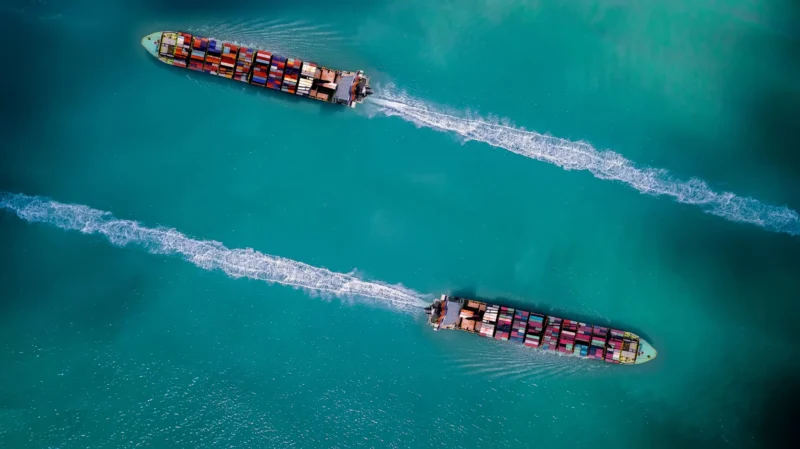
President Trump has assembled a naval force off the coast of Venezuela that doesn’t look like an anti-narcotics operation. He recently sent the U.S.’s most powerful aircraft carrier, accompanied by three destroyers; they joined a dozen warships, 14,000 troops, a special operations vessel, a nuclear-powered submarine, and F-35 fighter jets. Under the direction of the U.S. Southern Command, this naval force has attacked more than twenty boats that Washington says were carrying drugs, killing more than eighty people.
The military flotilla off the coast of Venezuela is much more robust than the one assembled when the U.S. attacked Libya in 2011 and toppled Muammar Gaddafi (Operation Odyssey Dawn). The fact that Trump is now offering talks with dictator Nicolás Maduro means that, despite all appearances, he would like to avoid open war and would prefer for him to leave the country under some arrangement. Maduro, however, has shown no signs of wanting to go. There are so far no cracks within the military establishment or even the civilian ranks of the Chavista regime to serve as an incentive for him to negotiate his departure. Should Trump decide to attack, unless the early strikes of a naval and air assault on Venezuela change Maduro’s mind, we might be in for a confrontation that could have unforeseen consequences.
This is very troubling news. The world has been hoping for a long time that key members of the military would break ranks with Maduro, recognize that the opposition won last year’s elections, force the departure of the regime’s leading figures, and initiate a transition process overseen by international guarantors. However, this outcome now seems unlikely. This suggests two things: first, that the counter-intelligence apparatus established by the Cubans in Venezuela is highly effective, and second, that the cost of removing Maduro will be very high.
I don’t just mean the cost in human lives and material destruction in the event of a sustained U.S. bombardment of Venezuela (I do not anticipate troops on the ground, which most Americans oppose, but who knows). I mean the political cost that the future Venezuelan government will endure if the return of liberal democracy is owed to a bloody and protracted U.S. military intervention. True, George H.W. Bush’s invasion of Panama (Operation Just Cause) in 1989, aimed at capturing dictator Manuel Antonio Noriega, a former CIA collaborator indicted on drug-trafficking charges in the U.S., was successful. Still, many of the dozens of other forms of military intervention since 1898 were not. They left behind a trail of resentment, demagoguery, instability and ultimately dictatorships under the guise of anti-imperialism. In fact, Chavismo itself emerged as an anti-imperialist political force in Venezuela towards the end of the 20th century.
U.S. military interventions in other parts of the world also caused as many, if not more, problems than they solved—including Libya, where the demise of Gaddafi, that monster, was followed by a civil war, a destabilizing effect throughout large parts of Africa, and a migration crisis that lasts to this day.
The best solution for Venezuela would be for those members of the regime who are not directly responsible for the many crimes committed under the banner of 21st-century socialism to take action before Trump, unable to persuade Maduro, feels forced to follow through on his threats to avoid losing face. Venezuela has strong opposition leaders, such as María Corina Machado, the recent Nobel Peace Prize winner, and Edmundo González, who won the presidential election last year and is now in exile in Madrid. These seasoned leaders have a solid social base and significant political legitimacy. They can initiate a transition process through direct talks with any Chavista leader who still possesses some common sense, ultimately leading to free and fair elections.
Those hypothetical Chavistas now have, right next to their country’s shores, the kind of protection they lacked before—if lack of courage was indeed the main reason for failing thus far to remove Maduro and put an end to the daily torture that the Chavista regime has become for millions of Venezuelans.