Why Trump’s $230 Million Claim Exposes a Gap in Settlement Rules for Presidents
Can a president write their own check?
November 12, 2025
News Article
Can a president write their own check?
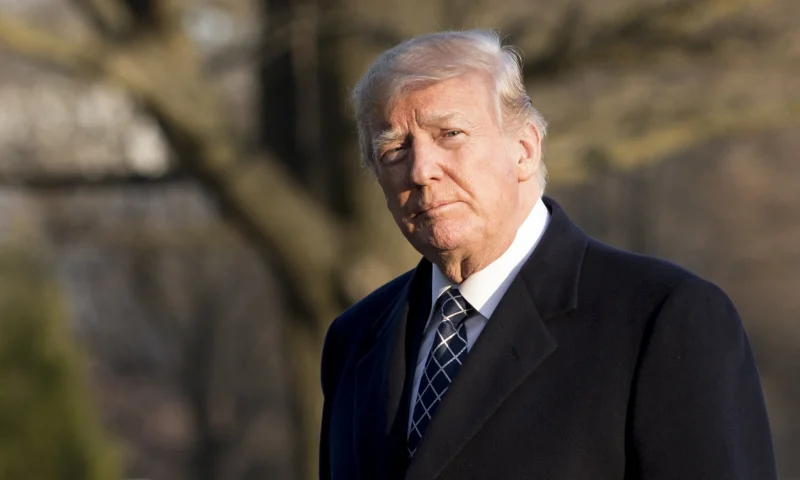
Donald Trump is seeking $230 million from the Department of Justice in damages related to multiple federal investigations. While no lawsuit has been formally initiated, the administrative claim starts the ball rolling for a potential settlement. This is an unprecedented event; no president in American history has ever filed claims against their own Department of Justice (DOJ). Critics argue that the effort raises concerns about conflicts of interest and the limits of executive power, given that Trump’s political appointees staff the DOJ.
The president filed two separate claims under the Federal Tort Claims Act (FTCA) after leaving office in 2021. FTCA allows individuals to seek damages from federal agencies. The first, filed in 2023, seeks damages relating to a violation of rights stemming from an FBI and special counsel investigation into Russian election interference and potential Russian ties to the Trump Administration in 2016. The second claim, filed in 2024, relates to a 2022 FBI search of Trump’s personal residence, Mar-a-Lago. Since six months have lapsed since the claims were submitted, Trump is now allowed to sue under FTCA.
Several of Trump’s personal ex-defense lawyers now hold high-ranking positions in the current DOJ. Todd Blanche, Deputy Attorney General and Trump’s former criminal defense lawyer, has the ability to greenlight any settlement that happens to be over $4 million. Associate Attorney General Stanley Woodward Jr., who defended Trump’s co-defendant in the aforementioned classified documents case, also has the authority to settle.
In a typical scenario, the parties on either side counter one another, assessing the strength of the evidence and negotiating at arm’s length. In this instance, however, the president effectively oversees both sides of the process. Trump, the natural person, negotiates with the underlings of Trump, the president. This situation is eerily akin to “writing one’s own check,” since those empowered to evaluate the legitimacy of Trump’s $230 million claim are, at least in part, his own appointees and former attorneys.
Trump stated that the government owes him “a lot of money.” The president told reporters, “It’s interesting, ’cause I’m the one that makes the decision, right?” It’s not as if these investigations were baseless. Marked classified documents were found in Trump’s Mar-a-Lago residence.
How can this be reconciled? Trump, the natural person, still deserves the right to make the claim that he was the target of a politicized investigation that led to damages. It is an essential part of the American constitutional creed that people have the right to defend themselves against government intrusions and Trump the person is no exception. However, the current process appears susceptible to abuse.
The FTCA effectively presumes that the claimant and the federal agencies are independent parties; however, when the president is a claimant, this obviously creates a conflict of interest, especially when they are not the party on the hook for the payout. Some possibilities could include creating an independent board or transferring settlement authority from the DOJ to a different government body. The likely best course of action would be for Congress to amend the FTCA to require a blind “special master” to adjudicate claims involving the executive branch. In addition to assessing the merits of the claim, the special master could have the power to make a recommendation or serve as an official firewall that approves or rejects the terms based on the case. The special master could then also report to Congress or the inspector general, thereby passing over conflicted DOJ members.
In any case, it is worth watching how this unfolds. Trump is not violating the emoluments clause, but this is a textbook example of a scenario where a president can monetarily profit from the office they hold and “we the people” will foot the bill because the president feels entitled to this money. This does not preserve legal fairness, nor public trust.