My Migration Story
October 21, 2025
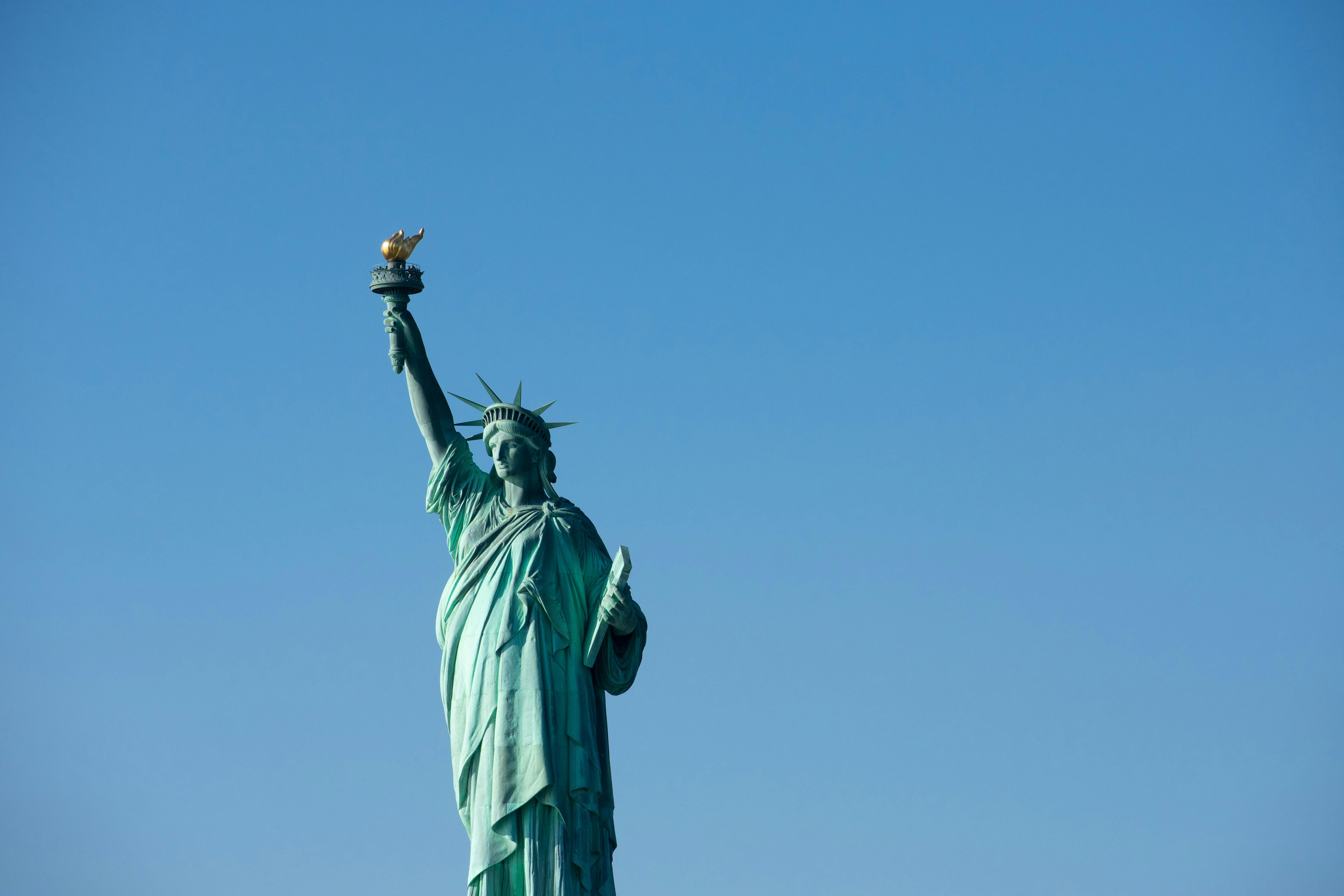
A few years ago, an institution that bears my late father’s name and that I now preside over (Cátedra Vargas Llosa), together with eLibro, the biggest digital library of the Spanish language, organized, with the participation of the Miami-Dade County public schools, a contest in South Florida called “My Migration Story.” It sought to encourage literary skills among young children and make them proud of both their heritage and their contributions to the United States of America. The contest is now in its second year.
I bring it up because I wish to share with readers my sadness at what has become of the word “immigrant” across the U.S. and the West in general. Millions of immigrants are afraid to use it, hide their origins, and prefer to share their personal stories, some of them heroic or tragic, secretly among themselves, like those dissidents who in the Communist Bloc used to pass around potentially subversive literature in clandestine form (it was referred to as “Samizdat”).
We were told, when the rhetoric against immigration began to gain traction, that the attacks on immigrants had nothing to do with xenophobia but with the fact that it was not fair for those who had come to the United States by the books that others had jumped the line. It was a lie. The media are constantly telling us about documented immigrants, including U.S.-born citizens, who are being arrested, beaten up, and sent to horrific detention centers (the idea of throwing them to the alligators is casually talked about in the higher echelons of power). No, what we are seeing, and the U.S. example is catching elsewhere, is an all-out persecution of the other—he or she who looks different, whose name sounds different, who happens to be in the wrong place—a restaurant, a factory, a field—at the wrong time.
Nativism has been a part of this country from very early on, as I documented in my book “Global Crossings: Immigration, Civilization and America” some years ago, even though, inaccurately, the Chinese Exclusion Act of 1882 is often cited as the first law that severely restricted immigration in the U.S. The wonderful news is that immigration prevailed in the face of these periodic bouts of hostility. It will prevail again. We are already seeing the effects of the persecution of immigrants on businesses and the economy, on tourism and other industries, and people are speaking out.
I have been an immigrant of sorts all my life. I was born in Peru, where, because I looked more white than mestizo (even though I am a mestizo, as is any Peruvian whose roots go back centuries), I was called a “Spaniard” by way of insult. I partly studied in England, where I was called a “Paki” because, for some of my fellow students, any foreigner had to be from Pakistan or India. I was asked if we had cars in my country of origin. I explained that, by way of transportation, we preferred to swing from tree to tree using vines, much like Tarzan.
Later on, when they learned that Britain also had European immigrants from the south of the continent, I was called a “dago” which made me a greasy Italian, I guess. I then studied at Princeton for a short while, where I was known as a “Puerto Rican,” partly because I had a wonderful group of Puerto Rican friends and partly because, well, it was simpler to amalgamate foreigners under that umbrella term.
When I worked in Spain for a period, I was called a “Sudaca,” a derogatory term for “South American.” I had another working spell in England, and by then the country had become more Europeanized; one could feel a certain conviviality that had been absent before. There was still a certain arrogance vis-à-vis “the other,” but there was progress. The progress was short-lived. Xenophobia is once again pervasive.
I then moved to the U.S., and for the first time in my life, I felt that my origin, my looks, and my manner of speaking did not define me at all. What defined me is what I did, what I stood for, my achievements, or lack thereof. I felt strangely at home in a country in which I had not been born or raised. I lived in Florida, in California’s Bay Area, and, finally, in Washington D.C., and traveled extensively across the country, including a road trip from coast to coast that has stuck in my mind as a wonderful learning experience (together with another road trip across the Deep South that still reverberates in me).
And yet. And yet. I see a deterioration, day by day, of that inclusive, pluralistic, porous, constructive, unprejudiced ethos all around me. It saddens and disappoints me. Behind it is an ideological construct built on tribalism and fear that runs contrary to the time-honored evolution of humankind.
The movement of people fleeing persecution or poverty, populating “new” worlds, working the land seasonally, filling gaps in the labor markets of more advanced countries, or for reasons of pilgrimage or trade, has been a constant presence since the dawn of time. It occurred within Africa long before the continent was colonized, within Europe itself for centuries, or along the commercial route from India to the Arabian Peninsula to West Africa. Not to speak of the massive movement of people across the Atlantic between the 14th and 19th centuries—including the ominous slave trade—or of the Great Migration of black Americans from south to north in the 20th century, that of southern Europeans to the north of their continent in the 1950s and 1960s, or the movement of millions of people from the former South Asian colonies to the British isles in the post-WWII era.
Migration is the story of the world. No demagogue will ever be able to reverse the law of migration. He or she may slow it down for a while, but it will eventually return, and we will all benefit from it culturally, economically, and politically.