The Second Amendment Victory in GOP’s “Big, Beautiful Bill”
The mandatory $200 tax stamp on suppressors will be eliminated January 1st.
July 22, 2025

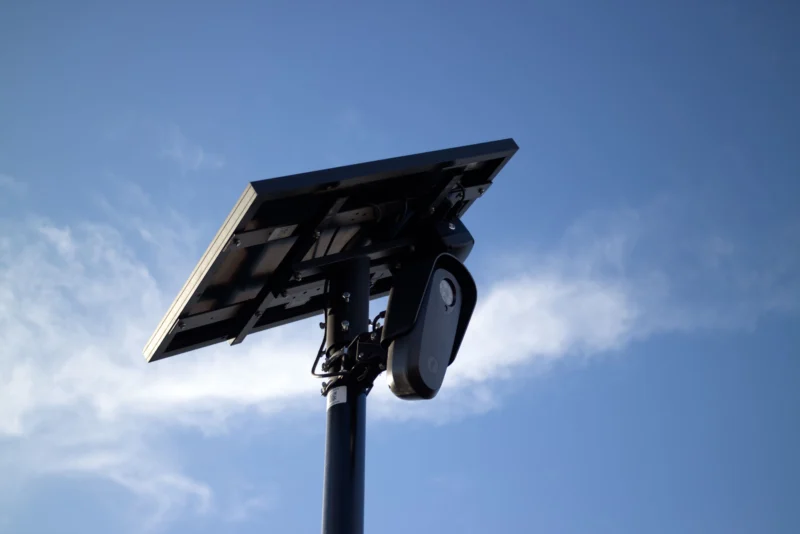
9mm Handgun Silencer - Rugged Obsidian - Gun Suppressor - Tony Webster - Flickr
News Article
The mandatory $200 tax stamp on suppressors will be eliminated January 1st.
Much criticism has been levied at President Trump’s first piece of trademark legislation signed into law during his second stint living in government housing. The so-called “Big Beautiful Bill” leaves an enormous amount to be desired from the perspective of fiscal responsibility.
To be fair, Republicans got one major provision right by extending Trump’s 2017 tax cuts. With high interest rates and an economy in a holding pattern while the world waits to see what comes of the president’s ill-advised global trade war, now was not the time for a tax increase on the vast majority of American families; however, the bill not only locks in Biden-era spending levels, it also raises the federal deficit by an estimated $3-4 trillion over the next decade. As Phil Magness points out, that number could potentially increase drastically if courts find the president’s “Liberation Day” tariff regime unconstitutional.
Second Amendment supporters had reason to be queasy over the last year, after the Republican Party scrubbed all talk of 2A protections from its platform last summer before the Republican National Convention, and Trump’s subsequent decision to nominate Pam Bondi–who carries a troubling record on Second Amendment issues–for Attorney General. But a victory for gun rights did make it into the final text of the “Big, Beautiful Bill.”
On January 1st 2026, the $200 National Firearms Act (NFA) tax stamp will be reduced to $0 on both suppressors (sometimes called silencers) as well as short-barreled rifles and shotguns. While 2A advocates and hardline pro-gun Republicans wished to remove these products from the NFA entirely, suppressors, SBRs, and SBSs will still be subject to additional regulations and registration. But considering the glacial pace in which Congress typically moves regarding gun related issues, eliminating the $200 tax burden on these items is no small victory.
While anti-gun politicians have long attempted to impede the legal ownership of all manner of firearms, the focus on suppressors always flew in the face of reason. Regardless of what you have seen in Hollywood films–the worst offenders being films such as the James Bond series–suppressors do not and can not make a firearm “silent.” The purpose of using a suppressor is to reduce the volume of the weapon to at or around OSHA’s hearing-safe impulse noise limit of 140 decibels (dBs). For reference, an unsuppressed AR-15–by far the most popular rifle in America–chambered in the standard 5.56 NATO cartridge, produces roughly 165-170dBs when fired; a suppressor reduces the volume to 135-145dBs. By comparison, a jackhammer produces roughly 130dBs, and hearing protection is still recommended when firing suppressed AR-15s, as well as most other rifles and handguns.
The main benefit of utilizing a suppressor comes in tactical and/or self-defense situations that carry the possibility of needing to fire a weapon indoors, where the volume and muzzle blast of firearms are exaggerated, as pointed out by popular gun writer and Army veteran who served in both Iraq and Afghanistan, John McAdams: “I was exposed to more than enough unsuppressed M-4 fire indoors during my time in the Army and I don’t care to experience any more. Shooting suppressed is definitely the way to go. That’s especially true indoors and/or with an AR style rifle.”
Other benefits of using suppressors include a significant reduction in both muzzle blast and recoil, which can aid both hunters and competitive shooters mightily in the field, especially women and younger shooters who may struggle with the noise and recoil of their rifles, specifically those chambered in powerful big game hunting cartridges.
Interestingly, in Europe–where the ownership of firearms is frighteningly restricted compared to the United States, aside from blue states such as California, New York, and Illinois–the use of suppressors is widespread among those fortunate enough to own a gun. In many European countries such as Finland and Norway, suppressors are completely unregulated, and even in nations with simple regulations on suppressors, such as the United Kingdom, Germany, and the Baltic states, suppressors are widespread and their use among hunters is encouraged–sometimes even required–by local governments.
The “Big, Beautiful Bill” is 1,106 pages long, and like all of the recent bloated omnibus spending packages, it contains enough pork and wasteful spending to keep the nation’s economists up at night, but the state’s crackdown on suppressors and short-barrelled rifles and shotguns–like most tyrannical anti-gun regulations–made absolutely no sense, and Congress and President Trump were correct to claw it back.