A Guide to American Tariffs in the Eighteenth and Nineteenth Centuries
June 18, 2025

News Article
America’s history is filled with political struggles over whether America should be a nation of free trade. The back-and-forth battles over tariffs have had a profound impact on America’s economic and political history. This article is meant to provide a guide to the economic history of tariffs in America. More detailed histories of tariffs are provided here.
1789–1816
When Thomas Jefferson was listing the grievances that American colonists had with Britain that led them to fight for independence, he included Britain’s “cutting off our Trade with all parts of the world.” The Americans wanted to trade with the world, but the Navigation Acts (a set of trade regulations) restricted American trade. Americans fought and died in part to defend their right to free trade.
The Navigation Acts hampered American colonial trade in two ways. First, an enumerated list required certain commodities to be shipped to England before they were shipped to other parts of the world. That requirement forced the enumerated commodities to pass through British customs and gave the British a monopsony on those American colonial goods. Second, all imported goods coming to the colonies had to pass through Britain before landing in colonial ports. The Navigation Acts raised the prices on colonial imports and lowered the prices at which they could sell their exports.
The recently independent Americans did not quickly abandon their love of freedom. Tariffs were put in place by the newly formed federal government after the ratification of the Constitution in 1788. However, these tariffs were passed to provide much-needed revenue to the federal government. The national government did not have the power to tax under the Articles of Confederation and had constantly struggled to balance its budget and pay its war debts.
Alexander Hamilton was one of the few voices arguing for protectionism in the early republic, but he was unsuccessful at getting Congress to go along with his plans for the purpose of protecting industry. He was able to convince Congress to increase tariffs temporarily, but that was after they asked him for recommendations for options to finance an American military presence to defend the Western frontier. Alexander Hamilton later became more unpopular with manufacturers in the North because he was unwilling to push for the trade restrictions they wanted.
The trade restrictions that did exist in the early republic were passed either for revenue or out of opposition to the British, as there were high tensions or open conflict between the Americans and British at the time. Although Jefferson enacted one of America’s trade embargoes in a failed attempt to get other nations to respect the neutrality of American shipping, one of his final political statements was made in favor of free trade. He called the “American System” of trade restriction proposed by Senator Henry Clay legislation “which we have declared to be usurpations, and against which, in point of right, we do protest as null and void, and never to be quoted as precedents of right.”
1816–1860
Henry Clay led the charge to establish protectionist tariffs in the early nineteenth century, and he was successful in getting tariffs raised in 1816, 1824, and 1828. Jefferson and Madison were both alive to see the implementation of Clay’s “American System,” and both condemned his plan. The fact that both the author of the Declaration of Independence and the principal framer of the Constitution denounced Clay’s “American System” certainly shows that Clay’s plan was a deviation from what America’s founding fathers had in mind for the new nation.
When Clay got another increase in tariffs passed in 1828, the tariff was so burdensome that it became known as the “Tariff of Abominations.” South Carolina nearly sparked a constitutional crisis when it passed the Ordinance of Nullification in 1832, declaring the tariffs unconstitutional and refusing to enforce them. South Carolina’s nullification prompted the passage of the Force Bill of 1833, which prescribed martial law to enforce the tariffs should South Carolina refuse. President Jackson said that he wanted to “hang every leader . . . of that infatuated people, sir, by martial law, irrespective of his name, or political or social position,” which included John C. Calhoun, his former vice president. Both sides chose to negotiate rather than resort to violence, however. The tariffs were reduced in 1833, and South Carolina repealed the Ordinance of Nullification.
The Compromise Tariff of 1833 lowered tariffs from the approximately 60 percent rate of the Tariff of Abominations to approximately 20 percent over the next decade. However, the 20 percent rate was reached in July of 1842, and by September of 1842 tariffs had been raised to protectionist levels once again, becoming known as the Black Tariff. The protectionist gains with the Black Tariff were quickly undone by the free-trade Walker Tariff. The free-trade position made further gains with the Tariff of 1857, which continued to lower tariff rates. On the eve of the Civil War, American tariffs had been lowered nearly to match the tariff rates of France and Britain, both of which had been consistently lowering their tariffs in the nineteenth century. The nineteenth century was by no means a century of uncontested protectionist dominance, but rather was defined by the back-and-forth struggle between free-traders and protectionists, with the free-trade camp in control for most of America’s history before the Civil War.
Further, in a period of relatively free trade from 1833 to 1860, America’s industrial output grew dramatically. Industrial output in 1860 was 4.5 times greater than it was in 1833, which was an incredible amount of growth for a 27-year period. That antebellum period of industrial growth contrasts sharply with the claim that America needed tariffs to increase its industrial output.
The similarity in the sizes of the competing free-trade and protectionist camps also enticed lobbyists to try to shape legislation and sway votes. “Men of talents” first started coming to Washington to make the case for protecting particular sectors of American manufacturing with the Tariff of 1816. Lobbyists continued to increase in number and professionalization throughout the period leading up to the Civil War, and the pork barrel legislation they encouraged became an easy target for free-trade advocates.
1861–1865
The U.S. made another unforced error when it raised tariffs with the Morrill Tariff in 1861. It was passed in the House in 1860, before the Southern states began seceding, but it was passed in the Senate and signed by President James Buchanan in March of 1861, after several states had already left the Union. Slavery was the key issue that drove the Southern states to secede, but the massive tariff hike only worsened relations between North and South.
The Morrill Tariff was a protective tariff, so it was not meant to fund the Union for the war. The British had begun freeing their trade in 1846, so the Morrill Tariff reversed fifteen years of trade liberalization between Britain and America. The British were outraged at the American government, and then the Union, for the Morrill Tariff.
The Southern states used the protectionism of the Union to frame the Civil War as being over tariffs instead of slavery. The Southern framing of the Morrill Tariff as the cause of the Civil War put a rift between Britain and the Union that deprived the Union of British support during the war.
1866–1920
Tariffs were generally high for most of the mid- to late-nineteenth century. Tariffs stayed high after the Civil War, with only minor revisions, until the 1880s. The Mongrel Tariff was the Arthur administration’s attempt to lower tariffs, but compromise forced Arthur’s tariff reduction to be considerably smaller than he had hoped. The McKinley Tariff made America considerably more protectionist. Tariffs were reduced in 1894, but were increased again in 1897 and then reduced only slightly in 1909. Tariffs were lowered significantly in 1913 when the federal income tax was put in place.
The United States had a strong wall of tariff protection around it from the Civil War to 1913 and experienced strong economic growth during that period. Were the late-nineteenth century tariffs responsible for America’s rapidly growing economy?
No.
Decompositions of the sources of economic growth during that period reveal that the primary driver of growth was capital accumulation in the non-traded sector (i.e., railroads, telegraph lines, etc). Tariffs did not have any clear effect on this channel.
Douglas A. Irwin notes that fiscal surpluses, shifts in the relative prices of consumer goods and capital, growth in foreign investment, and shifts in income distribution are plausible theoretical channels for tariffs increasing American capital accumulation, but that none of these explanations holds water when it comes to the actual economic history. Fiscal surpluses were helpful, but tariffs were one of many means of producing them and not necessary for their creation. Shifts in the relative prices of consumer goods and capital would have promoted growth in the traded capital sector, not the non-traded sector. Foreign capital investment was not large enough to meaningfully drive capital accumulation, and historical research has shown that shifts in income distribution were not responsible for growth in the savings rate.
Disaggregated studies of tariffs in the nineteenth century reveal that tariffs increased domestic prices, sheltered inefficient firms, and did not increase labor productivity. Further, tariffs increased the price of capital goods from abroad, which hindered the development of industrial production. Manufacturing had higher productivity growth than agriculture from 1869 to 1909, but transportation, utilities, and communications all had greater productivity growth than manufacturing. Thus, there is no reason to think that prioritizing manufacturing in particular with tariffs was the source of high growth. If tariffs had been entirely eliminated from 1870 to 1913, and there had been no negative employment effects from the market power the manufacturing industry got from tariffs, and all workers who lost jobs because of the tariffs’ removal went to work in agriculture, then GDP in 1913 would have been 0.8 percent lower than it actually was. Again, even with an ideal set of assumptions, the best-case scenario would be that they increased GDP by 0.8 percent over forty-seven years.
1930
The Smoot-Hawley Tariff of 1930 is infamous among tariff increases in U.S. history. It was passed as America was plunging into the Great Depression, which has led to debate over what role it played in the Depression. Modern research has shown that the Smoot-Hawley Tariff did not cause the Great Depression, but it also certainly made matters worse, not better.
Imports declined rapidly in 1930 because of the confluence of real incomes falling, the imposition of the Smoot-Hawley Tariff, and deflation that increased the effective ad valorem rates on specific duties. Smoot-Hawley caused an economic slowdown, but the impact of that negative economic effect paled in comparison to that of the Federal Reserve’s monetary mismanagement.
However, the U.S. also experienced significant retaliation from countries affected by Smoot-Hawley. Controlling for the financial crisis and decline in global aggregate demand, American exports to countries that protested Smoot-Hawley fell by 15–22 percent, and by 28–33 percent for countries that openly retaliated against it. Much of the retaliation was focused against rapidly growing American industries such as automobiles.
Foreign retaliation severely hampered exports and damaged American export industries. Foreign retaliation was a key factor leading to the push to roll back Smoot-Hawley and to the U.S. government taking the threat of retaliatory tariffs more seriously.
Conclusion
After the disaster of Smoot-Hawley, the U.S. government began rolling back trade restrictions. As seen below, America freed its trade in the later half of the twentieth century and encouraged others to do the same, and the country prospered under that system. Now, the ideology of protectionism is alive and well again in America.

Sources: Irwin (2003) and Tax Foundation
But the history of American trade should serve as a staunch warning against protectionism. The Revolutionary War was in part a fight for free trade. The founding fathers were nearly unanimous in their support for free trade. Henry Clay’s “American System” was decried by Madison and Jefferson, and Clay’s system encouraged the development of a professional class of lobbyists who pushed forward pork barrel legislation to protect special interests. The Morrill Tariff angered an ally of the Union who could have helped it win the Civil War against the Confederacy. America’s growth after the Civil War occurred in spite of, not because of, the tariffs it imposed. The Smoot-Hawley Tariff and foreign retaliation to it crippled the American economy when it was already in shambles.
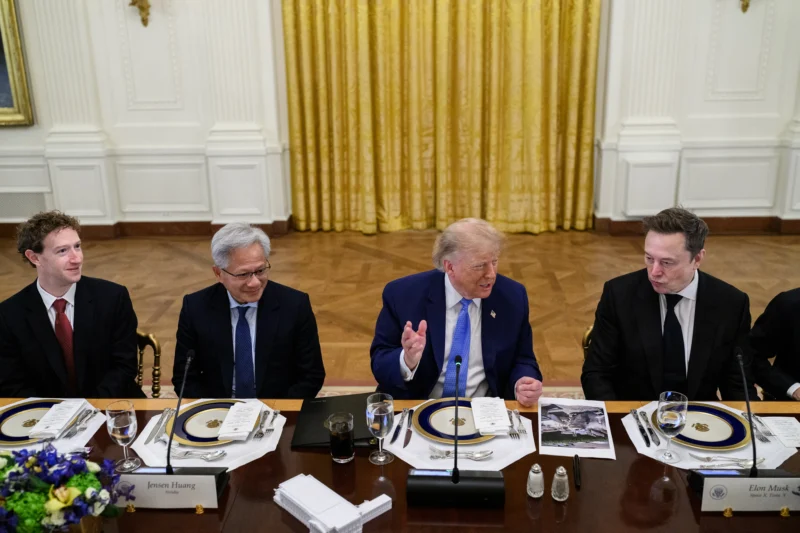
The Trump administration has made tariffs a core plank in its economic platform. Economists have decried the tariffs for being un-American, for promoting corruption, for alienating our allies, for hindering growth, and for inviting foreign retaliation. These are the same problems that have plagued tariffs for all of America’s economic history, and there is no reason to think that this time things will be different.